
An electrolyte drink for muscle cramps may help when cramping is connected to heavy sweating, heat exposure, dehydration, vomiting, diarrhea, or low mineral levels. It is less likely to solve cramps caused by muscle fatigue, overuse, nerve compression, medication, or another health condition. During an active cramp, stop, gently stretch the muscle, and rehydrate based on what you have lost.
Table of Contents
The best drink is not automatically the product with the most magnesium or potassium. For sweat-related cramps, fluid and sodium are usually the first label details to check because sodium and chloride are the main electrolytes lost in sweat. Potassium, magnesium, and calcium still matter, but more is not always better—and frequent unexplained cramps deserve proper medical evaluation.
Choosing an electrolyte drink for muscle cramps starts with identifying when and why the cramp happened.
Can an Electrolyte Drink Help Muscle Cramps?
An electrolyte drink for muscle cramps can be useful, but only when the cramp’s cause matches what the drink replaces. Sweat removes water and electrolytes, especially sodium and chloride. Long exercise sessions, outdoor work, hot weather, and repeated sweating can create a meaningful fluid and sodium deficit.
The MedlinePlus muscle-cramp guide lists dehydration and low magnesium, potassium, or calcium among possible causes of cramps. It also identifies muscle strain, overuse, reduced blood flow, nerve compression, pregnancy, medicines, and certain medical conditions. That is why no electrolyte powder can honestly promise to prevent every cramp.
Think about the situation surrounding the symptom. A calf cramp near the end of a long, hot run after visible sweating creates a stronger case for an electrolyte drink for muscle cramps than a recurring nighttime cramp on a cool, inactive day. The first pattern may involve fluid, sodium, and fatigue; the second needs a wider look at activity, stretching, medication, circulation, nerves, and health history.
Why Muscles Cramp
Muscle cramps are sudden, involuntary contractions that can last from a few seconds to several minutes. The muscle may feel hard, visibly tighten, or remain sore after the contraction releases.
Common contributors include:
- Muscle fatigue or overuse
- Dehydration after sweating or illness
- Heat exposure
- Low sodium, potassium, magnesium, or calcium
- Poor conditioning or a sudden increase in activity
- Holding one position for a long time
- Nerve compression or reduced circulation
- Pregnancy
- Certain medicines, including some diuretics and cholesterol-lowering drugs
- Kidney, thyroid, neurological, or metabolic conditions
This matters when choosing an electrolyte drink for muscle cramps. Replacing minerals cannot correct poor running mechanics, a pinched nerve, medication side effects, or a muscle pushed beyond its current conditioning.
Our guide to the best electrolytes for leg cramps at night explores nighttime patterns separately because cramps during sleep do not always have the same triggers as cramps during exercise.
When an Electrolyte Drink May Help Muscle Cramps

After prolonged or intense sweating
An electrolyte drink for muscle cramps makes the most sense during or after prolonged activity when you have lost a noticeable amount of sweat. This may include distance running, long cycling sessions, team sports tournaments, outdoor labor, or repeated workouts in hot and humid conditions.
The American College of Sports Medicine’s hydration guidance notes that heavy sweaters may lose roughly 500–700 mg sodium in an hour of vigorous exercise, although individual sweat losses vary widely. A drink containing only 50–100 mg sodium may be fine for light daily hydration but may replace only a small share of those losses.
After vomiting or diarrhea
Vomiting and diarrhea can remove both fluid and electrolytes. Mild losses may be managed with appropriate fluids, but significant illness-related dehydration is different from ordinary exercise hydration. A standard sports powder is not automatically equivalent to a medical oral rehydration solution.
Children, older adults, and anyone with persistent vomiting, severe diarrhea, confusion, fainting, very low urine output, or an inability to keep fluids down need medical guidance rather than relying only on an electrolyte drink for muscle cramps.
When diet or medication affects mineral balance
Some medicines and health conditions influence sodium, potassium, or magnesium levels. In these situations, randomly choosing the strongest electrolyte drink can be unsafe. Bloodwork and individualized advice are more useful than guessing from symptoms alone.
An electrolyte drink for muscle cramps should complement a clinician’s guidance when a deficiency or medication effect is suspected. It should not be used to self-treat a diagnosed electrolyte disorder.
When Electrolytes May Not Fix the Cramp
Many exercise-associated cramps occur when a tired muscle becomes unusually excitable. They often appear late in a hard session or after a sudden increase in pace, distance, resistance, or training volume. Hydration may be part of the picture, but conditioning and neuromuscular fatigue can matter just as much.
An electrolyte drink for muscle cramps is less likely to fix the problem when:
- The same muscle cramps despite cool weather and minimal sweating.
- The cramp follows an unusually hard or unfamiliar movement.
- Symptoms improve mainly with stretching, massage, or reduced intensity.
- Cramps happen alongside back pain, numbness, or tingling.
- A new medicine or dosage change preceded the symptoms.
- The area is swollen, red, warm, or weak.
For runners, our electrolyte drinks for runners guide explains how distance, weather, sweat rate, pace, and water access should shape a hydration plan rather than using the same packet for every run.
What to Look for in an Electrolyte Drink for Muscle Cramps
Sodium
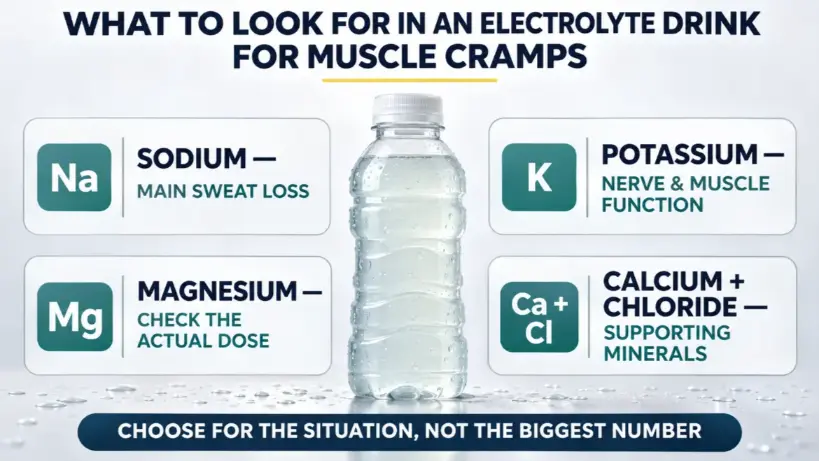
Sodium is the primary electrolyte lost in sweat, so it deserves more attention than front-label phrases such as “full-spectrum hydration.” For a short, easy workout in normal weather, plain water and normal meals may be enough. For prolonged sweating, a drink with a meaningful sodium dose may fit better.
Do not assume that the highest-sodium product is automatically the best electrolyte drink for muscle cramps. The right amount depends on exercise duration, sweat rate, climate, food intake, medical history, and whether you are a noticeably salty sweater.
Potassium
Potassium supports normal nerve signaling, muscle contraction, and fluid balance. Low blood potassium can cause weakness and more serious problems, but it is uncommon for a healthy person to develop severe hypokalemia from diet alone.
The NIH potassium fact sheet notes that heavy sweating, vomiting, diarrhea, certain medicines, and kidney-related issues can affect potassium balance. People with kidney disease or medicines that raise potassium should not deliberately load potassium without professional advice.
Magnesium
Magnesium is involved in nerve and muscle function. Severe magnesium deficiency can include cramps, but that does not mean every cramp requires a high-magnesium drink. Supplemental magnesium can also cause diarrhea, nausea, and abdominal cramping at high intakes.
When comparing an electrolyte drink for muscle cramps, check the actual milligrams rather than assuming a product contains a meaningful magnesium dose because the mineral appears in the ingredient list.
Calcium and chloride
Calcium participates in muscle contraction, while chloride works closely with sodium in fluid balance. They can contribute to a broader electrolyte profile, but the presence of five or six minerals does not guarantee that the serving matches your particular losses.
Sugar and carbohydrates
Sugar is not an electrolyte. However, carbohydrates can be useful during long endurance activity because they supply fuel, and glucose can support water and sodium absorption in oral rehydration solutions. For ordinary daily hydration or a short workout, a sugar-free formula may be perfectly reasonable.
Choose an electrolyte drink for muscle cramps according to the situation. A runner exercising for two hours may benefit from carbohydrates, fluid, and sodium, while someone taking a gentle walk may only need water and a regular meal.
Quick Drink Comparison by Situation
| Situation | Practical drink option | What matters most |
|---|---|---|
| Short, light activity in normal weather | Water | Hydration and normal meals may be enough |
| Long or sweaty exercise | Electrolyte drink with meaningful sodium | Fluid, sodium, duration, and sweat rate |
| Heavy sweating with visible salt marks | Higher-sodium electrolyte drink | Individual sodium losses and total daily intake |
| Mild everyday mineral support | Lower-sodium broad-mineral drink | Potassium, magnesium, taste, and repeat use |
| Vomiting or diarrhea | Appropriate oral rehydration product | Correct glucose-electrolyte balance and medical context |
| Nighttime cramps without sweating | Water or a moderate electrolyte drink may be tried | Also assess stretching, activity, medication, nerves, and circulation |
The table is a decision guide, not a dosing prescription. Someone with high blood pressure, kidney disease, heart disease, fluid restrictions, or electrolyte-related medication needs personalized guidance before routinely using concentrated drinks.
Use the table to narrow your options, then check whether an electrolyte drink for muscle cramps matches your actual activity and health context.
Low-Sodium vs High-Sodium Options
The difference between electrolyte products can be dramatic. Some daily formulas contain roughly 50–100 mg sodium, while performance-focused products may provide 500–1,000 mg or more per serving.
Our Ultima vs LMNT comparison illustrates the two ends of that spectrum. Ultima Replenisher Lemonade is a broad-mineral, low-sodium formula, while LMNT is deliberately sodium-forward. Neither is automatically the best electrolyte drink for muscle cramps in every situation.
A lower-sodium option may suit ordinary daily use, people who already eat plenty of sodium, or someone who mainly wants potassium and magnesium. A higher-sodium product may better match long, sweaty training or a known high sweat-sodium loss. Total intake still matters, especially when multiple packets are used.
How to Use an Electrolyte Drink for Muscle Cramps
Follow the product’s labeled water volume rather than making every packet highly concentrated. Using too little water can create a very salty or overly sweet drink and may cause stomach discomfort.
For exercise-related use:
- Begin activity normally hydrated instead of trying to correct a large deficit at the last minute.
- During prolonged exercise, drink according to thirst, conditions, and a hydration plan tested during training.
- Do not force excessive fluid. Drinking far beyond your needs can dangerously dilute blood sodium.
- After activity, replace fluids gradually and eat a normal meal containing carbohydrates, protein, and minerals.
- Track patterns. Note the weather, exercise duration, body area, fluid intake, and whether stretching relieved the cramp.
An electrolyte drink for muscle cramps works best as one part of a broader plan that also includes appropriate conditioning, pacing, recovery, and food.
What to Do When a Muscle Cramp Starts

During an active cramp, the fastest useful step is usually mechanical—not nutritional.
- Stop the activity. Do not push through a severe contraction.
- Gently stretch the affected muscle. Hold the stretch without bouncing.
- Massage the area. Light pressure may help the muscle relax.
- Use warmth for a tight muscle. Cold may feel better later if the area remains sore.
- Sip fluid. Choose water or an electrolyte drink for muscle cramps based on heat, sweating, activity duration, and recent illness.
- Resume carefully. Returning immediately to the same intensity may trigger another cramp.
Drinking electrolytes does not normally make an active contraction disappear instantly. The fluid and minerals must be consumed and absorbed, while stretching acts directly on the tightened muscle.
Can You Make a Homemade Electrolyte Drink?
A basic homemade drink can provide water and sodium, but mineral amounts are less precise than a labeled product. One simple option is 16–20 ounces of water with a small pinch of salt and a squeeze of lemon or lime. A little sugar or honey can be added when carbohydrate is useful during longer activity.
Avoid casually adding large amounts of salt, potassium-based salt substitute, magnesium powder, or cream of tartar. Homemade recipes can become highly concentrated, and potassium-rich ingredients are not appropriate for everyone.
If accurate dosing matters, a clearly labeled commercial electrolyte drink for muscle cramps is easier to evaluate than a recipe based on unmeasured spoonfuls.
Common Mistakes to Avoid
Assuming every cramp means low potassium
Bananas are nutritious, but a cramp does not prove potassium deficiency. Muscle fatigue, dehydration, sodium loss, medication, circulation, and nerves may all be involved.
Choosing magnesium without checking the dose
Some products advertise magnesium but contain only a token amount. Others provide enough supplemental magnesium to cause digestive discomfort when combined with additional supplements.
Ignoring sodium after heavy sweating
A potassium-heavy, low-sodium drink may be useful for everyday mineral intake but a poor match for several hours of salty sweating. The best electrolyte drink for muscle cramps should reflect the main losses from the activity.
Drinking excessive plain water
More water is not always safer during long endurance activity. Excessive fluid consumption can dilute sodium. Drink according to a sensible plan rather than repeatedly forcing large volumes.
Treating frequent cramps without investigating them
Repeated cramps may be a sign that training, medication, circulation, nerves, or another health issue needs attention. Continually adding supplements can delay a more useful assessment.
Who Should Be Careful With Electrolyte Drinks?
Speak with a healthcare professional before regularly using concentrated electrolyte products if you have:
- Kidney disease or reduced kidney function
- Heart failure or a prescribed fluid restriction
- High blood pressure requiring sodium management
- A history of high or low potassium
- An endocrine or thyroid disorder
- Medicines affecting sodium, potassium, or fluid balance
- Pregnancy with persistent or severe cramping
An electrolyte drink for muscle cramps is a consumer hydration product, not a treatment for a diagnosed mineral imbalance.
When to Seek Medical Attention
Contact a healthcare professional if cramps are severe, frequent, last a long time, repeatedly interrupt sleep, or do not improve with stretching and appropriate hydration.
Seek prompt care when a cramp occurs with:
- Swelling, redness, or warmth
- Significant muscle weakness
- Numbness or loss of function
- Dark urine after intense exercise
- Fainting, confusion, chest symptoms, or breathing difficulty
- Persistent vomiting or inability to keep fluids down
- One-sided calf swelling or pain that could indicate a blood clot
These situations require more than choosing an electrolyte drink for muscle cramps.
Frequently Asked Questions
What is the best electrolyte drink for muscle cramps?
The best electrolyte drink for muscle cramps matches the likely loss. After heavy sweating, prioritize adequate fluid and sodium, then consider potassium and magnesium. For ordinary daily use without major sweat loss, a lower-sodium, broad-mineral drink may be enough.
Is sodium or magnesium better for muscle cramps?
It depends on the cause. Sodium is the main electrolyte lost in sweat, making it especially relevant after prolonged exercise or heat. Magnesium matters when intake or blood levels are genuinely low, but magnesium is not a universal cure for cramps.
Does Gatorade help muscle cramps?
Gatorade provides fluid, sodium, potassium, and carbohydrates, so it may help when a cramp is associated with sweating and dehydration. Its usefulness depends on the activity, serving size, total fluid needs, and the actual cause of the cramp.
Can low potassium cause muscle cramps?
Low potassium can affect muscle function, but severe potassium deficiency is uncommon in otherwise healthy people eating a varied diet. Vomiting, diarrhea, heavy sweating, kidney problems, and certain medicines can alter potassium balance.
Should I drink electrolytes for nighttime leg cramps?
You can try a moderate drink if dehydration or low intake is plausible, but nighttime cramps are not always caused by electrolytes. Stretching, activity level, medications, circulation, nerve issues, pregnancy, and age should also be considered.
How quickly do electrolytes work for cramps?
There is no reliable universal time. Stretching may release an active cramp faster than drinking. An electrolyte drink for muscle cramps is more useful for replacing losses and supporting continued hydration than providing an instant cure.
Can too many electrolytes cause problems?
Yes. Excess sodium may be inappropriate for some people, too much supplemental magnesium can cause diarrhea, and excess potassium can be dangerous when kidney function or medication affects potassium handling.
Final Verdict
An electrolyte drink for muscle cramps is most useful when the cramp follows a situation that plausibly caused fluid and mineral loss—especially prolonged sweating, heat exposure, vomiting, or diarrhea. Look first at water volume and sodium, then evaluate potassium, magnesium, calcium, sugar, and the intended use of the product.
Do not expect a drink to correct every cramp. Muscle fatigue, overuse, poor conditioning, nerve irritation, circulation, medication, and medical conditions can produce similar symptoms. During a cramp, stop and stretch gently. For prevention, match hydration to your activity, progress training gradually, eat a varied diet, and investigate frequent or unusual symptoms.
The best electrolyte drink for muscle cramps is therefore not the one with the biggest mineral numbers. It is the formula that safely matches your actual losses and health context.
This article contains affiliate links. If you purchase through our links, we may earn a commission at no extra cost to you. We only recommend products we genuinely believe in. Read our Affiliate Disclaimer for full details.