
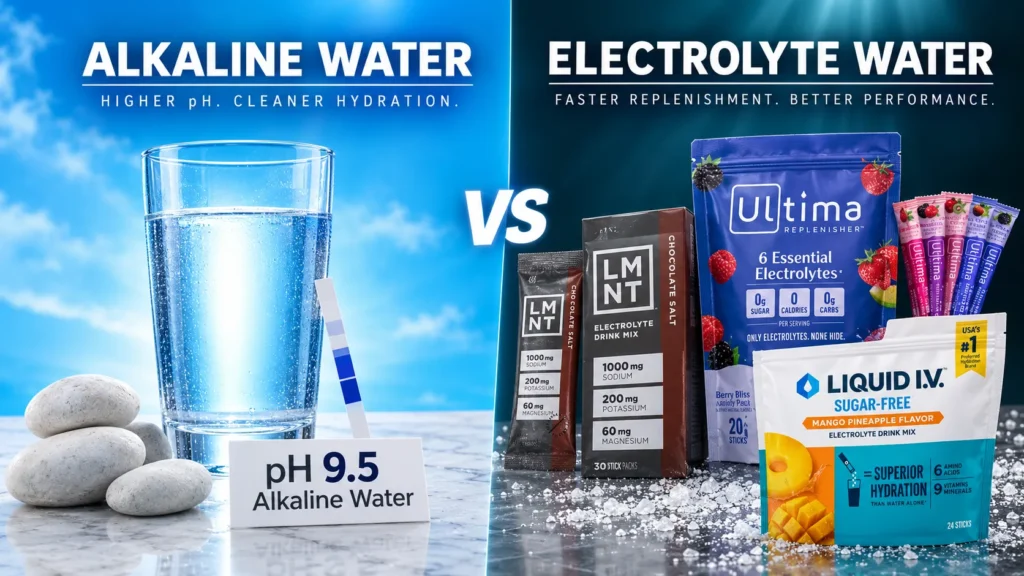
Alkaline vs electrolyte water is a comparison of two different features: alkaline water has a higher pH, while electrolyte water contains minerals such as sodium, potassium, or magnesium. For routine hydration, plain water is often sufficient. Electrolyte water may be more useful after prolonged exercise, heavy sweating, vomiting, or diarrhea, while evidence that alkaline water provides superior everyday hydration remains limited. The right choice depends on the situation, not the front-label promise.
Table of Contents
This alkaline vs electrolyte water guide cuts straight to what the science actually says, what the real difference between alkaline vs electrolyte products is, and which one your body actually needs for your specific situation.
| Sources: Eternal Water (2023), Bubs Naturals (Jan 2026), MayuWater (Feb 2025), Tahoe Springs Water (Sept 2024), Seychelle.com, NIH Office of Dietary Supplements, and peer-reviewed research on ORS hydration. Not medical advice. |
What Is Alkaline Water?
Alkaline water is defined purely by its pH level. Regular tap and filtered water sits at a neutral pH of 7. Alkaline water measures between 7.5 and 9.5 on the pH scale – above neutral, toward the alkaline end. That higher pH is the entire premise of the product. Everything else – taste, marketing, health claims – flows from that single measurement.
What Makes Water Alkaline?
According to Bubs Naturals’ January 2026 clinical breakdown, alkaline water gets its elevated pH through two primary mechanisms. First, natural spring water can become alkaline as it passes over rocks and picks up calcium, magnesium, and potassium – minerals that raise pH naturally. Second, artificially alkaline water is produced through electrolysis – an ionization process that separates acidic and alkaline molecules in the water using electrical current and ion exchange membranes.
Natural alkaline water carries mineral content that explains the pH. Artificially ionized alkaline water raises the pH without necessarily adding nutritionally meaningful mineral amounts. The distinction matters when evaluating alkaline water with electrolytes benefits – natural sources deliver both, while ionized products may only deliver the pH change.
What Does the pH Scale Actually Mean?
The pH scale runs from 0 to 14. Below 7 is acidic. Seven is neutral. Above 7 is alkaline (also called basic). Your stomach acid sits at a pH of 1.5-3.5 – extremely acidic, by design, to break down food and kill pathogens. Your blood maintains a remarkably tight pH range of 7.35-7.45, regulated continuously by your kidneys and lungs. Understanding this matters for evaluating whether alkaline water does anything meaningful inside your body – which we cover next.
The Core Difference Between Alkaline vs Electrolyte Water
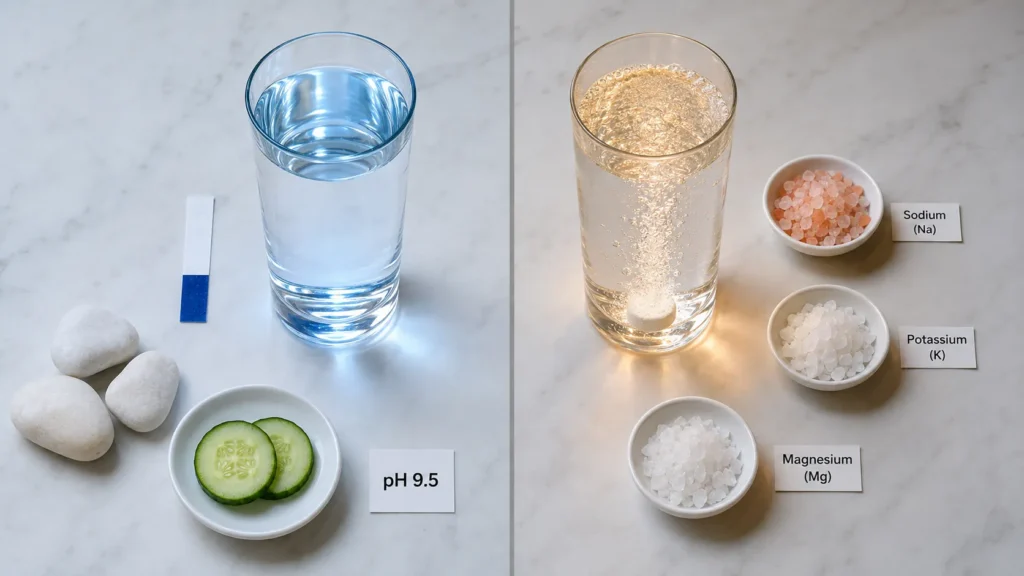
The difference between alkaline vs electrolyte comes down to one fundamental question: what is each product actually trying to do?
Alkaline water is about pH. Its entire premise is that a higher pH has health benefits – better internal balance, smoother digestion, acid neutralization. The minerals it contains (when it contains them) are secondary to the pH-raising goal. As Bubs Naturals’ January 2026 breakdown summarizes: “when we talk about alkaline water, we’re primarily referring to its pH level.”
Electrolyte water is about mineral delivery. Its premise is that specific minerals in the right concentrations replace what your body loses through sweat, illness, or physical stress. The pH of electrolyte water is often secondary or irrelevant – what matters is the sodium, potassium, magnesium, and calcium content and how effectively they restore cellular hydration.
In electrolyte water vs alkaline water terms, you can think of it this way: alkaline water is a lifestyle product centered on pH; electrolyte water is a functional product centered on mineral replenishment. Some products combine both – alkaline water with added electrolytes – which is a distinct third category covered below.
What Is Electrolyte Water?
Electrolyte water is functional hydration – water enhanced with minerals that carry an electrical charge. Those minerals are sodium, potassium, magnesium, and calcium. They’re classified as electrolytes specifically because they dissolve in water and conduct electricity, enabling the electrical signals your cells, nerves, and muscles use to communicate and contract.
What Makes Water an Electrolyte Drink?
Regular water contains trace minerals but not in concentrations that significantly impact your electrolyte balance. Electrolyte water is fortified – minerals are added in clinically relevant amounts specifically to replace what the body loses through sweat, illness, or physical output. The NIH Office of Dietary Supplements potassium fact sheet confirms that potassium alone supports heart function, muscle contraction, and fluid balance – none of which alkaline water specifically addresses.
According to Tahoe Springs Water’s September 2024 alkaline water vs electrolyte water clinical comparison: “electrolyte water is water that has been enhanced with sodium, potassium, calcium, and magnesium which are essential for various bodily functions.” The distinction from alkaline water is clear – electrolytes are about mineral function, not pH level.
Alkaline vs Electrolyte Water – Full Comparison
| Feature | Alkaline Water | Electrolyte Water |
| Primary purpose | Higher pH / internal balance | Mineral replenishment |
| pH level | 7.5 – 9.5 | 5 – 8 (varies by product) |
| Key components | Minerals that raise pH (Ca, Mg, K) | Sodium, potassium, magnesium, calcium |
| Electrolyte content | Low to moderate (natural) | High and targeted |
| Made by | Natural springs or ionization | Mineral fortification |
| Sugar content | None | 0 g (clean products) to 11-34 g |
| Changes blood pH? | No | No |
| Best for | General wellness, acid reflux support | Exercise, illness, sweat replacement |
| Scientific evidence | Limited | Well-established (ORS research) |
| Cost per serving | $1.50-4.00 (bottled) | $0.37-2.50 (powder) |
| Verdict | Lifestyle choice | Functional hydration tool |
Can Alkaline Water Actually Change Your Blood pH?
This is the most important myth to address in any honest alkaline vs electrolyte water comparison. The short, evidence-backed answer: no, alkaline water does not meaningfully change your blood pH. And that’s a good thing – not a limitation.
Your body maintains blood pH between 7.35 and 7.45 with remarkable precision. It uses three simultaneous systems: the bicarbonate buffer system in the blood, respiratory rate control through your lungs, and renal (kidney) excretion of acid or base. When you drink alkaline water at pH 9, your stomach acid – sitting at pH 1.5 – immediately neutralizes it before it reaches your bloodstream. Bubs Naturals’ January 2026 summary of the science put it directly: “your kidneys and lungs work around the clock to keep this balance tight.”
If blood pH actually shifted significantly in either direction, it would indicate a serious medical emergency (alkalosis or acidosis), not better hydration. So alkaline water’s claim to “alkalize your body” is physiologically inaccurate – your body won’t allow meaningful blood pH change, and you don’t want it to.
Alkaline Water With Electrolytes Benefits – The Best of Both

Here’s where the category gets genuinely interesting. Natural alkaline water from mineral springs doesn’t just have a higher pH – it also contains naturally occurring calcium, magnesium, and potassium that give it mild electrolyte properties alongside the pH elevation. Bubs Naturals’ September 2025 exploration of alkaline water with electrolytes benefits noted: “alkaline water may offer better hydration through its electrolytes, facilitating faster absorption and utilization within the body.”
Products that specifically combine ionized alkaline water with added electrolytes – like some premium filtered water products – attempt to deliver both benefits simultaneously: the potential acid-buffering effects of higher pH alongside the functional mineral replacement that electrolyte water provides. For people managing occasional acid reflux alongside active lifestyles, alkaline water with electrolytes benefits this dual-action positioning.
The honest assessment from clinical sources: the electrolyte component of such products carries well-established hydration science behind it. The alkaline component’s specific benefits are more limited in current peer-reviewed research. If you’re choosing a combined product, you’re primarily paying for the electrolytes and getting the pH as a secondary feature.
Does Alkaline Water Help With Acid Reflux?
This is actually one of the more credible claims in the alkaline water conversation. Acid reflux (GERD) occurs when stomach acid backs up into the esophagus. The esophageal lining is not designed to handle the acidity of stomach contents – which is what causes the burning sensation.
A 2012 in vitro study published in the Annals of Otology, Rhinology & Laryngology found that water at pH 8.8 permanently inactivated pepsin, the enzyme associated with reflux damage to the esophagus. Bubs Naturals’ 2026 summary noted that alkaline water “can help neutralize acid in the digestive tract, making it a popular choice for those dealing with occasional acid reflux.” This is one of the few areas where some scientific basis exists for a specific alkaline water benefit.
Electrolyte Water vs Alkaline Water After a Workout

This is the clearest use-case comparison in the electrolyte water vs alkaline water debate – and sports science has a definitive answer.
During exercise, you lose sodium and chloride through sweat (the primary sweat electrolytes), along with potassium, magnesium, and smaller amounts of calcium. Your muscles require sodium to maintain cellular fluid balance, potassium to complete the contraction-relaxation cycle, and magnesium for the hundreds of enzymatic reactions involved in energy production. Per the NIH Office of Dietary Supplements magnesium fact sheet, magnesium supports muscle function and energy metabolism – both directly affected by exercise.
Alkaline water replaces none of these specifically. Its pH doesn’t address sodium loss or potassium depletion. MayuWater’s February 2025 analysis confirmed: “if you’re an active individual seeking optimal performance, electrolyte water might be for you.” Electrolyte water gives your muscles what they actually lost. Alkaline water gives them a pH environment they didn’t specifically need after sweating.
Post-workout verdict: electrolyte water wins this comparison clearly. Alkaline water is a reasonable daily beverage but not a functional post-exercise recovery tool. For a full breakdown of the best electrolyte powders for post-workout recovery, our best electrolyte drink guide covers the complete market.
How to Make Alkaline Water at Home
If the pH question interests you but you’re not ready to spend $3+ per bottle, several how to make alkaline water methods work at home with verified results:
- Baking soda method: Add 1/8 teaspoon of baking soda (sodium bicarbonate) per 8 oz of water. This raises pH meaningfully – typically to 8.0-8.5. Note: adds ~300 mg sodium per serving, which is relevant for people monitoring sodium intake per the
- Lemon water method: Counterintuitively, lemons are acidic outside the body but their metabolic ash is alkaline. Adding lemon to water raises the alkaline mineral content modestly, though the pH effect is less predictable than baking soda
- pH drops: Concentrated mineral alkalizing drops available at health stores raise pH when added to regular water. Typically contain trace minerals including magnesium and potassium
- Water ionizer: Electric ionizer machines use electrolysis to separate water into acidic and alkaline streams. These are the same technology used in Japan’s medical ionizer devices. Cost: $200-$3,000+ depending on quality
- Mineral water from springs: Some natural mineral waters have naturally alkaline pH from dissolved calcium and magnesium. No processing required – just choose brands whose labels show pH 7.5+
Of these how to make alkaline water methods, the mineral spring approach and pH drops are the most straightforward for daily use without equipment. The baking soda method is fastest and cheapest but adds sodium that may not suit everyone.
3 Best Electrolyte Products Worth Knowing About
When the choice is between alkaline water vs electrolyte water for functional hydration goals, electrolyte products have the stronger evidence base. These three products from our review database at instanthydrationicee.com represent the cleanest options by use case:
1. LMNT – Best for Performance and Active Lifestyles
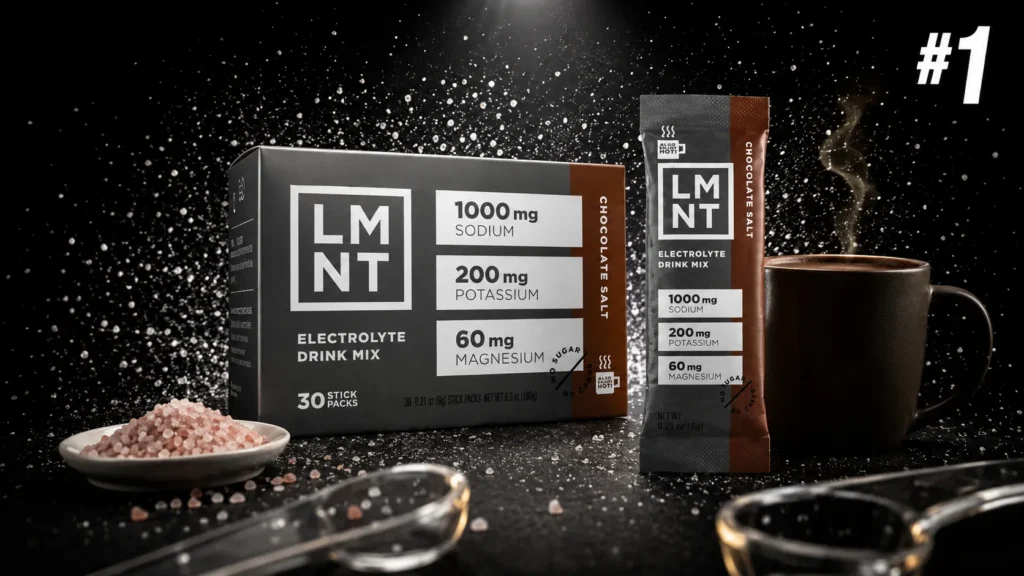
LMNT delivers 1,000 mg sodium, 200 mg potassium, and 60 mg magnesium malate per packet with zero sugar and zero artificial additives. For anyone choosing electrolyte water vs alkaline water specifically to replace sweat losses during exercise, LMNT’s sodium-forward formula addresses the primary electrolyte lost in sweat most directly. Our full can you drink LMNT everyday guide covers daily use parameters in detail.
2. Ultima Replenisher – Best for Broad Daily Mineral Coverage
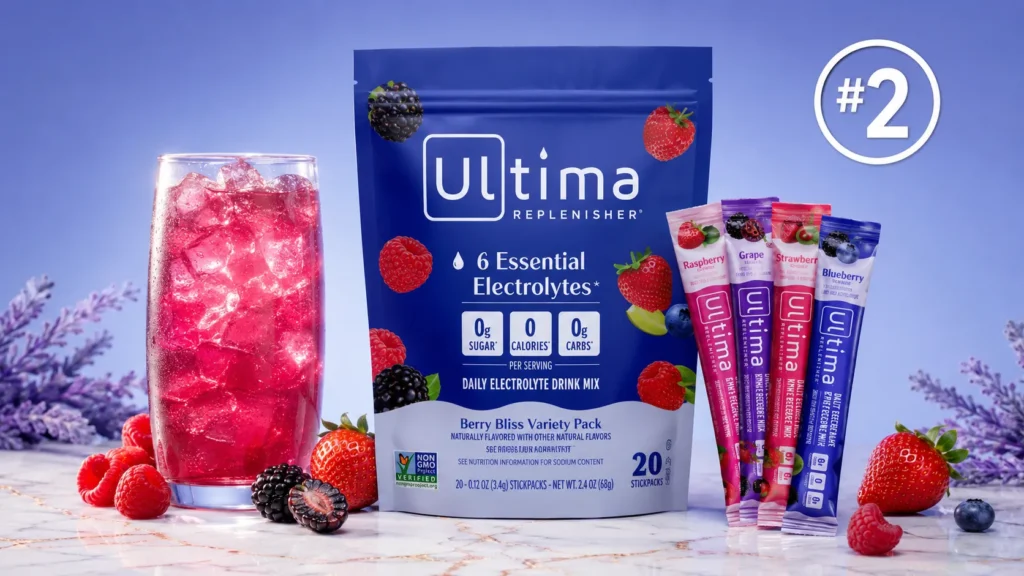
Ultima Replenisher provides 100 mg of magnesium, 250 mg of potassium, calcium, zinc, and chloride – six electrolytes in one zero-sugar serving, at roughly $0.37 per serving in canister format. For people who want the alkaline water with electrolytes benefits concept but prefer a powder they can add to any water, Ultima covers a broader mineral spectrum than most competitors. Our Ultima vs LMNT comparison breaks down every meaningful difference.
3. Liquid IV – Best for Absorption Speed and Illness Recovery
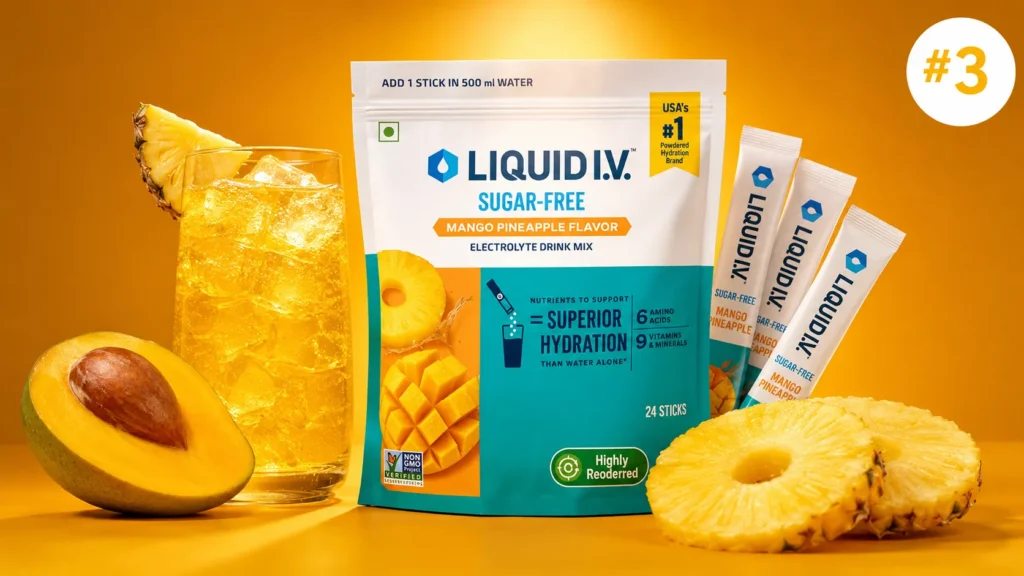
Liquid IV’s WHO ORS-calibrated formula uses the sodium-glucose cotransport mechanism to accelerate fluid absorption into the bloodstream – particularly relevant for illness recovery where fluid retention per sip matters. At 500 mg sodium and 370 mg potassium, it covers both primary electrolytes with a range of 15+ flavors. It’s a solid answer to electrolyte water vs alkaline water when illness or quick rehydration is the goal.
Who Should Choose Alkaline Water vs Electrolyte Water
- Choose Alkaline Water if you: – Prefer a wellness-oriented daily water with a smooth taste – Experience occasional mild acid reflux and want a complementary support – Have low activity levels and adequate dietary mineral intake – Want natural spring mineral water without added ingredients – Are interested in the Japanese longevity water tradition (ionized kangen-style)
- Choose Electrolyte Water if you: – Exercise regularly or work outdoors in heat with significant sweat output – Are recovering from illness (stomach flu, vomiting, diarrhea) – Follow keto, low-carb, or fasting protocols that accelerate sodium excretion – Experience frequent muscle cramps or nighttime leg cramps – Want clinically validated hydration with measurable mineral content
Final Verdict: Alkaline vs Electrolyte Water
The honest alkaline vs electrolyte water conclusion: they solve different problems, and understanding that difference is everything.
Alkaline water is a lifestyle choice centered on pH. The science for most of its health claims is limited – it doesn’t change your blood pH, it doesn’t meaningfully hydrate better than regular water for most people, and most of its marketed benefits remain speculative. The one credible exception is mild acid reflux relief, where the pH chemistry has at least some in vitro support.
Electrolyte water is a functional hydration tool backed by decades of clinical research in sports medicine, illness recovery, and ORS science. The minerals it contains address real physiological processes – fluid retention, nerve signaling, muscle contraction – with mechanisms that don’t depend on a study manufacturer’s marketing claims. When your body genuinely needs rehydration, electrolyte water vs alkaline water is not a close comparison.
The nuanced real-world answer: alkaline water from natural mineral springs is a pleasant daily drinking water that’s unlikely to harm and may offer mild benefits for some people. Electrolyte water in clean, zero-sugar form is the stronger functional investment for active, health-conscious US adults. And if the label says “alkaline water with added electrolytes” – you’re primarily buying the electrolytes, with the pH as a bonus. Spend accordingly.
| Disclaimer: This article is for informational purposes only. Consult a qualified healthcare provider for advice tailored to your specific health conditions, particularly if you have kidney disease, hypertension, or digestive conditions. Neither alkaline water nor electrolyte water replaces medical treatment. |
Frequently Asked Questions
Direct answers to every searched question about alkaline vs electrolyte water.
Is alkaline water the same as electrolyte water?
No. Alkaline water is defined by its elevated pH (7.5-9.5). Electrolyte water is defined by its mineral content (sodium, potassium, magnesium, calcium). Some products combine both, but they address different things at their core.
What is the pH level of alkaline water vs. electrolyte water?
Alkaline water: pH 7.5-9.5, above neutral. Electrolyte water: pH varies by product, typically 5-8. Neither changes blood pH (maintained 7.35-7.45 by your kidneys and lungs regardless of what you drink).
Which is better for hydration, alkaline water or electrolyte water?
Electrolyte water, for functional hydration. It replaces specific minerals lost through sweat. Alkaline water doesn’t contain meaningful electrolyte concentrations in most commercial products. For general daily drinking, both are fine.
Can you drink alkaline water every day?
Yes, for most healthy adults. No established upper limit exists for alkaline water consumption. Excessive use (beyond 2-3 liters/day at pH 9+) may mildly affect stomach acid over time – a precaution primarily for people with digestive conditions.
Does alkaline water contain electrolytes?
Natural alkaline spring water contains naturally occurring calcium, magnesium, and potassium – yes. Artificially ionized alkaline water may not contain meaningful mineral amounts. Always check the label for actual mineral content.
Is electrolyte water better than alkaline water after a workout?
Yes. Exercise depletes sodium, potassium, and magnesium through sweat. Electrolyte water replaces these directly. Alkaline water’s pH doesn’t address sweat losses. Sports science clearly supports electrolyte water for post-exercise recovery.
What are the health benefits of alkaline water?
Limited but real: some evidence for mild acid reflux support through pepsin inactivation. Claims about blood pH alteration, cancer prevention, or anti-aging are not supported by peer-reviewed clinical evidence. It’s a wellness lifestyle product, not a medical intervention.
Can drinking too much electrolyte water be harmful?
Yes, in excess. Too much sodium can raise blood pressure. Excess potassium risks hyperkalemia in people with kidney disease. One to two servings per day of a balanced electrolyte drink is safe for healthy adults – always check the sodium content per serving.
How is alkaline water made?
How to make alkaline water: naturally (water passes over calcium and magnesium rocks in springs), via electrolysis/ionizers, or at home with baking soda, lemon, or pH-raising mineral drops. Natural spring alkaline water contains actual minerals; ionized water primarily changes the pH structure.
Should you drink alkaline water or electrolyte water when sick?
Electrolyte water. Illness causes fluid and mineral loss through vomiting and diarrhea. ORS-based electrolyte drinks replace sodium, potassium, and magnesium. Alkaline water doesn’t specifically address these losses and isn’t part of any clinical rehydration protocol.
Does alkaline water help with acid reflux?
There’s some evidence. A 2012 in vitro study found water at pH 8.8 permanently inactivated pepsin, the reflux enzyme. For occasional mild reflux, alkaline water may offer complementary support – but isn’t a clinical replacement for lifestyle changes or medication.
Which is better for you, alkaline or electrolyte water?
Depends on your goal. For active hydration, exercise recovery, illness, or keto diets – electrolyte water. For general daily drinking with a wellness-focused approach – alkaline water is fine. For peak functional hydration, electrolyte water has the stronger evidence.
Why do I feel weird after drinking alkaline water?
High-pH water temporarily reduces stomach acid, which can cause mild nausea, bloating, or digestive discomfort – especially if consumed on an empty stomach. This typically resolves within a few hours. Try drinking it with food and reducing consumption if it continues.
Why do Japanese drink alkaline water?
Japan approved alkaline ionized water machines as medical devices in 1965, building decades of cultural trust. Japanese users credit it with digestive support and improved wellbeing. The cultural adoption preceded peer-reviewed research, and the tradition continues independently of Western clinical studies.
Who should not drink electrolyte water?
People with chronic kidney disease (impaired potassium and sodium excretion), those on potassium-sparing medications, individuals with severe hypertension on strict low-sodium diets, and anyone advised by their doctor to limit mineral intake should consult a healthcare provider first.
This article contains affiliate links. If you purchase through our links, we may earn a commission at no extra cost to you. We only recommend products we genuinely believe in. Read our Affiliate Disclaimer for full details.