Quick Takeaways
- Sweat sodium losses range from about 200 mg to over 1,000 mg per hour depending on the runner
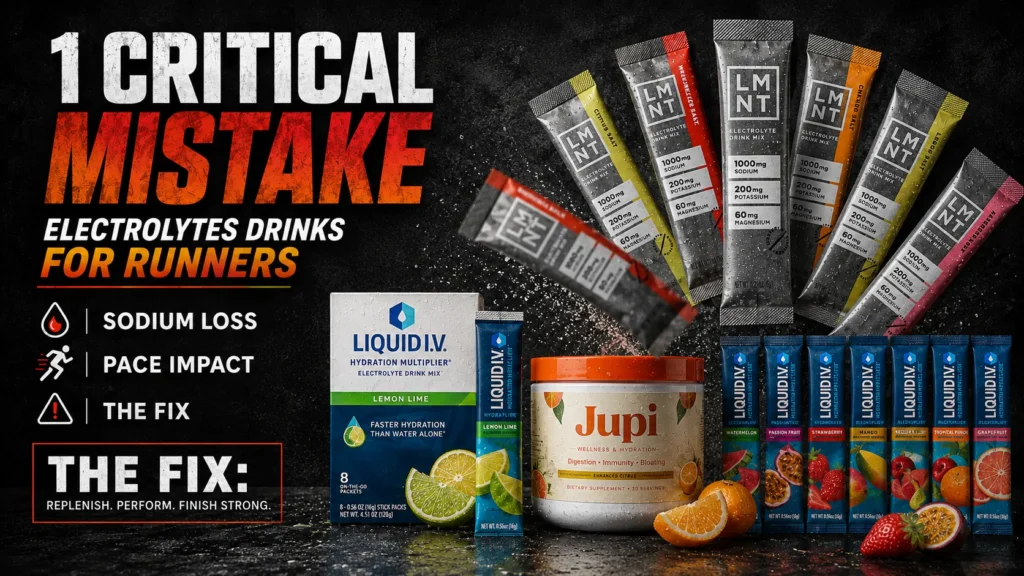
- LMNT, Liquid IV, and Jupi are among the best electrolyte packets for different sweat and stomach needs
- Plain water alone during long runs can dilute blood sodium and backfire
- Homemade electrolyte drinks work fine for most training runs
Somewhere around mile eight, your legs stop being the problem and your stomach starts cramping instead, or worse, your calf locks up like a rusty hinge. That’s usually a sodium problem, not a fitness problem. Choosing the right electrolytes drinks for runners isn’t about grabbing whatever’s on the shelf at the gas station, it’s about matching sodium, potassium, and fluid to what you’re actually sweating out. Later, we’ll show you how to make your own electrolyte drink for a fraction of the cost of a subscription box.
Table of Contents
Why Runners Need Electrolytes, Not Just Water
Sweat isn’t just water leaving your body, it’s water carrying sodium, potassium, chloride, and magnesium out with it. Replace only the water and you dilute what’s left in your bloodstream, which is exactly how hyponatremia happens during long runs. The American College of Sports Medicine’s position stand on fluid replacement specifically warns that plain water alone, without sodium, raises that risk during extended exercise.
The FDA’s Daily Value guidance for sodium sits under 2,300 mg for a typical day. Runners sweating through a long summer run can lose several hundred milligrams of that in a single hour, which is why electrolyte drinks for running exist in the first place, not as a marketing gimmick, but as a practical fix for a real physiological gap.
How Much Sodium Do Runners Actually Lose?
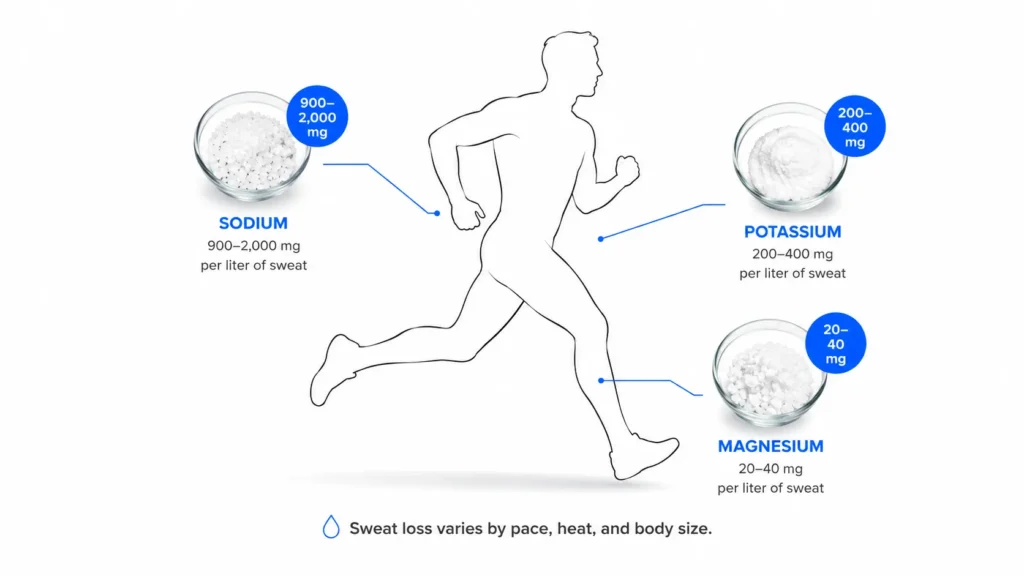
Sweat sodium concentration varies wildly by person. Research reviewed by sports nutritionists puts the average runner’s sodium loss around 200 to 300 mg per hour, while heavy salty sweaters, the ones who finish a run with white salt lines on their hat, can lose over 1,000 mg hourly. The American College of Sports Medicine recommends 500 to 700 mg of sodium per liter of fluid during exercise lasting longer than an hour.
You don’t need a lab test to get a rough idea. If your skin, clothes, or gear crust over with visible salt after a run, you’re likely on the higher end of sodium loss. That’s usually the clearest sign you need electrolyte drinks for running rather than just refilling your water bottle.
Signs Your Electrolytes Are Running Low Mid-Run
- Muscle cramping, especially in calves or hamstrings late in a run
- Unusual fatigue that hits harder than the mileage should explain
- Headache or dizziness in hot, humid conditions
- Nausea despite drinking what feels like enough fluid
- Salt crust visible on skin, hat, or clothing after sweating
None of these symptoms guarantee a sodium problem specifically, cramping in particular has several possible causes, but they’re common enough triggers to reach for an electrolyte drink rather than just more plain water.
Best Electrolyte Packets for Runners: LMNT, Liquid IV, and Jupi Compared
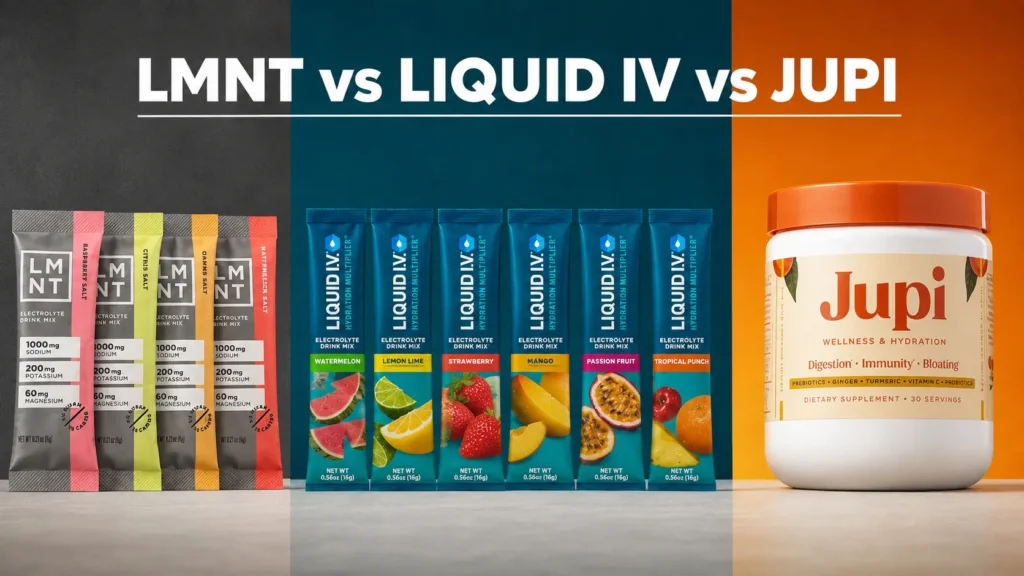
Not every packet is built for the same situation. Here’s how three of the best electrolyte packets for runners actually compare on paper, not just marketing copy.
| Brand | Sodium | Sugar | Best For |
| LMNT | 1,000 mg | 0 g | Heavy sweaters, long runs, hot weather |
| Liquid IV | ~500 mg | 11 g | Moderate sweat loss, flavor variety |
| Jupi Hydration | ~400 mg | 0 g | Lighter sodium needs, sensitive stomachs |
*Approximate values per manufacturer labels; check current packaging and flavor for exact figures.
LMNT delivers 1,000 mg of sodium, 200 mg of potassium, and 60 mg of magnesium per stick with zero sugar, making it one of the highest-sodium options built specifically for heavy sweat loss. That’s roughly double what most sports drinks offer, useful for marathoners and hot-weather training, likely overkill for a short easy jog.
If you’re deciding which flavor to start with, our best LMNT flavors roundup ranks them from an actual blind taste test.
Liquid IV takes a different approach, pairing about 500 mg of sodium with 11 grams of sugar using its Cellular Transport Technology, modeled on World Health Organization oral rehydration science. The added sugar helps some runners absorb fluid faster, but it also means Liquid IV isn’t one of the low sugar electrolyte drinks on this list.
Jupi Hydration takes a gentler route, blending about 400 mg of sodium with ginger, turmeric, and digestive-support ingredients instead of a high-sodium punch. It’s less of a dedicated sports formula and more of a hybrid wellness drink, which makes it a reasonable pick for runners with sensitive stomachs who still want electrolytes.
Our full Jupi Hydration Reviews breakdown covers the ingredient list and digestive claims in more detail.
Salt Tablets While Running: Do You Need Them?
Salt tablets while running solve a specific problem: getting concentrated sodium without chugging extra fluid you don’t need. SaltStick Caps, one of the most common options, deliver 215 mg of sodium, 63 mg of potassium, and 11 mg of magnesium per capsule, typically taken every 30 to 60 minutes during exercise.
Salt tablets while running make the most sense for marathoners, ultrarunners, and heavy sweaters logging more than 90 minutes in the heat. For a 30-minute neighborhood loop, they’re solving a problem you probably don’t have yet. Testing salt tablets while running for the first time on race day is one of the most common rookie mistakes, always trial them in training first.
Low Sugar Electrolyte Drinks for Runners

Low sugar electrolyte drinks for runners matter for two reasons: less stomach upset mid-run, and less unnecessary sugar on training days that don’t need extra fuel. LMNT and most Jupi formulas fall into this category with zero grams of sugar, while Liquid IV and traditional sports drinks lean sweeter to help with fast carbohydrate delivery during longer efforts.
For runs under an hour, ACSM’s own guidance notes little performance difference between plain water and a carbohydrate-electrolyte drink, so a low sugar electrolyte drinks for runners approach usually makes more sense than a sugary sports drink for short, easy miles.
How to Make Your Own Electrolyte Drink
Learning how to make your own electrolyte drink is genuinely simple and considerably cheaper than a subscription box. Mix 1 liter of water with a quarter to half teaspoon of salt, the juice of one orange or lemon for potassium and flavor, and a tablespoon of honey or sugar if you want a carbohydrate boost for runs over an hour.
This isn’t a random internet hack, it mirrors the same sodium-glucose pairing brands like LMNT and Liquid IV are built around, and the minerals involved play the roles described in the NIH Office of Dietary Supplements potassium fact sheet. If you want to learn how to make your own electrolyte drink with more precision, weigh your salt rather than eyeballing it, since teaspoon size varies by brand.
Electrolyte Drinks vs. Traditional Sports Drinks
Traditional sports drinks like Gatorade were built for a broad audience, not specifically for endurance runners, and often carry high sugar with modest sodium. Specialty electrolyte drinks for running typically flip that ratio, more sodium, less sugar, since long-distance sweat loss is the actual problem being solved. When people search for the best electrolyte packets, they’re usually comparing single-serving options like these rather than bulk tub powders.
Curious how a traditional sports drink stacks up against a specialty electrolyte mix? Our Body Armor vs Gatorade comparison breaks down the sugar and sodium differences in detail.
That doesn’t make traditional sports drinks useless, they still supply fast carbohydrates during long races. Pairing one with a higher-sodium option like LMNT or a salt tablet often covers more bases than either alone, especially once you’re past the 90-minute mark.
Electrolyte Drinks for Running: Before, During, and After
Timing changes what you need. Electrolyte drinks for running work best in three phases: a normal meal with fluids two hours before, small regular sips during runs over an hour, and a fuller electrolyte drink afterward to replace what training took out of you.
- Before: about 500 ml (roughly 17 oz) of fluid two hours pre-run, per ACSM guidance
- During: 600 to 1,200 ml per hour for runs over 60 minutes, sipped steadily, not chugged
- After: replace both water and sodium, not water alone, especially after a sweaty session
Common Mistakes Runners Make With Hydration
- Drinking large amounts of plain water during long runs without any sodium
- Waiting until you feel thirsty to start drinking on a hot day
- Trying a new electrolyte drink or salt tablet for the first time on race day
- Assuming more electrolytes always means better performance
- Ignoring your own sweat rate and copying someone else’s hydration plan exactly
Final Thoughts: Choosing Your Electrolyte Drink for Running
There’s no single best pick among these electrolytes drinks for runners, only the one that matches your sweat rate, run length, and stomach tolerance. Heavy sweaters logging long miles in the heat lean toward LMNT or salt tablets. Moderate sweaters wanting flavor variety may prefer Liquid IV. Sensitive stomachs might do better with Jupi or a homemade mix. Whichever you land on among the best electrolyte packets, matching sodium to sweat loss matters more than the brand name. Test everything in training, never on race day.
This article is for informational purposes only and isn’t a substitute for professional medical or sports nutrition advice. Talk to a doctor or sports dietitian if you manage a chronic health condition or have specific sodium restrictions.
Frequently Asked Questions
What is the best electrolyte drink for runners?
There’s no single best among electrolytes drinks for runners overall. Heavy sweaters often do well with LMNT’s 1,000 mg sodium formula, while moderate sweaters may prefer Liquid IV or a homemade mix.
How do I know if I need electrolytes during a run?
Runs under 60 minutes in mild weather rarely need them. Longer runs, hot weather, or visible salt residue on your skin or clothes are signs you likely do.
Are salt tablets better than electrolyte drinks for running?
Neither is universally better. Salt tablets while running deliver concentrated sodium without extra fluid, while drinks combine hydration and electrolytes together. Many runners use both.
Can I make my own electrolyte drink for running?
Yes. Mixing water, a pinch of salt, citrus juice, and a bit of honey shows how to make your own electrolyte drink that mirrors the ratios used in commercial brands.
Is Liquid IV good for runners?
Liquid IV works well for moderate sweat loss and flavor variety, though its 11 grams of sugar per packet makes it less ideal for short, easy training runs.
How much sodium do runners need per hour?
ACSM recommends 500 to 700 mg of sodium per liter of fluid during exercise longer than an hour, though needs vary by individual sweat rate.
Do low sugar electrolyte drinks work as well as sugary ones?
For runs under an hour, yes. For longer efforts, some carbohydrate can help maintain energy, so a mix of low sugar and moderate sugar options often works best.
Is LMNT good for marathon training?
LMNT’s high sodium content, 1,000 mg per stick, suits marathoners and heavy sweaters well, particularly during long runs in hot weather.
Can too much electrolyte drink hurt performance?
Yes. Overdoing sodium or fluid intake can cause stomach distress or, in rare cases, contribute to electrolyte imbalances. Match intake to your actual sweat losses.
When should runners start drinking electrolytes during a race?
Most guidance suggests starting within the first 20 to 30 minutes of a race lasting over an hour, rather than waiting until thirst or cramping sets in.
This article contains affiliate links. If you purchase through our links, we may earn a commission at no extra cost to you. We only recommend products we genuinely believe in. Read our Affiliate Disclaimer for full details.