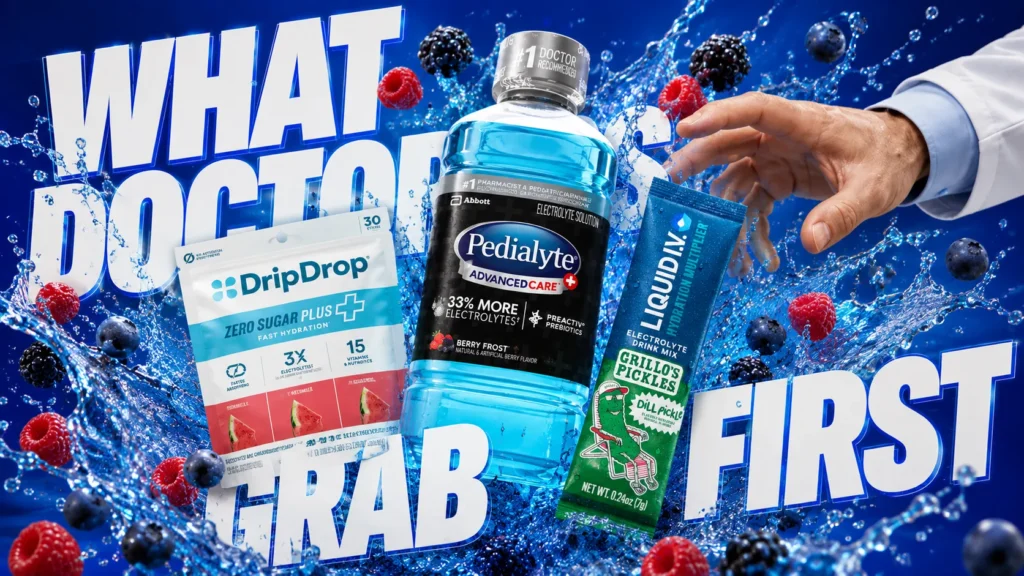
The best electrolyte drink when sick depends on what is causing fluid loss and how severe it is. Oral rehydration products that combine sodium and glucose can be useful when vomiting or diarrhea makes it difficult to replace fluids, while ordinary water and food may be enough for a mild illness without significant losses. This guide compares Pedialyte, DripDrop, and Liquid I.V. and explains when symptoms require medical care rather than another drink.
Table of Contents
Quick answer: for most healthy adults, Pedialyte, DripDrop ORS, and Liquid IV rank as the best electrolyte drink when sick, since each pairs sodium with a calibrated amount of sugar so your gut actually absorbs the fluid instead of letting it pass straight through. Keep one stocked before flu season hits, not after the first cough.
Quick Takeaways
- Water alone won’t fix dehydration from illness – your body needs sodium and potassium too
- Pedialyte, DripDrop ORS, and Liquid IV are the top 3 best electrolyte drink when sick picks for most healthy adults
- Sip small amounts frequently rather than chugging a full glass at once
- Seek medical care if you can’t keep fluids down for 12 or more hours
Why Plain Water Isn’t Enough When You’re Sick
When you’re sick, you lose more than water. Fever sweats, vomiting, diarrhea, and even a constantly runny nose drain sodium, potassium, and chloride at the same time. Drinking large amounts of plain water without replacing those minerals can dilute the sodium already in your blood, a condition doctors call hyponatremia. That’s the honest reason you can down three glasses of water and still feel wrung out an hour later.
The FDA’s guidance on sodium in your diet explains that this mineral plays a central role in regulating fluid balance throughout the body. When illness pulls sodium out faster than usual, water alone cannot restore that balance. This is exactly why the best drink for electrolytes when sick pairs water with minerals in the right ratio, instead of assuming plain water will handle everything on its own.
Signs You’re Dehydrated From Being Sick
Dehydration can sneak up during illness, especially with fever or vomiting involved. Watch for these signs before reaching for whatever’s cold in the fridge.
- Dark yellow urine or noticeably less frequent urination than normal
- Dry mouth, cracked lips, or a headache that won’t ease with rest
- Dizziness or lightheadedness when standing up too quickly
- Unusual fatigue that feels heavier than typical illness tiredness
- Rapid heartbeat or sunken eyes in more severe cases
Catching these signs early means reaching for the best electrolyte drink when sick before dehydration snowballs into something that needs an ER visit instead of a nap and a bottle on the nightstand.
How Electrolytes Actually Help You Recover

The science is simpler than it sounds. Sodium and glucose share a transport channel in your small intestine. When they travel together in the right ratio, your gut pulls water into the bloodstream faster than water can move on its own. This cotransport mechanism is precisely why identifying the best drink for electrolytes when sick beats guessing at random home remedies pulled from a decade-old family recipe box.
That’s also why sugary sports drinks aren’t automatically the best electrolyte drink when sick for adults. Too much sugar without matching sodium can worsen diarrhea by pulling fluid into the gut instead of out of it. Balance beats sweetness every time, even if the fruit-punch flavor is more fun to drink at 2 a.m.
What Electrolytes Your Body Loses When You’re Sick
Every fever, vomiting episode, or bout of diarrhea drains a specific set of minerals. Understanding what’s actually leaving your body clarifies why a single mineral rarely does the whole job on its own.
- Sodium – lost through sweat, vomiting, and diarrhea; controls how much fluid your cells and blood vessels hold onto
- Potassium – depleted by diarrhea and low appetite; supports muscle and heart function, according to the NIH Office of Dietary Supplements
- Chloride – travels alongside sodium; helps maintain healthy stomach acid and fluid balance
- Magnesium – runs low during prolonged illness; low levels can worsen fatigue and muscle cramping
- Zinc – not a classic electrolyte, but commonly depleted during colds and linked to slower recovery time
Losing even one of these minerals for several days can leave you feeling foggy and drained well after your fever breaks. That’s why choosing the best electrolyte drink for dehydration isn’t only about feeling better today, it’s about giving your body what it needs to fully recover instead of limping along at 70 percent.
For the full mineral picture, see the NIH Office of Dietary Supplements potassium fact sheet, which breaks down daily needs and food sources in plain language.
How Much Sodium Do You Actually Need When Sick
Per FDA guidance, the general Daily Value for sodium sits under 2,300 mg for healthy adults, and most Americans already consume more than that through packaged food alone. Illness is different territory, though. Fever, vomiting, and diarrhea can temporarily push your sodium needs higher than your everyday baseline, which is exactly why electrolyte drinks matter more when you’re sick than when you’re healthy. This isn’t a green light to load up on salt indefinitely, just a note that sick-day math looks different from an average Tuesday.
Best Electrolyte Drink When Sick – Top 3 Picks Reviewed
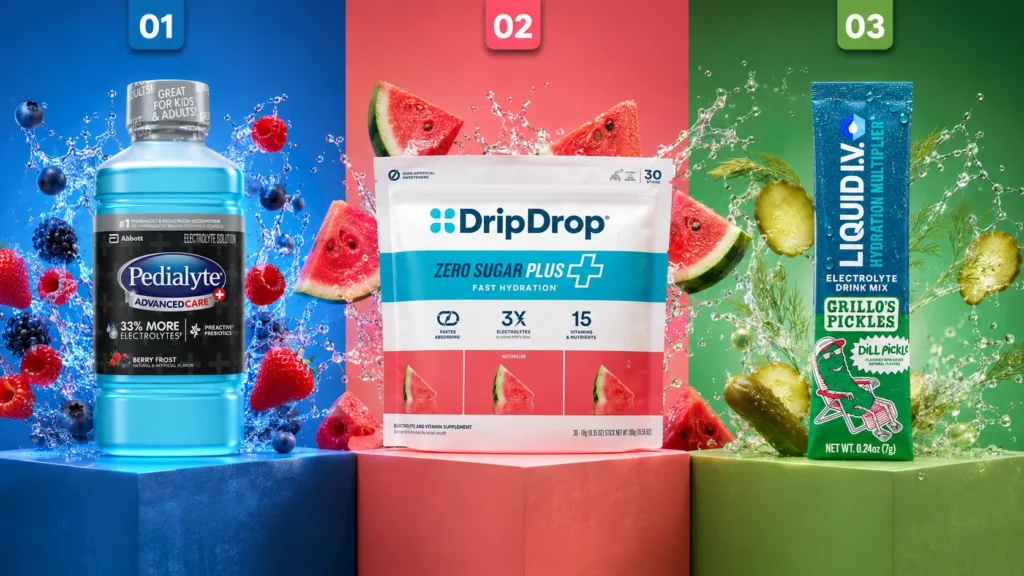
We compared sodium content, sugar levels, and real-world usability for people who can barely stand up long enough to read a label. These three consistently rank as the best electrolyte drink when sick across pharmacy shelves, hospital recommendations, and independent reviews.
| Product | Sodium* | Sugar* | Formula Style | Best For |
| Pedialyte | ~490 mg | ~9 g | ORS-based | Adults & kids, general illness |
| DripDrop ORS | ~330 mg | ~7 g | WHO ORS formula | Dehydration, fast fluid loss |
| Liquid IV | ~500 mg | ~11 g | Cellular Transport Tech | Flavor variety, everyday illness |
*Approximate values per manufacturer nutrition label; always check current packaging for exact figures.
#1 Pedialyte – Best Electrolyte Drink When Sick for Adults and Kids
Pedialyte built its reputation in pediatric hospitals, but adults reach for it just as often now. Each serving delivers a sodium-to-sugar ratio designed to activate absorption without upsetting an already irritated stomach. It’s sold at nearly every US pharmacy, which matters when you’re sick at midnight and don’t want to shop around. For households managing both kids and adults through the same flu season, Pedialyte is often cited as the best electrolyte drink when sick for adults and kids sharing one house, and one shopping cart.
Explore Pedialyte’s Full Lineup
#2 DripDrop ORS – Best Electrolyte Drink for Dehydration
DripDrop was built directly on World Health Organization oral rehydration science, originally developed for disaster relief and severe dehydration response. Its sodium content sits higher than typical sports drinks, which makes it the best electrolyte drink for dehydration when illness has you losing fluid fast through fever or stomach upset. It mixes into a single packet with water, so preparing it from bed takes under a minute – no measuring spoons, no math.
For a deeper breakdown of ORS-style drinks ranked specifically for stomach illness, see our guide on electrolyte drinks for stomach flu.
#3 Liquid IV – Best Drink for Electrolytes When Sick With Flavor Variety
Liquid IV uses Cellular Transport Technology, essentially the same sodium-glucose pairing found in clinical ORS, packaged into more than a dozen flavors. When nothing sounds appetizing, having that many options genuinely helps you finish the glass instead of leaving it half-full on the nightstand. For many people, the best drink for electrolytes when sick is simply the one they’ll actually keep drinking, and Liquid IV wins on that front alone.
If you’re weighing safety questions before stocking up, our article on Liquid IV and kidney health covers what the research actually says.
What to Drink When Sick With Flu (vs. a Cold or Stomach Bug)
Not every illness drains the same minerals. The flu often brings fever sweats and a vanished appetite, so what to drink when sick with flu should focus on steady sodium and potassium replacement alongside rest. A stomach bug, by contrast, drains fluid explosively through vomiting and diarrhea, so smaller, more frequent sips matter more than total volume gulped in one sitting.
CDC home-care guidance for flu recommends clear fluids and electrolyte drinks specifically to prevent dehydration, alongside rest and avoiding caffeine or alcohol. That advice hasn’t changed much over the years, because the underlying biology hasn’t either. When you’re asking what to drink when sick with flu at 11 p.m. with a thermometer in hand, the honest answer is simple: whichever electrolyte drink you’ll actually finish, sipped steadily rather than chugged once.
- Flu: warm broth, diluted electrolyte drinks, herbal tea with honey
- Common cold: water, electrolyte drinks, citrus-based fluids for vitamin C
- Stomach bug: small frequent sips of ORS-style drinks, ice chips, clear broth
No matter the diagnosis, the best drink for electrolytes when sick is always the one matched to what you’re actually losing, not the one with the flashiest can design.
Whether you’re wondering what to drink when sick with flu or recovering from a weekend stomach bug, these steps apply across the board. If you prefer a sugar-free option, our roundup of the best LMNT flavors is worth a look before you commit to a flavor blind.
Best Electrolyte Drink When Sick for Elderly Adults
Older adults dehydrate faster and often recognize thirst later than younger adults do, which makes proactive hydration essential rather than optional. The best electrolyte drink for elderly patients typically leans toward lower sugar, higher sodium formulas, and should be introduced with a doctor’s guidance if kidney disease or blood pressure medication is already part of the picture. This isn’t a category where guessing is a good strategy.
Family caregivers often ask what the best electrolyte drink for elderly relatives should be during cold and flu season. Because of its gentle, well-studied formulation, Pedialyte is frequently cited as the best electrolyte drink for elderly users managing multiple medications. Sneaking a packet into grandpa’s water bottle counts as an act of love, not a conspiracy, so don’t feel sneaky about it.
Gatorade vs. Water vs. Electrolyte Drinks: What Actually Hydrates You
Regular Gatorade was designed for athletes losing sodium through sweat, not people fighting a virus. It works fine for mild dehydration, but its higher sugar content can aggravate an already upset stomach. Plain water rehydrates your cells but replaces zero lost sodium, which means large volumes can actually dilute the sodium remaining in your blood while you’re sick, working against you instead of for you.
Purpose-built electrolyte drinks split the difference, delivering water alongside the exact minerals your body is losing. When dehydration from vomiting or heavy sweating hits, the best electrolyte drink for dehydration is the one with the highest usable sodium, not the one with the biggest marketing budget or the loudest influencer campaign behind it.
Curious how sports drinks stack up head-to-head? Our Body Armor vs Gatorade breakdown digs into the sugar and electrolyte differences in detail.
How to Use Electrolyte Drinks While You’re Sick
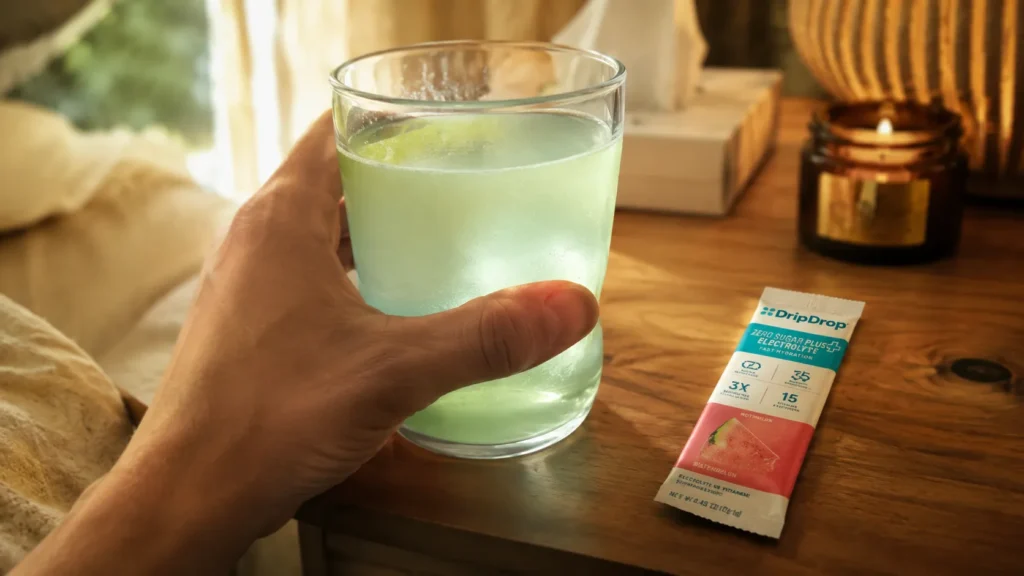
Matching your symptoms to the best electrolyte drink for dehydration beats grabbing whatever’s closest on the shelf. A few practical habits make any choice work harder for you.
- Sip small amounts every 15-20 minutes instead of gulping a full glass at once
- Keep drinks cold or room temperature; warm liquids can worsen nausea for some people
- Alternate electrolyte drinks with plain water rather than relying on either one alone
- Stock a box before flu season hits, not while you’re already flat on the couch
- Check labels for added caffeine or excess sugar if you manage diabetes or hypertension
This applies doubly to the best electrolyte drink when sick for adults managing a chronic condition, where sodium content deserves a second look before you buy in bulk.
When to See a Doctor Instead of Self-Treating
Most illnesses resolve at home with rest, fluids, and time. Seek medical care if you notice no urination for eight or more hours, dizziness when standing, confusion, a fever above 103°F, or an inability to keep any fluid down for over twelve hours. These signs mean oral hydration alone is no longer enough, and it’s time for professional help, not another home remedy.
Final Verdict: Best Electrolyte Drink When Sick
There’s no single drink that fits every illness or every person, but Pedialyte, DripDrop ORS, and Liquid IV consistently rank as the best electrolyte drink when sick because each is built on real rehydration science rather than marketing alone. Whether you’re researching what to drink when sick with flu or nursing a stomach bug through a rough weekend, caregivers researching the best electrolyte drink for elderly family members should prioritize sodium content and simplicity over flavor count.
Keep one option stocked before you need it. And if you’re shopping specifically for the best electrolyte drink when sick for adults, let sodium content top your checklist, not the flashiest label on the shelf.
This article is for informational purposes only and isn’t a substitute for professional medical advice. Talk to a doctor if symptoms are severe, persistent, or paired with a chronic health condition.
Frequently Asked Questions
Is Gatorade or Pedialyte better for when you’re sick?
Pedialyte is generally better for illness because its sodium-to-sugar ratio is calibrated for rehydration, not athletic performance. Gatorade works for mild cases but its higher sugar content can worsen an upset stomach.
Is it okay to drink electrolytes when sick?
Yes. Reaching for the best drink for electrolytes when sick helps replace sodium, potassium, and other minerals lost through fever, vomiting, or diarrhea, supporting faster rehydration than water alone.
What drink gives the most electrolytes?
LMNT and Gatorlyte typically deliver the highest sodium per serving among mainstream options, while DripDrop and Pedialyte remain the best electrolyte drink for dehydration overall thanks to a balanced sodium-to-sugar ratio.
Will electrolytes get rid of a cold?
No. Electrolytes don’t cure a cold or kill a virus. They support hydration and mineral balance, which can ease fatigue and headache while your immune system does the actual work.
Is Liquid IV healthier than Pedialyte?
Neither is universally healthier. Liquid IV offers more flavor variety and added vitamins, while Pedialyte has a longer clinical track record and a formula built specifically for rehydration during illness.
Does Gatorade actually hydrate better than water when sick?
Gatorade replaces some sodium that water lacks, which can help with mild dehydration. But its sugar content is higher than illness-specific drinks, making it a secondary choice next to ORS-style options.
What is the downside to Liquid IV?
Liquid IV contains added sugar and has faced class-action lawsuits over labeling claims, including a preservative-labeling dispute and a separate suit alleging underfilled packets. Some users also find the sodium level high for daily, non-illness use.
What hydrates you faster, water or Pedialyte?
Pedialyte typically hydrates faster during illness because its sodium-glucose ratio activates intestinal absorption more efficiently than plain water, which lacks the sodium needed to pull fluid into your bloodstream.
Is 1 Pedialyte a day too much?
No, one serving daily is generally safe for most healthy adults, making Pedialyte a common best electrolyte drink for elderly choice when used under medical guidance. Those with kidney or heart conditions should check with a doctor first.
How many glasses of water is Liquid IV equal to?
Liquid IV’s marketing claims one packet equals roughly two to three glasses of water in hydration efficiency, though independent, peer-reviewed verification of that exact multiplier is limited.
What are the lawsuits against Liquid IV?
Liquid IV has faced class-action lawsuits alleging misleading no-preservatives labeling despite containing citric acid, plus a separate suit claiming some Lemon Lime packets were sold underfilled.
Do doctors recommend Liquid IV?
Doctors often recommend ORS-style hydration broadly during illness, and some accept Liquid IV as a reasonable option, though many still favor clinically established products like Pedialyte for acute dehydration.
This article contains affiliate links. If you purchase through our links, we may earn a commission at no extra cost to you. We only recommend products we genuinely believe in. Read our Affiliate Disclaimer for full details.