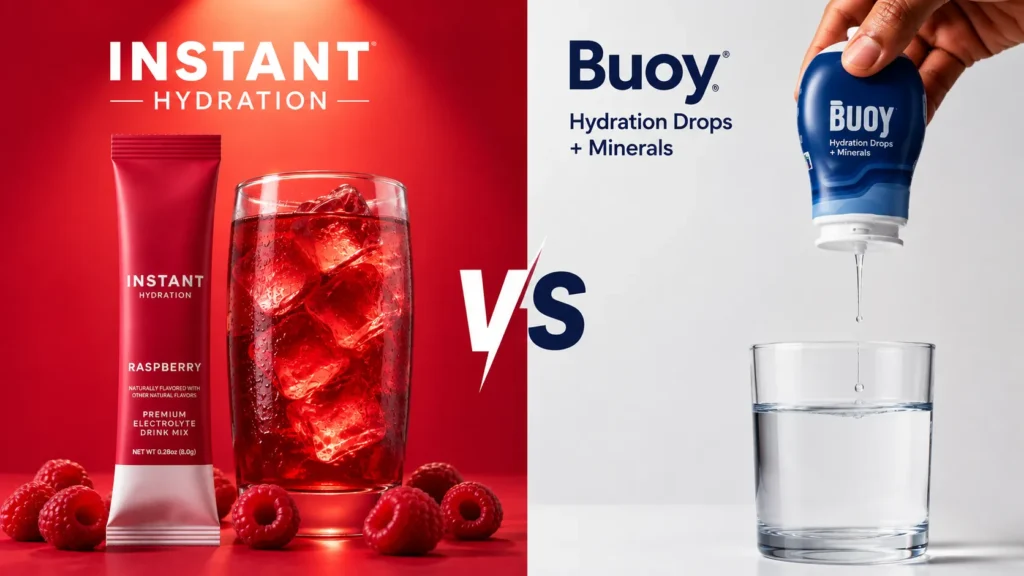
Instant Hydration vs Buoy is less about choosing a universal winner and more about choosing a format. Instant Hydration is a flavored, single-serving powder with a larger mineral dose, while Buoy Hydration Drops are unflavored and designed to be added in small amounts to water, coffee, tea, or other drinks. Both avoid added sugar, but their sodium levels and serving patterns differ substantially, so compare the exact formula you plan to buy.
Table of Contents
This Instant Hydration vs Buoy comparison breaks down the ingredients, sodium levels, sugar content, taste, price, and daily usability of both products. By the end, you will know exactly which one fits your routine, and which one you can skip.
Quick Verdict
If you want a stronger electrolyte punch with a real flavor to sip on, Instant Hydration wins. If you want a flavorless, low-commitment way to add minerals into whatever you are already drinking, Buoy wins.
| Category | Instant Hydration | Buoy |
| Format | Powder stick packs | Liquid drops |
| Sodium per serving | About 500 mg | About 300 mg (Rescue Drops) |
| Added sugar | 0 g | 0 g |
| Flavor | Fruit flavored | Unflavored |
| Best for | Workouts, heat, travel | All-day sipping, coffee and tea |
What Is Instant Hydration?
Instant Hydration is a powdered electrolyte mix sold in single-serving stick packs. You tear one open, pour it into cold water, and stir or shake until it dissolves.
The formula uses sel gris (French grey sea salt) instead of standard table salt, along with magnesium bisglycinate chelate, potassium chloride, and calcium sourced from mineralized algae. Sweetness comes from organic stevia leaf and organic monk fruit extract, with no added sugar and no artificial sweeteners.
One stick delivers roughly 500 mg of sodium, which lands close to 22 percent of the FDA Daily Value, plus around 470 mg of potassium and 100 mg of magnesium. That is a genuinely complete electrolyte profile for a single packet.
Buoy Hydration Review
This Buoy hydration review starts with the basics: Buoy makes unflavored liquid electrolyte drops instead of powder. You add a squeeze to water, coffee, tea, or pretty much any beverage, and the company recommends using it four to seven times throughout the day.
The Hydration Drops formula relies on wild-harvested sea salt for sodium, potassium, magnesium, and calcium, plus trace ocean minerals and a B-vitamin complex. There is no sugar, no sweetener, and almost no taste, which is exactly the point for people who do not want their water to taste like a melted popsicle.
One short squeeze counts as a serving, and Buoy’s own labeling notes zero calories and zero carbs per dose, which makes it one of the lighter-touch electrolyte products on the market.
Instant Hydration vs Buoy: Ingredients Compared
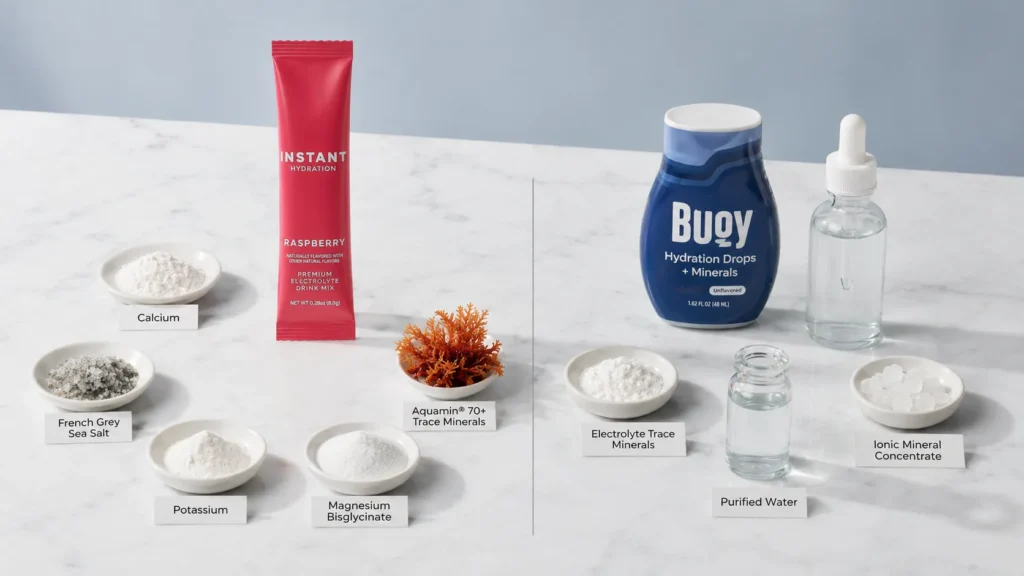
Both brands avoid artificial sweeteners, dyes, and added sugar, but they take different paths to get there.
Sodium Source
Instant Hydration uses sel gris, an unrefined French sea salt. Buoy also sources sodium from sea salt, but its formula is diluted across many small servings rather than one concentrated dose. The FDA notes that sodium plays an important role in fluid balance, but most Americans already get plenty of it through packaged food, so the right amount really depends on your activity level.
Potassium and Magnesium
Instant Hydration includes a notably high 470 mg of potassium per stick, alongside 100 mg of magnesium in the more absorbable bisglycinate form. The NIH Office of Dietary Supplements points out that many American diets fall short on magnesium, which makes this a meaningful daily top-up rather than a marketing gimmick.
Buoy’s drops also contain potassium and magnesium, but because each serving is so small, the total mineral dose per squeeze runs lighter than a full Instant Hydration stick.
Extra Ingredients
Buoy adds a B-vitamin complex and trace ocean minerals to its formula, along with an antioxidant blend. Instant Hydration keeps its ingredient list shorter and more focused purely on core electrolytes and sweeteners.
Instant Hydration vs Buoy: Sodium and Electrolyte Levels
Numbers matter more than marketing copy here, so here is a side-by-side look at the mineral content.
| Electrolyte | Instant Hydration (per stick) | Buoy (per squeeze) |
| Sodium | ~500 mg | ~300 mg (Rescue Drops) |
| Potassium | ~470 mg | Lower, trace level |
| Magnesium | 100 mg | Trace level |
| Calcium | Yes, from algae | Trace level |
Buoy is designed to be used several times a day, so the lighter per-serving dose is intentional rather than a shortfall. Instant Hydration front-loads more minerals into a single packet, which suits people who want one clear dose instead of sipping small amounts all day.
Instant Hydration vs Buoy: Sugar and Sweeteners
If you are hunting for the best electrolyte powder no sugar option, both of these brands qualify, but they get there differently.
Instant Hydration sweetens its formula with organic stevia leaf and organic monk fruit extract, giving it an actual fruit-forward taste without added sugar. Buoy skips sweeteners entirely because it skips flavor entirely, which technically makes it the cleaner label of the two if plant-based sweeteners are not your thing.
Both brands avoid maltodextrin, dextrose, and sugar alcohols, which are common fillers in cheaper electrolyte powders.
Instant Hydration vs Buoy: Taste and Format
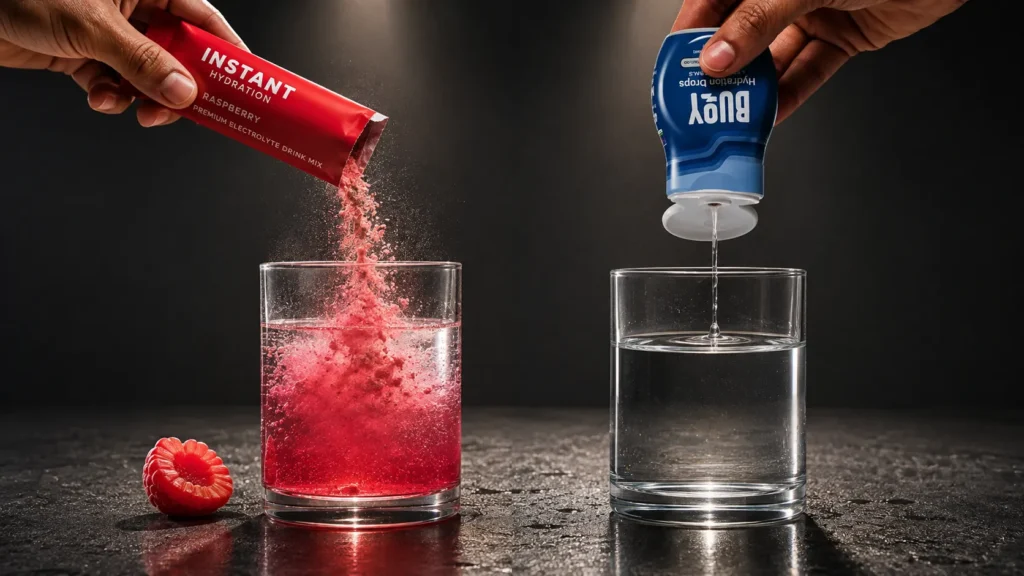
Here is where personal preference takes over. Instant Hydration tastes like flavored water, with options like raspberry and watermelon that make hydration feel like a treat rather than a chore.
Buoy tastes like, well, nothing much. A slight mineral note shows up if you pay close attention, but otherwise it blends into whatever drink you add it to. That is a feature, not a flaw, especially if you want to boost your morning coffee or afternoon tea without changing the flavor.
If you like the ritual of mixing a flavored drink, Instant Hydration wins this round. If you want something invisible that works in the background, Buoy takes it.
How to Use Each Product
- Instant Hydration: Tear open one stick, add it to at least 16 ounces of water, and stir or shake.
- Buoy: Add one short squeeze to any beverage, repeated four to seven times throughout the day.
- Neither product replaces plain water. Both work best alongside a normal daily water intake.
If you are curious how either brand stacks up against a heavier-sodium option, our Instant Hydration vs LMNT vs Liquid IV comparison digs into that side of the market.
Which Is the Best Electrolyte for Everyday Use?
Choosing the best electrolyte for everyday use really comes down to how you like to hydrate. If you want a dedicated drink with a real flavor and a solid mineral dose in one go, Instant Hydration fits that role well.
If you already drink coffee, tea, or water throughout the day and just want a low-effort mineral boost without changing the taste, Buoy slides into that routine more naturally.
People managing heavier sweat loss from workouts might want more sodium than either brand provides in a single dose. Our guide to electrolyte drinks for runners covers options built specifically for that kind of activity.
Who Should Choose Instant Hydration
- People who want a flavored, single-dose electrolyte drink
- Anyone doing moderate to intense workouts or spending time in the heat
- People who want a higher, all-in-one dose of sodium, potassium, and magnesium
- Travelers who want a convenient stick pack
Who Should Choose Buoy
- People who dislike flavored electrolyte drinks
- Anyone who wants to add minerals to coffee, tea, or smoothies without changing the taste
- People who prefer smaller, more frequent doses instead of one large serving
- Light, non-athletic daily hydration
If you get sick and need gentler hydration support, our guide on the best electrolyte drinks when you are sick breaks down what actually helps versus what is just marketing.
Instant Hydration and Buoy Price Comparison
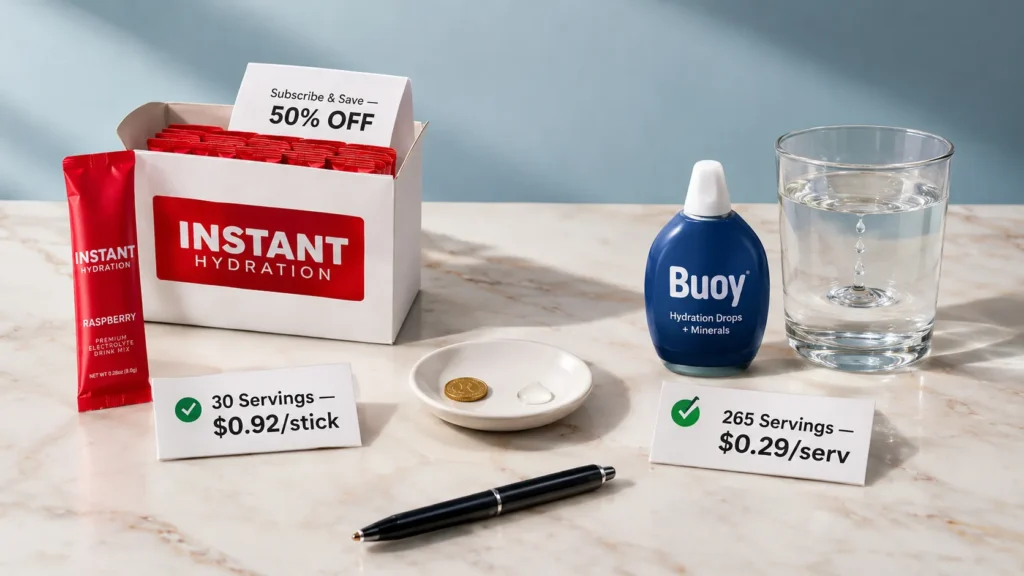
Instant Hydration runs close to $1.83 per serving at standard retail pricing, positioning it as a premium option compared with mass-market powders. Buoy’s subscription pricing works out to roughly $1 per day when using the recommended four to seven servings, which actually spreads the cost thin per individual squeeze.
Neither brand is the cheapest option on the shelf, but both charge a premium for cleaner ingredient sourcing and third-party testing, which is a fair trade for a lot of buyers.
Instant Hydration Pros and Cons
| Pros | Cons |
|---|---|
| High potassium and magnesium content | Higher sodium may not suit low-sodium diets |
| Real fruit flavors | Pricier than mass-market powders |
| Zero sugar and no artificial sweeteners | — |
| Convenient single-serving sticks | — |
Buoy Pros and Cons
| Pros | Cons |
|---|---|
| Works with any beverage, not just water | Lighter mineral dose per serving |
| Zero calories and zero sugar | Requires multiple doses per day to add up |
| Includes B vitamins and trace minerals | Not ideal for intense workouts or heavy sweating |
| Third-party tested | — |
Final Verdict: Buoy vs Instant Hydration
So, Buoy vs Instant Hydration, who actually wins? It depends entirely on your hydration style, and that is not a cop-out answer.
Instant Hydration wins for people who want a flavored, concentrated electrolyte drink with a strong potassium and magnesium profile. Buoy wins for people who want a flexible, flavorless mineral boost that fits into drinks they are already having.
In this Instant Hydration vs Buoy matchup, there is no single loser. Pick the format that matches how you actually drink water, coffee, and everything in between.
Frequently Asked Questions
Which is better, Instant Hydration or Buoy?
Neither is universally better. Instant Hydration suits people who want a flavored, higher-dose electrolyte drink, while Buoy suits people who want a flavorless mineral boost added to multiple drinks throughout the day.
Is Buoy a good electrolyte for everyday use?
Yes, Buoy works well as an everyday electrolyte for people who want light, frequent doses without changing the taste of their drinks.
Does Instant Hydration have more sodium than Buoy?
Yes, one Instant Hydration stick contains about 500 mg of sodium, compared with roughly 300 mg in a single Buoy Rescue Drops serving.
Is Instant Hydration or Buoy better for workouts?
Instant Hydration is generally better suited for workouts because of its higher sodium, potassium, and magnesium content in a single dose.
Does Buoy contain sugar?
No, Buoy Hydration Drops contain zero added sugar and zero calories per serving.
What is the best electrolyte powder no sugar option between these two?
Both Instant Hydration and Buoy qualify as no-sugar options. Instant Hydration uses stevia and monk fruit for flavor, while Buoy skips sweeteners entirely since it is unflavored.
Can I add Buoy to coffee or tea?
Yes, Buoy is designed to blend into coffee, tea, smoothies, and other beverages without significantly altering the taste.
How many times per day should I use Buoy?
The brand recommends four to seven servings per day, added to different beverages.
Is Instant Hydration safe to drink every day?
For most healthy adults, yes, though anyone on a low-sodium diet should account for the roughly 500 mg of sodium per stick.
Which is cheaper, Instant Hydration or Buoy?
Pricing is fairly close per day of use. Instant Hydration costs around $1.83 per serving, while Buoy’s subscription pricing averages close to $1 per day when used as recommended.
This article contains affiliate links. If you purchase through our links, we may earn a commission at no extra cost to you. We only recommend products we genuinely believe in. Read our Affiliate Disclaimer for full details.