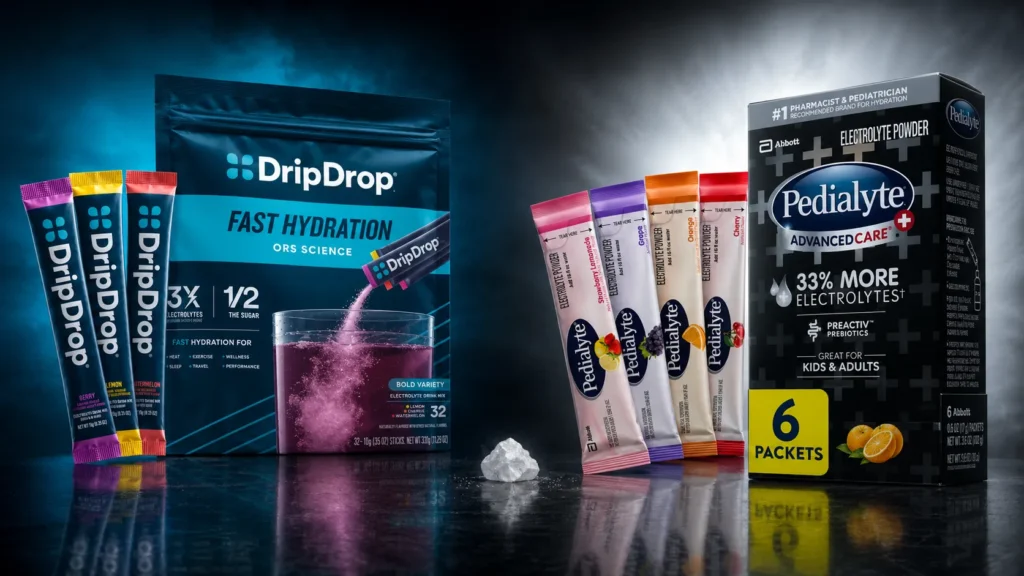
DripDrop vs Pedialyte compares two oral rehydration products that combine electrolytes with carbohydrate, but their formats, serving sizes, flavors, and intended audiences differ. DripDrop is a portable powder with sodium, potassium, and magnesium, while Pedialyte offers ready-to-drink and powder options commonly used during illness. The better choice depends on the exact variant, age, symptoms, preparation needs, and medical guidance, especially for children or significant dehydration.
Table of Contents
But they serve slightly different people in slightly different situations. This DripDrop vs Pedialyte 2026 comparison breaks down every meaningful difference between the two – sodium, sugar, magnesium, ingredients, price, taste, and the specific use cases where each one outperforms the other. By the end, DripDrop vs Pedialyte which is better for your situation will have a clear answer.
Before getting into the head-to-head, a quick note on what both products actually are. Both DripDrop and Pedialyte are oral rehydration solutions (ORS) – meaning they use the sodium-glucose cotransport mechanism (SGLT1) to pull water into the bloodstream faster than plain water alone. That shared science is what separates them from standard sports drinks and flavored water. The differences lie in dosing, format, ingredients, and intended audience.
DripDrop Review: What You Need to Know
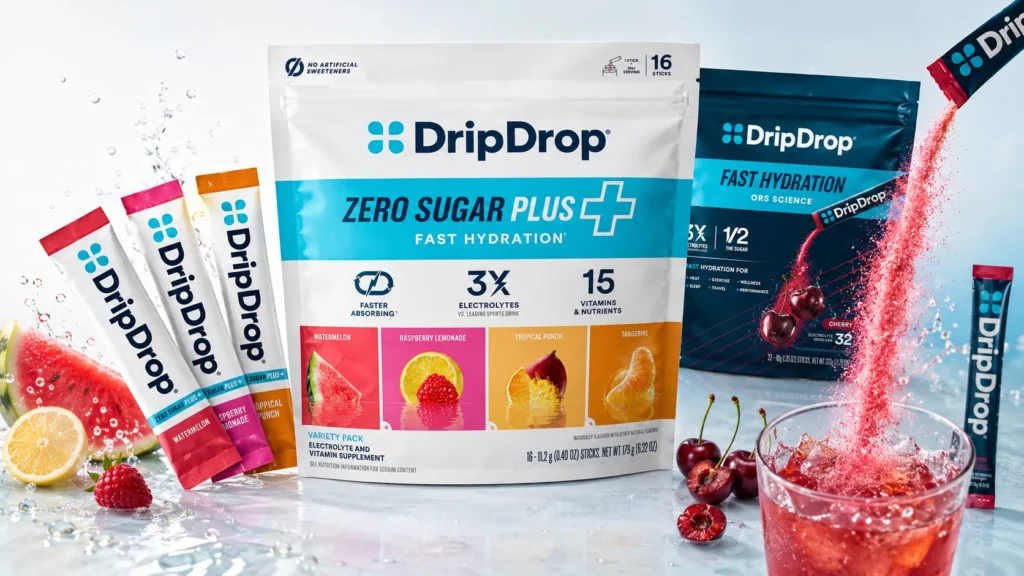
DripDrop ORS was created by Dr. Eduardo Dolhun, a physician who identified a critical gap in disaster relief situations where IV therapy was unavailable and existing oral rehydration options were either ineffective or unpalatable. He developed DripDrop to be a medically effective ORS that people would actually want to drink.
The product has since been adopted by the US Military, Mayo Clinic, and Stanford University Medical Center. It holds NSF Content Certification and NSF Sport Certification for its 16 oz stick packs. Those are not marketing claims – they are third-party verified quality standards that matter, especially for athletes in tested sports.
Each standard DripDrop packet mixed into 8 oz of water delivers:
- Sodium: 330 mg
- Potassium: 180 mg
- Magnesium: 40 mg (magnesium citrate)
- Zinc: 10% DV
- Vitamin C: included
- Sugar: 7 g | Calories: approximately 35
- Artificial dyes: None – natural coloring from fruit and vegetable sources only
DripDrop also offers a Zero Sugar version sweetened with sucralose, which adds B vitamins (B3, B5, B6, B12). The standard formula uses a blend of sugar, fructose, and dextrose – all functional components of the ORS absorption mechanism, not added sweeteners. It comes in over 18 flavors and is available at Target, Walmart, Amazon, and select Costco locations.
In terms of a DripDrop Review overall: the product sits clearly between a medical ORS and a consumer sports drink. It is cleaner than Gatorade, more effective than standard flavored water, and specifically designed for situations of genuine dehydration. For adults who sweat heavily, travel frequently, or deal with moderate illness, DripDrop delivers a well-calibrated formula in a portable format.
Pedialyte Review: The Clinical Gold Standard
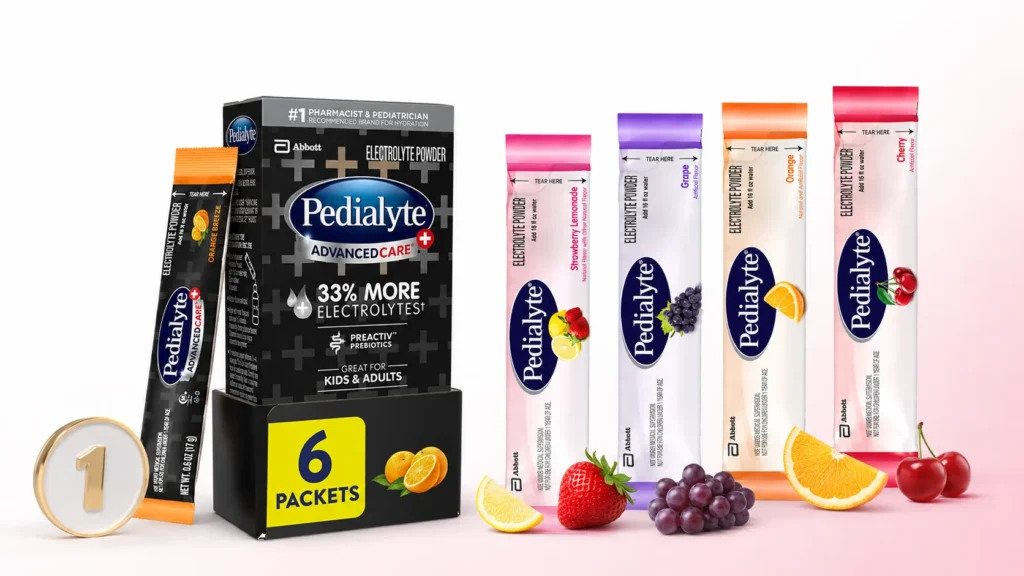
Pedialyte is manufactured by Abbott Nutrition and has been in continuous use since 1966. It was originally developed for pediatric dehydration from vomiting and diarrhea, and for six decades it has been the default recommendation from pediatricians and emergency medicine physicians for mild to moderate dehydration in children.
In recent years, Pedialyte expanded its marketing aggressively toward adults – positioning it for hangover recovery, athletic use, and travel dehydration alongside its traditional clinical role. That expansion has been commercially successful, though some critics argue it dilutes the brand’s core medical identity.
Pedialyte comes in multiple product lines: Classic (ready-to-drink liter), Powder Packs, Sport, AdvancedCare Plus, and Electrolyte Water. The formulas vary meaningfully between these lines. For this Pedialyte Review, the most relevant formats for adult comparison are the Classic liquid and the Powder Packs.
Pedialyte Classic (per 12 oz serving) delivers:
- Sodium: 370 mg
- Potassium: 280 mg
- Chloride: 440 mg
- Zinc: included
- Sugar: 9 g | Calories: approximately 45
- Magnesium: 0 mg in Classic formula
The Powder Pack format is zero sugar, uses sucralose as a sweetener, and adds magnesium and zinc. Pedialyte Sport raises sodium to approximately 490 mg per serving and targets athletic dehydration. AdvancedCare Plus includes PreActiv Prebiotics for gut support. The formulation variety gives Pedialyte more range than DripDrop across different use cases – though it also means the product you grab matters more.
The most important thing the Pedialyte Review reveals: no other consumer electrolyte product carries as much clinical track record. When physicians recommend an ORS for a sick child or a dehydrated elderly patient, Pedialyte is almost universally the first name mentioned. That credibility is real and earned.
DripDrop vs Pedialyte 2026 Comparison: Head-to-Head
Sodium – Higher Concentration Per Ounce
Winner: DripDrop
| Product | Sodium | Serving Size | Sodium per Fluid Ounce | Notes |
|---|---|---|---|---|
| DripDrop | 330 mg | 8 oz | 41.25 mg/oz | Higher sodium concentration per fluid ounce. |
| Pedialyte Classic | 370 mg | 12 oz | 30.83 mg/oz | Lower sodium concentration per fluid ounce than DripDrop. |
| Pedialyte Sport | 490 mg | 12 oz* | 40.83 mg/oz* | Narrows the gap with DripDrop and is formulated for athletic use. |
On paper, Pedialyte Classic has slightly more sodium per serving (370 mg vs 330 mg). But that comparison misses the format difference. DripDrop mixes into 8 oz; Pedialyte Classic is served as 12 oz. Per fluid ounce, DripDrop delivers more sodium. That higher sodium concentration per unit of water is what drives faster rehydration in acute dehydration scenarios. For general mild dehydration, both are within appropriate ranges and the difference is not clinically significant.
Potassium and Chloride Coverage
Winner: Pedialyte
| Product | Potassium | Chloride | Notes |
|---|---|---|---|
| Pedialyte | 280 mg | 440 mg | Delivers 56% more potassium and significantly more chloride per serving. |
| DripDrop | 180 mg | Chloride not listed separately | Chloride is the most volume-lost electrolyte in vomiting – directly relevant for illness use. |
This is where Pedialyte’s illness-specific design shows clearly. Vomiting expels gastric acid, which is rich in hydrochloric acid – removing chloride along with hydrogen ions. Pedialyte’s 440 mg of chloride per serving directly replaces that loss. DripDrop’s formula does not separately list chloride, though sodium chloride is a source mineral. For dehydration specifically from gastrointestinal illness, Pedialyte’s chloride content gives it a formulation advantage.
Magnesium – Clear Winner
Winner: DripDrop
| Product | Magnesium | Notes |
|---|---|---|
| DripDrop | 40 mg magnesium citrate | Magnesium citrate is well-absorbed and relevant for muscle cramps and recovery. |
| Pedialyte Classic | 0 mg magnesium | Pedialyte Powder Pack adds some magnesium – Classic liquid does not. |
Magnesium is absent from Pedialyte Classic entirely. DripDrop’s 40 mg of magnesium citrate is not a complete daily magnesium solution – the recommended daily intake is 320-420 mg – but it is a meaningful addition for anyone dealing with exercise-related dehydration where magnesium loss through sweat is part of the picture. For illness-related dehydration where magnesium loss is minimal, this advantage is less relevant.
If muscle cramps are a recurring issue alongside dehydration, our article on how much sodium in LMNT covers the sodium-magnesium relationship in detail alongside other high-performance electrolyte options.
Ingredient Cleanliness
Winner: DripDrop
| Product | Artificial Dyes | Notes |
|---|---|---|
| DripDrop | No FD&C artificial dyes | Natural coloring only across all flavors. |
| Pedialyte Classic (Flavored) | Uses FD&C artificial dyes in some flavors | Includes Red 40, Blue 1, Yellow 5/6 in some flavors. |
| Pedialyte Unflavored | No dyes | — |
| Pedialyte Zero Sugar Powder | Cleaner formula | — |
If you care about artificial dyes – and more people do than the packaging suggests – DripDrop wins this category across every flavor. Natural coloring from fruit and vegetable concentrates, turmeric, and beta carotene replace the FD&C dyes that appear in several Pedialyte Classic flavors. This distinction matters for parents giving the product to children, for migraine sufferers sensitive to artificial colorings, and for anyone who prefers cleaner labels.
Sugar Content
Winner: Pedialyte
| Product | Sugar | Notes |
|---|---|---|
| DripDrop | 7 g per 8 oz packet | — |
| Pedialyte Classic | 9 g per 12 oz serving | Lower sugar concentration per ounce. |
| Pedialyte Zero Sugar Powder | 0 g sugar | Best option for low-sugar preference. |
Per serving, DripDrop has less total sugar (7 g vs 9 g). But per ounce of finished drink, Pedialyte Classic actually has a lower sugar concentration because it is diluted across 12 oz vs DripDrop’s 8 oz. Both contain sugar for the same functional reason – glucose activates the SGLT1 transport mechanism that makes ORS absorption superior to plain water. The sugar is not added for taste alone. That said, Pedialyte’s Zero Sugar Powder Pack removes this entirely for those who need it.
Price Per Serving
Winner: Pedialyte
| Product | Approximate Price | Cost per Serving | Notes |
|---|---|---|---|
| DripDrop (32-pack) | Approximately $32–36 | $1.00–$1.15 per serving | — |
| Pedialyte Classic (1 L) | Approximately $8–10 per liter | — | Ready to drink, no prep. |
| Pedialyte Powder Packs (8-pack) | Approximately $24–26 | $3.00–$3.25 per serving | — |
Pedialyte Classic in liter format is the clear price winner – at around $0.50-0.70 per 12 oz serving from a $8-10 bottle, it is significantly cheaper than DripDrop per ounce. However, Pedialyte Powder Packs are actually more expensive per serving than DripDrop powder. If you compare powder to powder, DripDrop wins on value. If you compare DripDrop powder to Pedialyte ready-to-drink, Pedialyte wins on cost. The format you buy determines the outcome of this comparison.
Taste and Palatability for Adults
Winner: DripDrop
| Product | Flavor Profile | Notes |
|---|---|---|
| DripDrop | Well-reviewed adult flavor profiles | Lighter than typical sports drinks. |
| Pedialyte Classic (Unflavored) | Mild, clinical, saline taste | Functional but unpleasant for many. |
| Pedialyte Sport and newer lines | Improved taste | Closer to DripDrop range. |
Pedialyte’s unflavored classic format has a distinctly clinical taste that many adults find difficult to drink outside of illness. The saline quality is part of the formulation, not a manufacturing flaw – but it creates a palatability gap versus DripDrop’s lighter, more beverage-like flavors. Pedialyte’s newer Sport line and Strawberry flavor options have improved this considerably, but DripDrop maintains a general taste advantage for adult use cases where enjoyment matters.
DripDrop vs Pedialyte Which Is Better – by Use Case
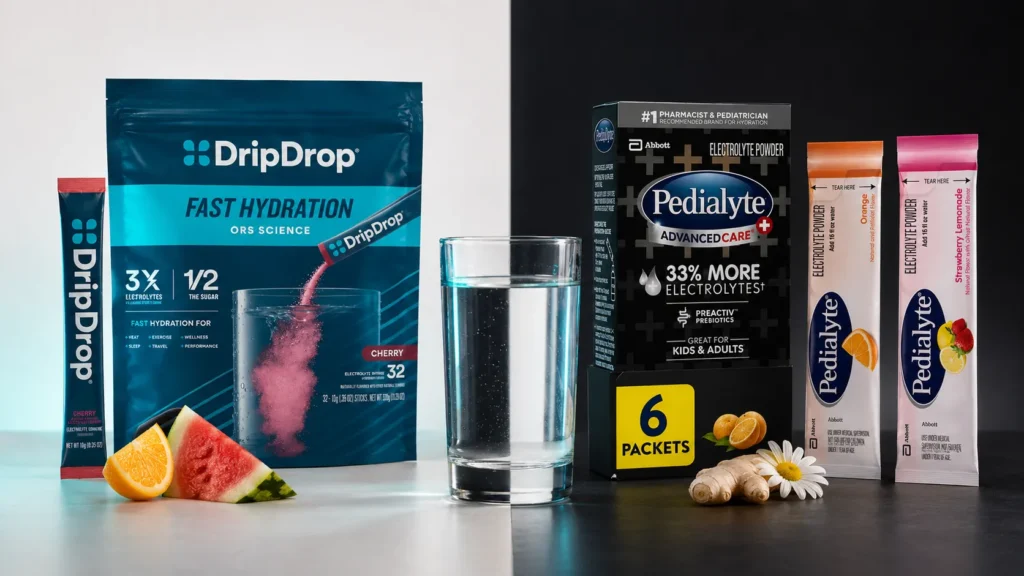
The direct answer to DripDrop vs Pedialyte which is better is not one-size-fits-all. Here is how to choose based on your actual situation.
- Use DripDrop for: Exercise and sweat-related dehydration, travel and heat exhaustion, situations where you want a product with no artificial dyes, portability in a compact powder format, or when magnesium inclusion matters (cramps, muscle recovery). DripDrop’s higher sodium concentration per ounce and cleaner ingredient list make it the stronger adult performance hydration choice.
- Use Pedialyte for: Gastrointestinal illness with vomiting or diarrhea, especially in children. Clinical-grade oral rehydration where the 60-year medical track record matters. Budget-conscious hydration where the liter format is more economical. Situations where you need to buy something immediately at any pharmacy at any hour – Pedialyte’s distribution advantage is unmatched.
- Use Pedialyte Sport for: Athletic adults who specifically want Pedialyte’s medical credibility with higher sodium (490 mg) and better flavor than Classic. It narrows the gap with DripDrop significantly on electrolyte delivery.
- Use Pedialyte Zero Sugar Powder Pack for: Anyone avoiding sugar for dietary, diabetic, or keto-adjacent reasons who still wants the core Pedialyte ORS science without the glucose load.
Final Verdict: DripDrop vs Pedialyte
Both products are legitimate, well-formulated oral rehydration solutions that outperform plain water and standard sports drinks in genuine dehydration scenarios. Choosing between them depends on three questions: who is using it, what caused the dehydration, and which format works for your situation.
DripDrop wins on ingredient cleanliness (no artificial dyes), magnesium inclusion, sodium concentration per ounce, adult palatability, and portability. It is the better choice for active adults dealing with exercise, heat, travel, or any sweat-related dehydration scenario. If you want a physician-developed ORS formula in a compact adult-friendly format, DripDrop is the more purposefully designed product for that use case.
Pedialyte wins on clinical credibility, chloride coverage (particularly relevant for illness), format variety, and ready-to-drink accessibility. It is the better choice for children, for illness with vomiting or diarrhea, for anyone who can grab it from any pharmacy in an emergency, and for budget-conscious buyers who use the liter format. No product in the consumer market has a longer or more validated medical track record.
The DripDrop vs Pedialyte 2026 comparison ultimately comes down to this: DripDrop is the better everyday adult electrolyte drink. Pedialyte is the better clinical illness rehydration tool – especially for children and medical settings. Both belong in different drawers of the same medicine cabinet.
If you want to understand more about how electrolytes affect your health in ways beyond hydration, our piece on is Liquid IV bad for kidneys addresses the sodium and kidney health questions that apply across all high-electrolyte products.
Frequently Asked Questions
Is DripDrop or Pedialyte better for adults?
For most adult use cases – exercise, travel, heat exhaustion, or general dehydration – DripDrop is the more purposefully designed option. It delivers more sodium per fluid ounce, includes magnesium, avoids artificial dyes, and tastes better for adult palates. For adults recovering from GI illness with vomiting or diarrhea specifically, Pedialyte’s clinical ORS formula and chloride content remain the most appropriate choice.
Which has more sodium – DripDrop or Pedialyte?
DripDrop delivers 330 mg of sodium per 8 oz. Pedialyte Classic delivers 370 mg per 12 oz. Per fluid ounce of finished drink, DripDrop has a higher sodium concentration. Pedialyte Sport increases to approximately 490 mg per serving, making it the highest-sodium Pedialyte format and placing it above DripDrop on absolute sodium per packet.
Can I give DripDrop to children?
DripDrop is formulated and marketed primarily for adults and is not specifically dosed for infants or young children. Pedialyte Classic is the clinically validated and pediatrician-recommended choice for dehydrated children, particularly those under five. For older children and teenagers dealing with sports or heat dehydration, DripDrop is generally considered appropriate, but consult a pediatrician for children with medical conditions or severe dehydration.
Does DripDrop taste better than Pedialyte?
For most adults, yes. DripDrop’s flavor profiles are consistently rated as more pleasant and less clinical than Pedialyte Classic’s standard formulas. Pedialyte Sport and some newer Pedialyte flavors have improved significantly, narrowing the taste gap. Pedialyte Unflavored has a saline, medicinal quality that many adults find difficult to drink in large amounts – DripDrop does not have this issue.
Is Pedialyte cheaper than DripDrop?
Pedialyte Classic in ready-to-drink liter bottles ($8-10 per liter) is cheaper per ounce than DripDrop powder packets ($1.00-$1.15 per 8 oz serving). However, Pedialyte Powder Packs ($3.00-$3.25 per serving) are more expensive than DripDrop per serving. The format you choose determines which is more affordable – powder vs powder, DripDrop wins on price; liter format vs powder, Pedialyte wins.
Which is better for hangovers – DripDrop or Pedialyte?
Both work for hangover rehydration because both use ORS science to replace fluid and electrolytes faster than plain water. DripDrop has a mild taste advantage for adults who find Pedialyte Classic too clinical. Pedialyte AdvancedCare Plus adds PreActiv Prebiotics that help settle the stomach – a practical advantage for the GI irritation component of a hangover. For speed and adult palatability, DripDrop is the slightly better hangover pick. For stomach sensitivity and gut support, Pedialyte AdvancedCare Plus has an edge.
This article contains affiliate links. If you purchase through our links, we may earn a commission at no extra cost to you. We only recommend products we genuinely believe in. Read our Affiliate Disclaimer for full details.