

Can Electrolytes Cause Constipation, an electrolyte drink does not directly cause constipation. The timing can still be real: a new product may contain calcium, added fiber, sweeteners, or other ingredients that affect digestion, and using a concentrated mix or drinking too little plain fluid can change the overall picture. Electrolyte imbalances can also affect bowel movement, but symptoms alone cannot show which mineral is high or low.
Table of Contents
Why an Electrolyte Drink May Seem Connected
Constipation means more than skipping one day. It can involve fewer than three bowel movements a week, hard or dry stool, painful straining, or a feeling that stool has not passed completely. Normal frequency varies, so compare the change with your usual pattern.
If constipation starts soon after you add a hydration powder, it is reasonable to inspect the product. Timing identifies a possible connection, not the cause. Travel, reduced activity, a change in food, illness, medication, supplements, pregnancy, and stress can change bowel habits at the same time.
Dehydration is often the more relevant link
The colon removes water from stool. When fluid intake is inadequate, stool can become harder and more difficult to pass. The NIDDK guide to constipation causes lists dehydration and not drinking enough liquids among several possible contributors.
An electrolyte packet only helps with fluid intake when it is mixed with the stated amount of water and you actually drink it. Dry-scooping powder, making the drink unusually concentrated, or treating one small bottle as the entire day’s fluid does not meet the same goal.
A salty taste does not prove that a drink is dehydrating you, and sodium alone does not diagnose the problem. If you are comparing formulas because you need to limit sodium, our lower sodium electrolyte drinks guide shows why the amount per serving and number of servings both matter.
A new routine may matter as much as the formula
People sometimes replace water, meals, fruit, or other usual foods when they begin a new diet or supplement routine. That can reduce total fluid or fiber even when the electrolyte drink itself is not constipating. Look at the whole day rather than judging one ingredient in isolation.
Also check whether exercise, heat exposure, or an illness has increased your fluid needs. A drink that was adequate on an ordinary day may not replace larger losses. Severe dehydration, confusion, fainting, very low urine output, or inability to keep fluids down requires medical attention.
Which Electrolytes Are Linked With Constipation
Electrolytes are minerals with an electrical charge in body fluids. Sodium, potassium, calcium, magnesium, and chloride help support fluid balance, nerves, muscles, and other functions. “Electrolytes” is a category, so their digestive effects cannot be reduced to one yes-or-no rule.
Low potassium can slow intestinal movement
Potassium supports muscle function, including the smooth muscle involved in digestion. Clinically low blood potassium, called hypokalemia, can include constipation among its symptoms. More severe deficiency can also cause weakness, cramps, abnormal heart rhythms, or other serious problems.
Constipation does not prove that potassium is low. A blood test and clinical assessment are needed, and the underlying cause determines treatment. Do not take a large potassium dose to test the idea, especially if you have kidney disease or use medicines that affect potassium.
Calcium needs a closer label check
Calcium is an electrolyte, but the amount found in a typical hydration product may be very different from a calcium supplement or calcium-containing antacid. MedlinePlus notes that calcium supplements can cause gas, bloating, and constipation in some people. That does not mean every drink containing a small amount of calcium will have the same effect.
Read the milligrams per serving and count every serving used that day. If you also take a multivitamin, separate calcium supplement, or antacid, include those sources when you discuss symptoms with a clinician or pharmacist.
Magnesium more often loosens stool
Magnesium is commonly associated with the opposite effect. High supplemental intakes can cause diarrhea, nausea, and abdominal cramping, according to the NIH magnesium fact sheet. The effect varies by dose and magnesium form.
A small amount of magnesium in an electrolyte drink is not automatically a constipation treatment. Increasing magnesium without advice can cause side effects or interact with medicines, and impaired kidney function increases the risk from excessive intake.
Check the Whole Formula
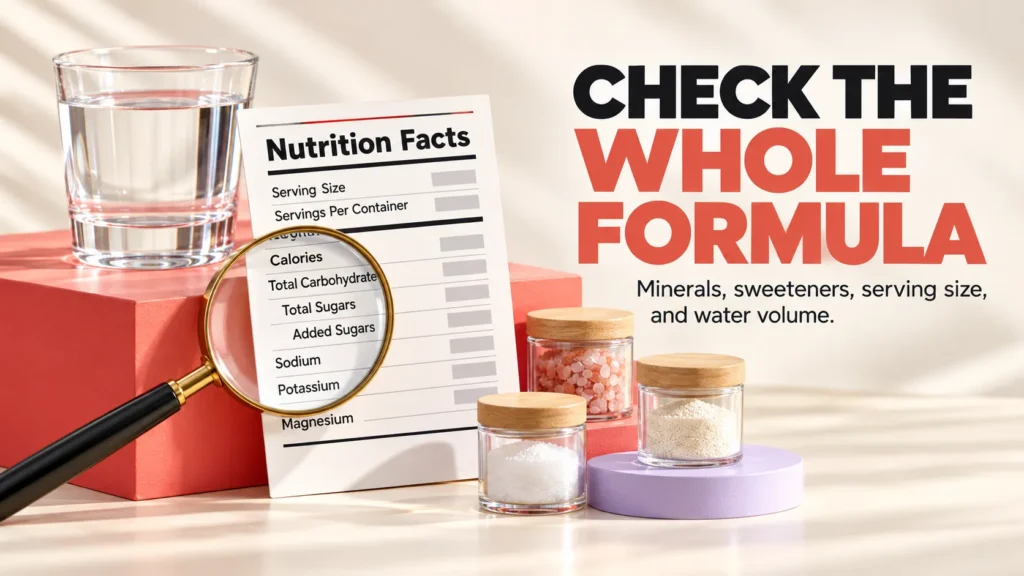
The front of a package may emphasize “electrolytes,” while the ingredient list includes acids, flavors, carbohydrates, non-sugar sweeteners, vitamins, fiber, or plant extracts. Review the Nutrition Facts or Supplement Facts panel together with the ingredient list and mixing directions.
| What to check | Why it matters | Practical review |
| Water volume | Too little liquid can leave stool harder and makes the mix more concentrated. | Use the labeled dilution and review total daily fluids. |
| Calcium | Some calcium supplements and antacids can cause constipation. | Count the amount from drinks and other products. |
| Magnesium | Larger supplemental amounts more often cause diarrhea or cramping. | Do not use a hydration mix as an improvised laxative. |
| Added fiber | A sudden increase may cause gas, and fiber works best with enough liquid. | Increase gradually when appropriate for you. |
| Sweeteners and extras | Individual tolerance varies across formulas. | Identify the exact ingredient before blaming all electrolyte drinks. |
Sweetness does not tell you which minerals are present. Our article explaining whether sugar is an electrolyte separates carbohydrate from electrolyte content and explains why both may appear in the same drink.
Serving size and concentration change exposure
One scoop may not equal one packet, and the label may assume a particular water volume. Doubling the powder doubles the listed minerals and other ingredients while reducing water per serving if the bottle size stays the same.
Follow the stated preparation directions. A stronger mixture has not been shown to correct unexplained constipation, and it can make sweetness, acidity, and mineral intake harder to tolerate.
Do not blame every symptom on sweeteners
Some people notice gas, bloating, or looser stool with certain sugar alcohols or larger amounts of particular sweeteners. Constipation is less characteristic, but individual responses vary and products use different blends. Check the exact ingredient rather than grouping every sugar-free drink together.
A short, simple log can help. Record the product, serving size, water volume, other supplements, meals, fluid intake, bowel movements, and symptoms. Change one nonessential item at a time so the result is easier to interpret.
What to Do if Constipation Started After a New Drink
For a nonessential product, pause it or return to the previous serving while you review the label. Continue drinking an appropriate amount of fluid unless a healthcare professional has given you a fluid restriction. Do not keep increasing the powder because the first serving did not change your bowel movement.
Aim for regular meals and fiber from foods such as vegetables, fruit, legumes, and whole grains when these fit your health needs. Add fiber gradually and pair it with enough liquid. NIDDK nutrition guidance explains that adequate liquids can help prevent dehydration and constipation.

Gentle activity can also support a regular routine when you are able to exercise safely. Give yourself time to use the bathroom and do not repeatedly ignore the urge to go. These basic steps address common contributors more directly than choosing a drink solely for a high electrolyte number.
If you want to compare two hydration products, look at each exact formula. Our Instant Hydration vs Liquid IV comparison separates serving size, sugar, sodium, potassium, and preparation details instead of treating every product from a brand as identical.
Review medicines and supplements
Constipation can be related to medicines and supplements, including iron, some calcium products, certain antacids, opioids, anticholinergic medicines, and other drugs. Diuretics can also change fluid and electrolyte balance. Do not stop a prescribed medicine on your own; ask the prescriber or pharmacist to review the full list.
Bring the electrolyte label or a clear photo of it. The product name alone may not identify the formula, and recipes can change. Include how many servings you use, how much water you add, and any additional vitamin or mineral products.
Can Electrolytes Relieve Constipation
An ordinary electrolyte drink is not a standard treatment for constipation. It may help indirectly when better fluid intake corrects mild dehydration, but it does not supply the fiber needed for stool bulk and does not address medication effects, pelvic floor problems, bowel obstruction, or other causes.
Some laxatives contain magnesium compounds, but that does not make a sports hydration powder interchangeable with a laxative. The amounts, chemical forms, instructions, and intended uses differ. Use a constipation treatment only as directed and ask a clinician or pharmacist when you are unsure.
Correcting a confirmed potassium or calcium abnormality also requires an individualized plan. Kidney function, medicines, ongoing losses, and the severity of the imbalance affect what is safe. A symptom-based guess can move a mineral level in the wrong direction.
Readers who have been told to restrict potassium can use our low potassium electrolyte drinks comparison to compare labels. A low-potassium claim does not establish that a drink is appropriate for a particular kidney condition or bowel symptom.
When to Contact a Healthcare Professional
Contact a healthcare professional if constipation does not improve with self-care, keeps returning, or began after a medication or supplement change. Prompt assessment is also important when you have kidney disease, heart disease, a prescribed fluid limit, or a history of electrolyte abnormalities.
Seek medical care right away for constipation with blood in the stool or rectal bleeding, constant abdominal pain, inability to pass gas, vomiting, fever, or unexplained weight loss. These are among the warning signs listed by NIDDK and should not be managed by repeatedly changing electrolyte drinks.
Severe weakness, palpitations, fainting, confusion, or major changes in urination can occur with serious fluid or electrolyte problems. Those symptoms require timely medical evaluation rather than self-treatment with extra sodium, potassium, calcium, or magnesium.
Frequently Asked Questions
Can too much sodium cause constipation
Sodium by itself is not a routine explanation for constipation. A high-sodium, concentrated drink may leave the larger issue unresolved if total fluid and fiber remain inadequate. People with prescribed sodium limits should count all servings and follow their clinician’s plan.
Can electrolyte powder make stool hard
It can seem associated if the new routine reduces total water, changes food intake, or adds a constipating ingredient. Check the exact formula, serving size, water volume, calcium content, other supplements, and changes elsewhere in the day.
Should I use magnesium electrolytes for constipation
Do not assume a magnesium-containing hydration drink will work like a laxative. Product doses and forms vary, and excess supplemental magnesium can cause diarrhea and other adverse effects. Ask a pharmacist or clinician about an appropriate treatment.
How quickly should constipation improve after stopping a drink
There is no reliable timeline because the drink may not be the cause. If symptoms persist, worsen, or occur with a warning sign, seek medical advice. Keep the label and a brief symptom record for the appointment.
The Practical Answer
Can electrolytes cause constipation? Usually, the electrolyte label alone is not the explanation. Dehydration, low fiber, medications, calcium-containing supplements, a concentrated mixture, or an underlying electrolyte imbalance may be more relevant. Review the whole formula and routine, use the directed water volume, and seek care when symptoms persist or warning signs appear. This article provides general education and does not replace individualized medical advice.
This article contains affiliate links. If you purchase through our links, we may earn a commission at no extra cost to you. We only recommend products we genuinely believe in. Read our Affiliate Disclaimer for full details.