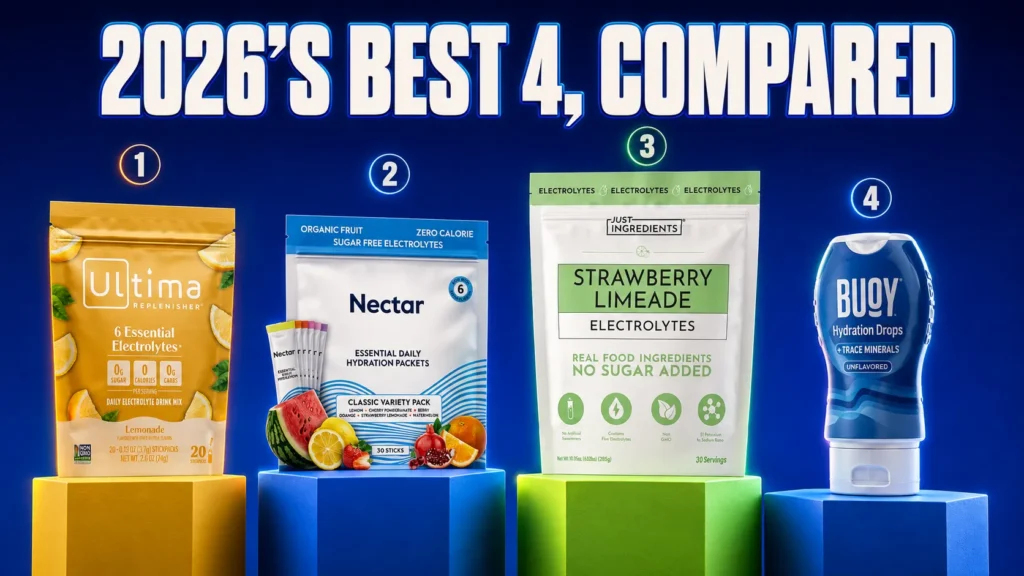
Lower sodium electrolyte drinks can add flavor and minerals without the concentrated sodium found in many sports formulas. This guide compares four products that list 140 mg of sodium or less per serving: Buoy Hydration Drops, Ultima Replenisher Lemonade, Nectar Essential Daily Hydration, and Just Ingredients Strawberry Limeade. The best choice depends on whether you prioritize no sweeteners, more magnesium, a balanced packet, or real-fruit ingredients.
Table of Contents
This list does not assume lower sodium is always healthier. A desk worker seeking lightly mineralized water has different needs from a runner sweating for two hours in summer heat. The products were selected for current label transparency, a sodium dose at or below the FDA low-sodium threshold, and a meaningful distinction in format or ingredients.
What Counts as a Lower-Sodium Electrolyte Drink?
The FDA sodium guidance defines “low sodium” as 140 mg or less per serving. It defines “very low sodium” as 35 mg or less and sodium-free as less than 5 mg. “Reduced sodium” means at least 25% less than a comparable regular product, which is a different claim.
This guide uses 140 mg as a practical screening rule, not as a medical recommendation. Serving size still matters. A small squeeze of drops and a full powder packet can both meet the threshold while delivering very different amounts of potassium, magnesium, calcium, and flavoring ingredients.
Also check how many servings the brand expects you to use. Buoy provides 50 mg sodium per squeeze, but its broader daily routine can include several squeezes. Four servings would total 200 mg. A low number on the single-serving panel does not guarantee a low daily total if you repeatedly refill the bottle.
Quick Comparison of the Four Picks
| Product per labeled serving | Sodium | Potassium | Magnesium | Calories / sugar | Sweetener |
| Buoy Hydration Drops | 50 mg | 10 mg | 0.5 mg | 0 / 0 g | None |
| Ultima Replenisher Lemonade | 55 mg | 250 mg | 100 mg | 0 / 0 g | Organic stevia |
| Nectar Essential Daily Hydration | 100 mg | 250 mg | 50 mg | 0 / 0 g | Organic stevia |
| Just Ingredients Strawberry Limeade | 100 mg | 300 mg | 50 mg | 25 / 3 g total, 0 g added | Organic stevia and monk fruit |
Nutrition values represent the exact variants named, reviewed September 1, 2026. Calcium, chloride, carbohydrate, ingredients, and preparation details are discussed below. Brand formulas can change, so verify the package before publishing or using the product.
1. Buoy Hydration Drops: Best Without Sweeteners
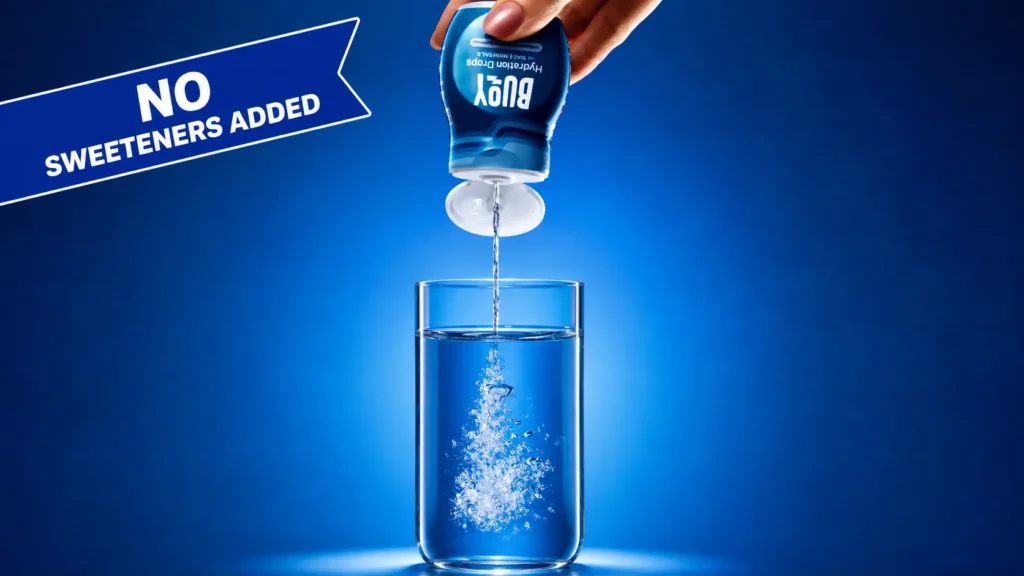
Buoy Hydration Drops provide 50 mg sodium, 10 mg potassium, 0.5 mg magnesium, 0.5 mg calcium, and 80 mg chloride per short squeeze. The label lists 0 calories, 0 carbohydrates, and 0 sugar. Buoy is unflavored and contains no sugar, stevia, monk fruit, sucralose, or other sweetener.
That makes Buoy the clearest fit for shoppers seeking electrolytes without artificial sweeteners and anyone who wants to add minerals to coffee, tea, or flavored water without creating a separate sweet drink. It is also the lowest-potassium option in this shortlist, although it is not potassium-free.
The limitation is concentration. Buoy supplies far less potassium and magnesium per serving than the powders below. Its official page also suggests repeated use, so count the total number of squeezes. This is a light mineral additive for ordinary beverages, not a concentrated sweat-replacement formula.
For a direct format comparison, the site’s Instant Hydration vs Buoy guide explains how unflavored drops differ from a full-dose flavored packet. The more useful product is the one whose serving pattern matches how you actually drink.
2. Ultima Replenisher Lemonade: Best Magnesium Profile
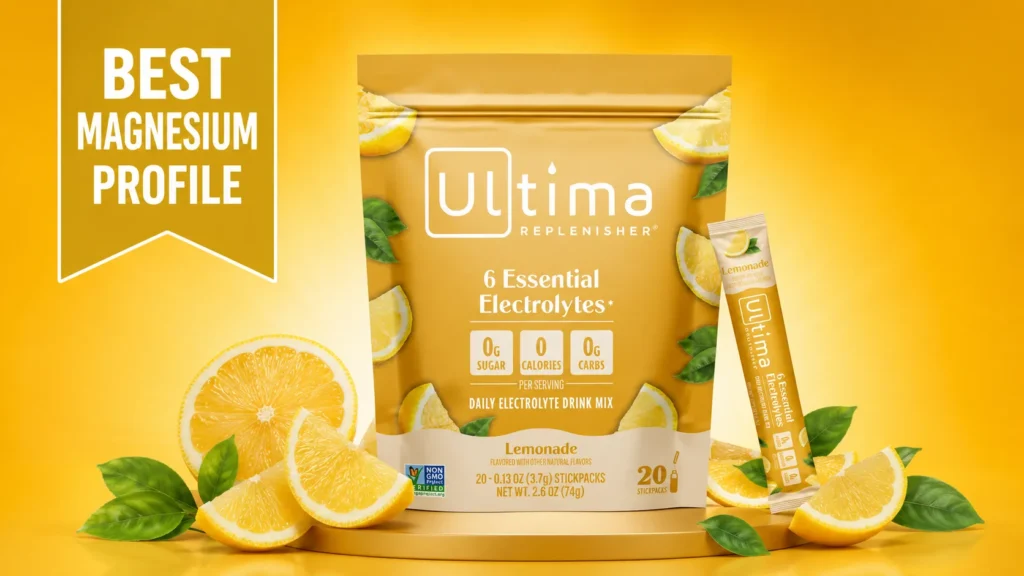
Ultima Replenisher Lemonade lists 55 mg sodium, 250 mg potassium, 100 mg magnesium, 47 mg calcium, 78 mg chloride, and 70 mg phosphorus per scoop or stick. It has 0 calories, 0 carbohydrates, and 0 sugar and uses organic stevia leaf extract.
Ultima is the strongest mineral-forward option among these low-sodium picks. Its 100 mg magnesium is double Nectar and Just Ingredients, while its sodium remains only 2% of the FDA Daily Value. That combination suits readers primarily interested in potassium and magnesium rather than replacing large sodium losses.
The formula contains citric acid and natural flavor, so it will not suit every ingredient-avoidance goal. Zero sugar also does not mean unsweetened. Anyone sensitive to stevia should consider Buoy or use additional water to make the flavor lighter.
The site’s Ultima vs LMNT comparison shows the opposite ends of the sodium spectrum: 55 mg in Ultima Lemonade versus 1,000 mg in a standard LMNT stick. That gap matters more than which brand has the more exciting pouch.
3. Nectar Essential Daily Hydration: Best Balanced Packet
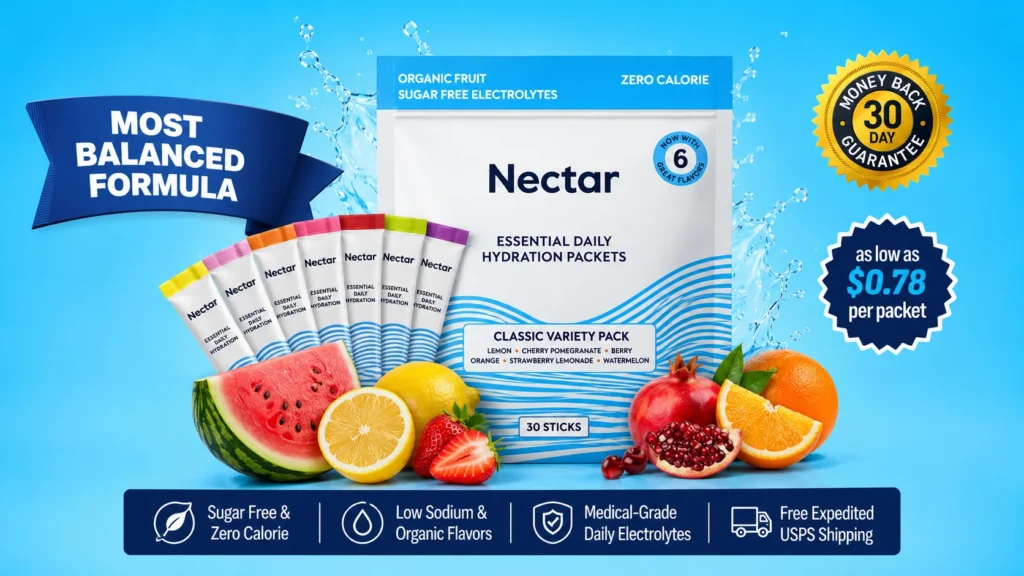
Nectar Essential Daily Hydration provides 100 mg sodium, 250 mg potassium, 50 mg magnesium, 75 mg calcium, and 150 mg chloride per packet. It is designed for 16 ounces of water and lists 0 calories, less than 1 g carbohydrate, and 0 g sugar.
Nectar occupies the middle ground. It provides much more magnesium and potassium than Buoy but half Ultima’s magnesium. Its ingredient list includes organic fruit flavor, Himalayan pink salt, potassium citrate, magnesium citrate, calcium citrate, citric and malic acids, and organic stevia.
This is a sensible sugar-free electrolyte packet for someone who wants five disclosed electrolytes without a high sodium dose. It is less compelling for prolonged heavy sweating because 100 mg sodium may not replace much of what a salty sweater loses. The packet is also not sweetener-free or citric-acid-free.
4. Just Ingredients Strawberry Limeade: Best Real-Fruit Option
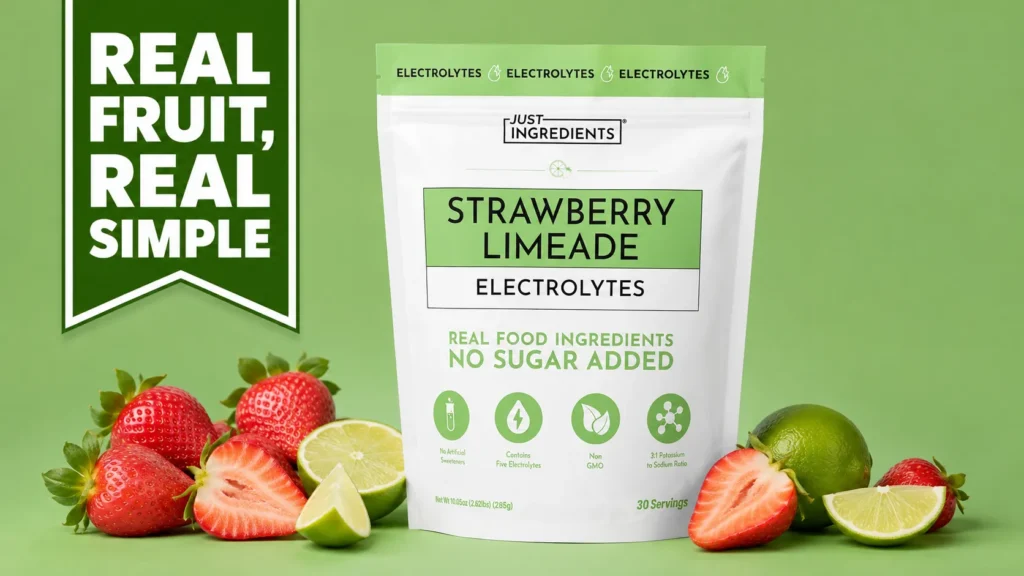
Just Ingredients Strawberry Limeade lists a 3:1 potassium-to-sodium ratio. Current brand information identifies 100 mg sodium and 300 mg potassium per serving, plus 50 mg magnesium and 50 mg calcium. One scoop is mixed with 14 ounces of water.
The ingredient list uses organic strawberry, cassava-root citric acid, potassium citrate, organic coconut water, magnesium citrate, sodium chloride, calcium citrate, lime extract, organic stevia, and organic monk fruit. The brand states there are no artificial flavors, sweeteners, dyes, sugar alcohols, or synthetic emulsifiers.
This pick requires careful wording: it has 0 g added sugar, but the reviewed serving lists 3 g total sugar and 25 calories from real-fruit ingredients. It is not an electrolyte powder sugar free in the literal Nutrition Facts sense. Choose it when real-fruit flavor and no added sugar matter more than achieving zero calories or zero total sugar.
Sugar-Free, Zero-Calorie, and Sweetener-Free Are Different
These terms overlap, but they do not mean the same thing. A product can contain zero sugar and still use stevia or sucralose. A drink can have zero added sugar while retaining naturally occurring sugar from fruit. A zero-calorie label does not tell you whether the product is flavored, sweetened, or strongly mineral-tasting.
For the exact products reviewed, Buoy, Ultima, and Nectar are zero-sugar options. Buoy, Ultima, and Nectar are also zero-calorie according to their current labels. Just Ingredients Strawberry Limeade has no added sugar but contains 3 g total sugar and 25 calories.
If “electrolytes without artificial sweeteners” means avoiding sucralose, aspartame, and acesulfame potassium, all four qualify based on the reviewed ingredient lists. If it means avoiding every high-intensity sweetener, including plant-derived stevia and monk fruit, only Buoy qualifies.
When Lower Sodium May Be the Wrong Goal
Lower sodium formulas make sense when you want light daily mineral intake, already eat plenty of sodium, dislike salty flavors, or have been told to compare lower-sodium options. They can also make flavored water easier to drink without adding hundreds of milligrams of sodium each time.
They may be insufficient during prolonged exercise, outdoor labor, high heat, heavy sweating, or an unusually salty sweat pattern. Sodium is the main electrolyte lost in sweat. A powder that emphasizes potassium and magnesium can still be nutritionally interesting, but it may not match the primary loss during a long, sweaty session.
For a practical exercise framework, see the site’s electrolyte guide for runners. It explains why workout duration, heat, fluid intake, and personal sweat losses should guide the dose instead of a universal “more” or “less” rule.
Do not use a wellness powder as a substitute for a medical oral rehydration product during significant vomiting or diarrhea, or for professional assessment when dehydration is severe. Lower-sodium products are designed as foods or supplements, not individualized treatment.
What About Electrolytes Without Potassium?
None of the four recommended products is potassium-free. Buoy is the lowest at 10 mg per serving, but “low” and “none” are not interchangeable. A potassium-free electrolyte product was not included because a suitable lower-sodium option with a current, clearly verified official label could not be confirmed during research.
People with chronic kidney disease or medicines that reduce potassium excretion should not choose a powder from a general shopping list. The NIH potassium fact sheet notes that kidney disease, ACE inhibitors, angiotensin receptor blockers, and potassium-sparing diuretics can raise blood potassium. Ask a clinician or renal dietitian to review the exact label and serving plan.
Plain water contains no potassium and may be the simplest routine beverage when extra electrolytes are unnecessary. If sodium replacement is needed but potassium must be restricted, the appropriate product and dose should come from individualized medical guidance rather than trial and error.
How to Choose the Right Product
- Start with the reason: everyday flavor, heat, exercise, travel, or a clinician-directed restriction.
- Compare sodium per serving and the number of servings you will realistically use.
- Check potassium and magnesium, especially if you have kidney disease or take interacting medicines.
- Separate zero sugar from zero added sugar, zero calories, and no sweeteners.
- Read the exact flavor label because acids, colors, fruit ingredients, and packet weights can vary.
- Test new products during ordinary activity, not for the first time during a race or illness.
Frequently Asked Questions
What electrolyte drink has the least sodium?
Among the four verified picks, Buoy Hydration Drops has the least sodium at 50 mg per squeeze. Ultima Replenisher Lemonade follows at 55 mg. Remember that using multiple servings changes the daily total.
Are sugar-free electrolyte packets always zero calorie?
No. Sugar-free and zero-calorie are separate label statements. In this guide, Ultima, Nectar, and Buoy list both zero sugar and zero calories. Other sugar-free products can still contain small amounts of calories from flavors, acids, or other ingredients.
Which option has no artificial sweeteners?
All four reviewed products avoid sucralose, aspartame, and acesulfame potassium. Buoy is the only one with no sweetener at all. Ultima and Nectar use stevia, while Just Ingredients Strawberry Limeade uses stevia and monk fruit.
Can a low-sodium electrolyte drink replace sweat losses?
It may contribute during light activity, but it can be too weak for prolonged exercise, heat, or heavy sweating. The relevant dose depends on sweat losses, fluid intake, diet, duration, and health. More sodium is not always necessary, but too little may miss the purpose of supplementation.
Final Verdict
Among lower sodium electrolyte drinks, Buoy is best for a truly unsweetened, zero-calorie mineral boost; Ultima is best for the most magnesium and broad mineral coverage; Nectar is the most balanced zero-sugar packet; and Just Ingredients is the strongest real-fruit, no-added-sugar choice.
The winner depends on what you are trying to limit. Lower sodium does not automatically mean sugar-free, zero-calorie, sweetener-free, or potassium-free. Read the whole label, count repeated servings, and match the formula to actual activity and health context. For many quiet days, the least complicated low-sodium hydration drink is still plain water.
This article contains affiliate links. If you purchase through our links, we may earn a commission at no extra cost to you. We only recommend products we genuinely believe in. Read our Affiliate Disclaimer for full details.