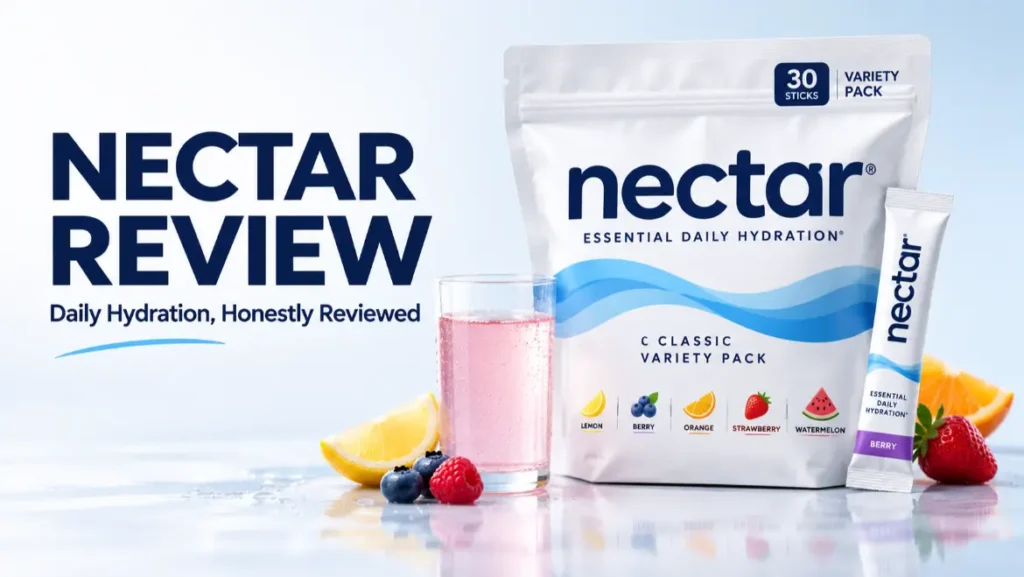
This Nectar Review finds that Essential Daily Hydration is a convenient, sugar-free choice for people who want a lightly flavored, lower-sodium electrolyte packet for ordinary days. Each packet provides five declared electrolytes, including 250 mg potassium and 50 mg magnesium. However, its 100 mg sodium may be too little for prolonged exercise, heavy sweating, or hot-weather work.
Table of Contents
Nectar is most convincing as a daily water enhancer with meaningful minerals, not as an aggressive sports-hydration formula. The simple ingredient list, zero calories, travel-friendly packets, and mild flavor profile are useful strengths. The main tradeoffs are stevia, possible settling, a premium price compared with basic mineral powders, and limited sodium for high-output conditions.
What Is Nectar Essential Daily Hydration?
Nectar Essential Daily Hydration is a single-serve electrolyte powder designed to be mixed into water. The brand positions it for everyday use rather than only workouts, hangovers, or endurance events. This Nectar Review focuses specifically on the standard Essential Daily Hydration formula—not Nectar’s Daily Energy or Daily Calm products, which contain different functional ingredients.
According to the official Nectar website, one bag contains 30 packets. The standard formula is sugar-free, calorie-free, low in sodium, naturally flavored with organic fruit, and sweetened with organic stevia leaf extract. Current flavor selections include options such as Lemon, Cherry Pomegranate, Wild Berry, Sunrise Orange, Strawberry Lemonade, Watermelon, Peach, Grape, Fruit Punch, and several tropical choices, although availability can change.
The formula is unusual because potassium—not sodium—is its largest listed electrolyte by weight. That makes it quite different from products created for salty sweaters, endurance athletes, or people deliberately seeking a high-sodium mix.
A useful Nectar Review must keep that intended use in view: this is an everyday formula first and a sports product second.
Nectar Nutrition Facts and Electrolytes

The label profile below applies to one packet of Nectar Essential Daily Hydration. Always check the pouch you receive because brands can update formulas and serving sizes.
| Nutrient | Amount per packet |
|---|---|
| Calories | 0 |
| Total carbohydrate | Less than 1 g |
| Total sugar | 0 g |
| Sodium | 100 mg |
| Potassium | 250 mg |
| Magnesium | 50 mg |
| Calcium | 75 mg |
| Chloride | 150 mg |
For this Nectar Review, the most important number is 100 mg of sodium. That is only about 4% of the FDA’s 2,300 mg Daily Value. The serving also provides more potassium than sodium, plus useful but moderate quantities of magnesium, calcium, and chloride. That mineral balance shapes the Nectar Review conclusion more than any front-of-pouch claim.
This profile earns Nectar a place in our lower-sodium electrolyte drinks guide. Lower sodium is not automatically better for every person, but it can suit someone who wants to add minerals and flavor without consuming several hundred milligrams of sodium each time.
In practical terms, the Nectar Review nutrition profile favors mineral variety over aggressive salt replacement.
Nectar Review: What Each Electrolyte Contributes
Sodium and chloride
Nectar provides 100 mg sodium and 150 mg chloride per packet. These minerals help regulate fluid balance and support normal nerve and muscle function. The dose is intentionally modest, which can make the drink easier to use on ordinary days when sweat losses are low.
That modest dose is also the formula’s clearest limitation. The American College of Sports Medicine notes that athletes who sweat heavily may lose roughly 500–700 mg sodium in an hour of vigorous exercise. A single Nectar packet would replace only a small portion of that example loss. This Nectar Review therefore would not make Nectar the first choice for long endurance sessions, very hot conditions, or people with high measured sweat-sodium losses.
That distinction is central to this Nectar Review because “contains electrolytes” does not automatically mean “matches every type of electrolyte loss.”
Potassium
At 250 mg per packet, potassium is one of Nectar’s more meaningful features. The NIH potassium fact sheet explains that potassium helps maintain intracellular fluid volume and the electrical gradients needed for normal nerve transmission and muscle contraction.
The 250 mg in Nectar remains a small fraction of total daily potassium needs, so it should complement—not replace—potassium-rich foods. People with kidney disease or anyone taking medication that affects potassium should ask a healthcare professional before regularly using potassium-containing supplements.
Magnesium and calcium
Nectar lists 50 mg magnesium and 75 mg calcium per packet. These amounts expand the mineral profile beyond sodium and potassium and may appeal to shoppers who prefer a broader electrolyte blend. However, the product should not be treated as a complete magnesium or calcium supplement.
For context, our Ultima vs LMNT comparison shows how dramatically electrolyte formulas can differ. Ultima emphasizes a broad, lower-sodium mineral blend, while LMNT centers on 1,000 mg sodium. Nectar sits much closer to the low-sodium end of that spectrum.
Nectar Ingredients and Sweetener
The current ingredient list includes organic fruit flavor, Himalayan pink salt, potassium citrate, magnesium citrate, calcium citrate, non-GMO citric and malic acids, and organic stevia leaf extract. It is a short list compared with many flavored hydration powders.
This Nectar Review sees three practical advantages in that formulation:
- There is no added sugar.
- The standard hydration formula contains no caffeine or stimulant.
- It avoids artificial colors and uses organic fruit flavor and stevia.
Still, sugar-free does not mean unsweetened. Stevia gives Nectar its sweetness, and some people notice a lingering or slightly bitter stevia finish. Citric and malic acids create tartness and may not suit people who avoid acidic drinks. “Himalayan pink salt” also sounds distinctive, but the amount of sodium on the Nutrition Facts panel matters more than the salt’s marketing name.
From an ingredient perspective, this Nectar Review sees a clean, compact formula with one obvious preference issue: you need to be comfortable with stevia.
How Does Nectar Taste?
Nectar is intended to taste lighter than a conventional sports drink. Company-hosted reviews commonly praise its subtle fruit flavor, while some independent reviewers describe it as too mild or notice the stevia. Both reactions make sense: a lightly flavored packet will appeal to people who dislike syrupy drinks but disappoint anyone expecting a bold juice or soda taste.
Because this is a research-based Nectar Review and not a hands-on taste test, taste should be treated as subjective. The best clue is the preparation range. Mixing a packet into 8 ounces creates a stronger drink, while 16 ounces produces a lighter one. Starting with 12–16 ounces is a sensible approach if you are sensitive to sweetness.
That adjustable water range makes the Nectar Review taste verdict more flexible than a simple “good” or “bad” rating.
How to Mix Nectar Correctly
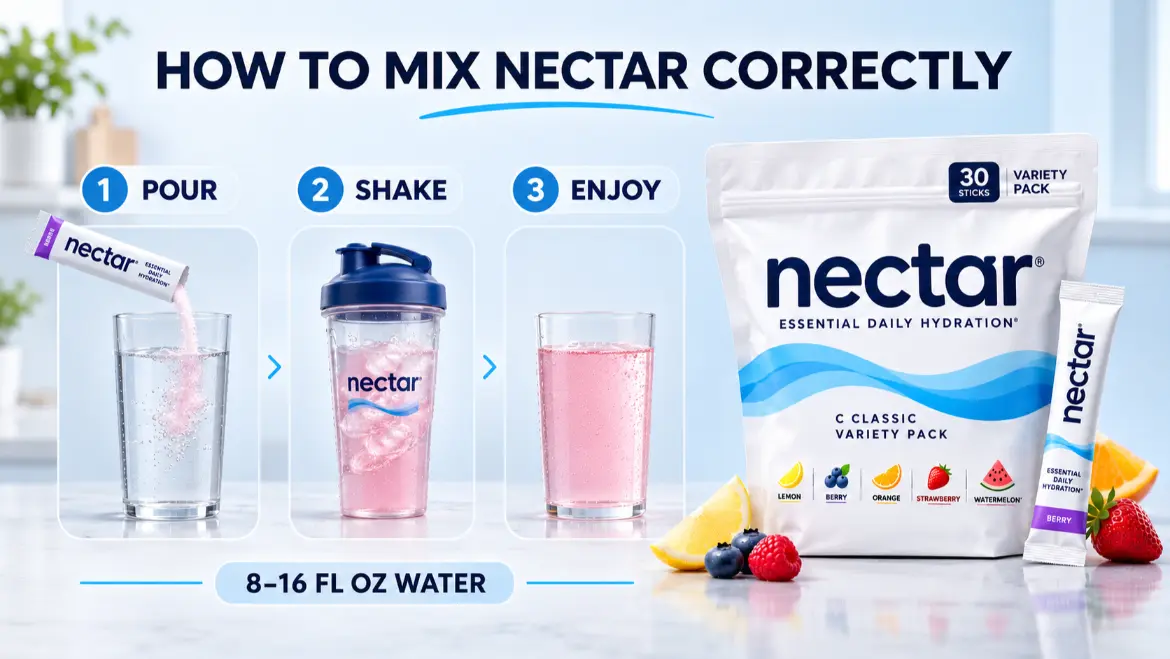
The brand instructs users to pour one packet into 8–16 fluid ounces of water, then stir or shake. A small amount of settling can occur because of the formula’s ingredients, so another quick shake may be needed after the bottle sits.
For the most consistent result:
- Add cold water to a bottle first.
- Empty one entire packet into the water.
- Shake for 10–15 seconds.
- Let foam settle briefly, then shake again if powder remains.
- Add more water if the flavor or stevia is stronger than you prefer.
The packet format is easy to carry through airport security, store in a desk, or keep in a gym bag. Our best electrolyte packets for travel and long flights guide explains why portability, serving size, sodium, sugar, and access to water all matter when choosing a travel formula.
For portability, this Nectar Review gives the slim single-serve format a clear advantage over canisters and ready-to-drink bottles.
Is Nectar Good for Exercise?
Nectar can be reasonable for light workouts, short walks, yoga, ordinary gym sessions, or days when a pleasant flavor simply helps you drink more water. It supplies five electrolytes without sugar or many calories.
The answer changes as sweat loss increases. For a long run, extended cycling session, outdoor labor, or training in humid heat, 100 mg sodium may be insufficient. ACSM hydration guidance also notes that many people exercising for under 60–90 minutes in normal weather are unlikely to deplete electrolytes significantly. In those situations, plain water and regular meals may already be enough.
This Nectar Review would choose the product for convenience and light daily mineral intake, not because every workout requires an electrolyte packet. If you know you are a heavy or salty sweater, compare a higher-sodium option and consider your total diet, session duration, heat exposure, and individual sweat rate.
Nectar Review Pros and Cons

Pros
- Zero sugar and zero calories: Helpful for people who do not want a sugary sports drink.
- Five declared electrolytes: Sodium, potassium, magnesium, calcium, and chloride are all quantified.
- Meaningful potassium: The 250 mg serving is higher than the sodium dose.
- Low sodium: Useful for ordinary sipping when concentrated sweat replacement is unnecessary.
- Simple packets: Easy to carry, portion, and mix without a scoop.
- Broad flavor range: Multiple fruit options and variety packs reduce commitment to one flavor.
- No caffeine in Essential Daily Hydration: This distinguishes it from the brand’s Energy line.
Cons
- Too little sodium for some athletes: One packet may not match losses from prolonged or heavy sweating.
- Contains stevia: The aftertaste will not suit everyone.
- Can settle: Natural mineral ingredients may require a second shake.
- Not a medical oral rehydration solution: It should not be substituted for clinician-recommended treatment during significant illness-related dehydration.
- Dynamic pricing: Discounts and bundles can make the true cost per serving harder to compare quickly.
- Marketing claims need perspective: Claims about rapid improvements in energy, focus, mood, or recovery should not be assumed to occur for every user.
Nectar Price and Value
Nectar commonly sells Essential Daily Hydration in 30-packet pouches, with one-time purchases, bundles, and subscription discounts. The official store uses changing promotions, so check the final checkout total rather than relying on an old advertised price.
The Nectar Review value calculation should always use the live checkout price because temporary discounts can materially change the cost per packet.
To judge value, divide the final cost—after discounts but before optional shipping—by the number of packets. This Nectar Review would compare that cost with what you actually need. If you value organic fruit flavor, individual sticks, five measured electrolytes, and low sodium, the convenience may justify a higher per-serving price. If you only want inexpensive flavor or sodium replacement, other powders may deliver better value.
Remember that a cheaper serving is not automatically the better serving. A high-sodium packet and Nectar solve different problems, and comparing them only by packet price can be misleading.
Who Should Consider Nectar?
The Nectar Review buyer profile is strongest when everyday convenience matters more than maximum sodium.
Nectar may be a good fit if you:
- Want a sugar-free, zero-calorie electrolyte drink for everyday use.
- Prefer 100 mg sodium rather than a high-salt formula.
- Want potassium, magnesium, calcium, and chloride in one packet.
- Like subtle fruit flavor rather than a syrupy sports drink.
- Need portable packets for work, travel, or casual activity.
- Avoid caffeine but still want flavored hydration.
This Nectar Review would suggest comparing alternatives if you:
- Need substantial sodium replacement for endurance exercise or heavy sweating.
- Dislike stevia or tart citric-acid drinks.
- Want an unflavored electrolyte with no sweetener.
- Need a clinically formulated oral rehydration solution.
- Have kidney disease, potassium restrictions, or medication-related electrolyte concerns.
For another portable, moderate-sodium format, our Nuun Review examines dissolvable tablets rather than powder sticks. Format can matter as much as the label when you are packing light.
How Nectar Compares With Other Electrolyte Powders
Nectar’s clearest identity is lower sodium, higher potassium, sugar-free daily hydration. It is less sodium-heavy than many sports-focused packets and more mineral-forward than plain flavored water enhancers.
Compared with Ultima Replenisher Lemonade, Nectar has more sodium but less magnesium. Compared with LMNT, Nectar has one-tenth the sodium and a broader five-electrolyte profile. Compared with many original Liquid I.V. formulas, Nectar contains no sugar and substantially less sodium. Compared with Nuun Sport, it comes as powder rather than a tablet and emphasizes potassium more heavily.
No single comparison makes Nectar universally better. It wins when the buyer specifically wants light daily flavor, zero sugar, portable sticks, and a low sodium dose. It loses when sodium replacement, an unsweetened formula, or the lowest possible cost is the priority.
That is the fairest Nectar Review comparison: judge the packet against the job you need it to do, not against the largest mineral number on another label.
Frequently Asked Questions
Is Nectar hydration actually good for you?
For many healthy adults, Nectar can be a convenient way to add flavor and modest amounts of five electrolytes to water. It is not necessary for everyone, and it does not replace a balanced diet. People with kidney disease or electrolyte restrictions should seek individual medical advice.
Does Nectar have sugar?
Nectar Essential Daily Hydration lists 0 grams of sugar and 0 calories. It is sweetened with organic stevia leaf extract, so it is sugar-free but not unsweetened.
How much sodium is in Nectar?
One packet contains 100 mg sodium. This Nectar Review considers that a low-to-moderate daily amount but a limited dose for replacing sodium lost during prolonged heavy sweating.
Does Nectar contain caffeine?
The standard Essential Daily Hydration formula is caffeine-free. Nectar also sells an Energy product, so confirm the exact pouch before buying if you are avoiding caffeine.
How much water should I mix with one Nectar packet?
Mix one packet with 8–16 fluid ounces of water. Use less water for stronger flavor or more water for a lighter taste.
Can you drink Nectar every day?
The product is marketed for daily use. Whether you need it every day depends on your diet, activity, climate, and health. Count electrolytes from all drinks, foods, and supplements rather than viewing each packet in isolation.
Final Verdict: Is Nectar Worth It?
This Nectar Review finds a thoughtfully positioned product with a clear audience. Nectar Essential Daily Hydration works best for people who want a light, sugar-free, lower-sodium electrolyte packet for ordinary hydration, travel, or casual exercise. Its 250 mg potassium, 50 mg magnesium, 75 mg calcium, and 150 mg chloride give it more substance than a basic flavored-water mix.
The product is less compelling for endurance athletes and heavy sweaters because 100 mg sodium is modest. Stevia sensitivity, settling, and changing promotional prices are also worth considering.
Those limitations keep the Nectar Review verdict balanced rather than treating a well-designed daily packet as the right formula for every situation.
Overall, this Nectar Review rates the formula as a strong everyday option for the right buyer—not a universal replacement for water, food, high-sodium sports nutrition, or medical oral rehydration. Choose it when low sodium and clean convenience match your actual routine.
This article contains affiliate links. If you purchase through our links, we may earn a commission at no extra cost to you. We only recommend products we genuinely believe in. Read our Affiliate Disclaimer for full details.