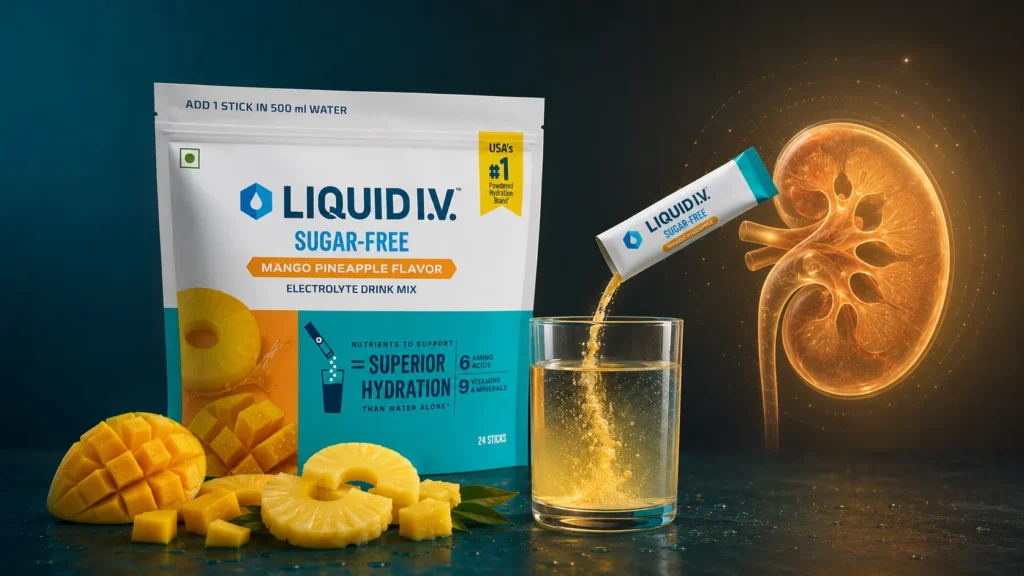
Is Liquid IV Bad for Kidneys? For most adults with normal kidney function, occasional use as directed is unlikely to be harmful, but the answer changes with chronic kidney disease, high blood pressure, fluid restrictions, diabetes, or a history of certain kidney stones. Liquid I.V. formulas vary, so check sodium, potassium, sugar, and vitamin C on the exact label and ask a clinician or kidney dietitian before routine use if kidney health is a concern.
Table of Contents
This article breaks down exactly what’s in Liquid IV, how each ingredient affects kidney function, and what both healthy people and those with kidney concerns genuinely need to know before making it a daily habit.
What Is Liquid IV and How Does It Work?
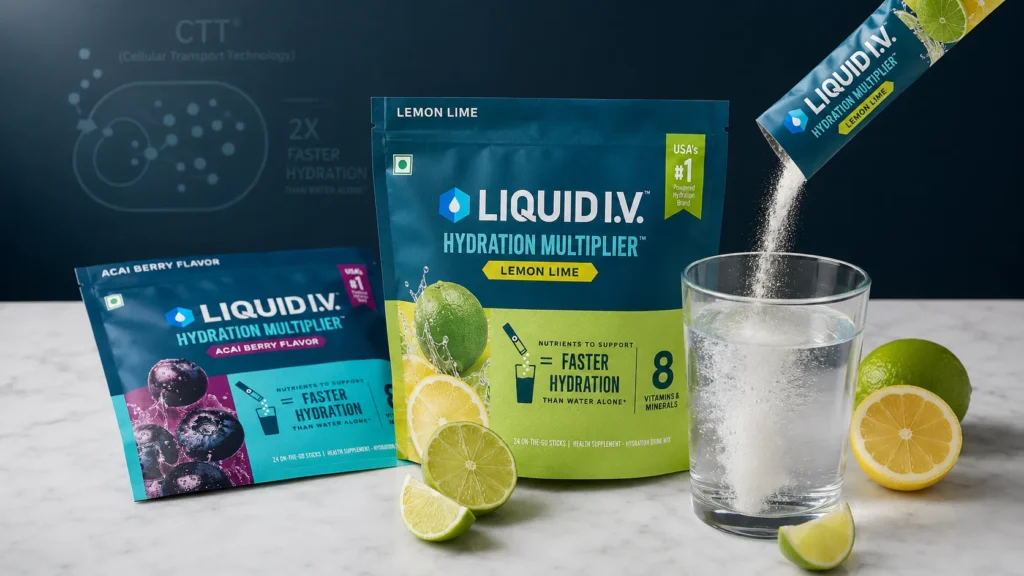
Liquid IV‘s Hydration Multiplier is an electrolyte powder that uses a formula based on the World Health Organization’s Oral Rehydration Solution (ORS) principle. The idea is that combining glucose with sodium activates the sodium-glucose cotransport mechanism in the small intestine, pulling water and electrolytes into your bloodstream faster than plain water can. The company claims this makes it 2–3 times more hydrating than water alone.
Each stick pack of Liquid IV contains:
- 500 mg of sodium (22% of the FDA daily value)
- 370 mg of potassium
- 11 grams of added sugar (dextrose and pure cane sugar)
- 45–50 calories per packet
- B vitamins (B3, B5, B6, B12) and vitamin C
Understanding these numbers is essential when asking is Liquid IV bad for your kidneys – because the kidney’s job is to filter and regulate exactly these minerals. The sodium and potassium levels are what determine the answer for most people.
How Your Kidneys Actually Handle Electrolytes
Your kidneys filter roughly 50 gallons of blood every single day. Their primary job is to remove waste, regulate blood pressure, and maintain the balance of sodium, potassium, calcium, and magnesium in your body. This is exactly why the question are electrolytes good for kidneys has a nuanced answer – not a simple yes or no.
In a healthy person, the kidneys handle moderate electrolyte intake with remarkable efficiency. When sodium comes in, they decide how much to reabsorb and how much to send out in urine. Potassium goes through the same process. The system works beautifully – until kidney function drops below a certain threshold, or sodium intake chronically exceeds what the kidneys can manage at that person’s health baseline.
So are electrolytes good for kidneys in general? Yes – balanced electrolytes actively support kidney function. Proper sodium and potassium levels help regulate blood pressure, which directly protects the kidneys from long-term damage. The risk emerges when intake tips into excess, or when the kidneys are already compromised.
Is Liquid IV Bad for Kidneys in Healthy Adults?

Is Liquid IV safe for kidney health in a person without underlying conditions? According to Healthline and multiple registered dietitians, yes – it’s generally safe for people with healthy kidney function. The kidneys handle the 500 mg sodium and 370 mg potassium per packet without significant strain, particularly when the rest of the diet isn’t already high in sodium.
A 2020 clinical study published in a peer-reviewed journal and referenced by the National Institutes of Health found that daily electrolyte beverages actually helped kidney function in Guatemalan agricultural workers exposed to high heat. Researchers noted that adequate electrolyte intake reduced markers of kidney injury compared to workers consuming plain water only. This tells us something important: proper hydration with electrolytes supports kidneys, not threatens them – for people with normal kidney function.
That said, is Liquid IV bad for kidneys if you use it in excess – say, two or three packets per day alongside a typical processed-food diet? That’s a different story. You could push sodium well past 2,300 mg before counting food at all, which creates unnecessary kidney load and blood pressure stress over time.
| Key point: One Liquid IV packet per day, mixed with adequate water, is generally considered safe for healthy adults. Daily or multi-packet use without medical oversight raises sodium concerns for most people. |
Who Should Be Careful – or Avoid It Altogether?
This is where is Liquid IV bad for your kidneys becomes genuinely important to answer honestly. Several groups face real risk from regular Liquid IV consumption:
People with Chronic Kidney Disease (CKD)

CKD patients – especially in stages 3 through 5 – have significantly reduced ability to filter and regulate sodium and potassium. According to a 2025 Medscape article written by a nephrologist, one patient with CKD experienced dangerous potassium buildup after using a daily electrolyte powder supplement. The clinical recommendation was clear: for CKD patients who already have Liquid IV or a similar product at home, dilute each packet in at least twice the recommended water volume to halve the effective mineral concentration.
For CKD patients, is Liquid IV safe for kidney health? The honest clinical answer is: only with physician guidance, diluted significantly, and ideally replaced with a kidney-specific hydration product.
People with High Blood Pressure
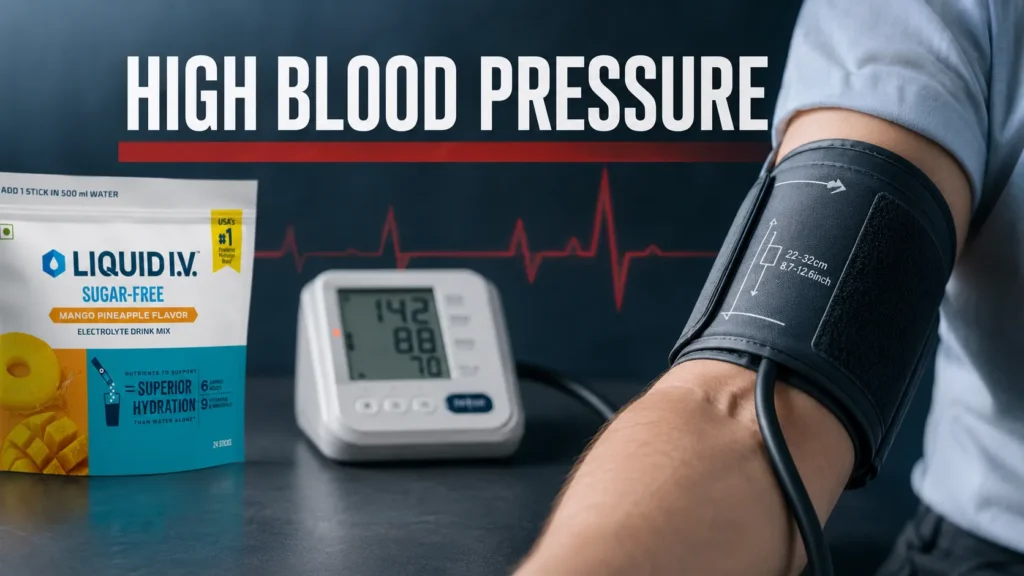
Sodium is the primary driver of blood pressure in sodium-sensitive individuals. At 500 mg per packet – 22% of the daily value – Liquid IV adds meaningful sodium on top of what most people already eat. The American Heart Association sets its sodium limit at 1,500 mg per day for people with hypertension. One Liquid IV packet already covers a third of that budget. Regular daily use creates a compounding problem for this group.
People at Risk for Kidney Stones

The Kidney Dietitian – a registered dietitian who specializes exclusively in kidney health – flagged three specific Liquid IV ingredients as concerning for stone-prone individuals: high sodium, added sugar, and vitamin C. High sodium increases urinary calcium excretion, which raises stone risk. Excess sugar promotes uric acid production. And vitamin C (ascorbic acid) converts to oxalate in the body, the compound at the center of calcium oxalate stones – the most common type. For people who’ve had kidney stones before, is Liquid IV bad for kidneys in this specific context? Yes, potentially.
Seniors and Older Adults
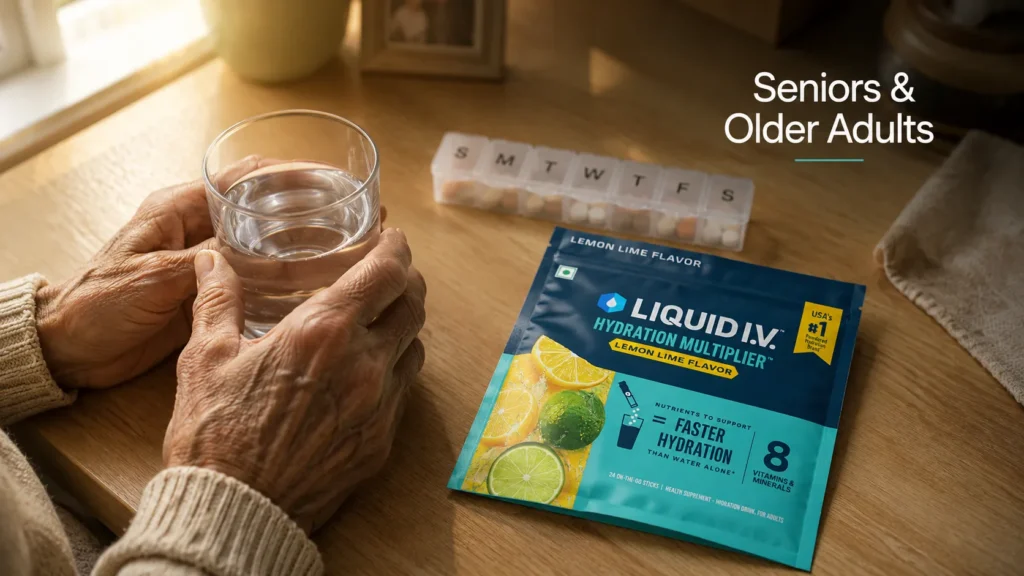
According to Ubie Health’s doctor-reviewed guide on Liquid IV safety for women over 65, older adults often have naturally declining kidney function even without a formal diagnosis. Their kidneys lose filtering efficiency gradually with age. In this group, excess sodium from regular Liquid IV use can contribute to fluid overload, elevated blood pressure, and kidney strain that wouldn’t affect a younger healthy adult. Occasional use in appropriate circumstances – during illness, after exercise, in heat – is generally considered reasonable. Daily use is more questionable and warrants a conversation with a doctor first.
Pregnant Women

Pregnancy places additional fluid regulation demands on the kidneys. While Liquid IV isn’t outright dangerous for pregnant women, the sodium and sugar content warrant caution, and medical guidance before daily use is always advisable. For pregnancy-specific hydration information, our guide on electrolytes for pregnancy nausea covers safer options and dosing context.
Are All Fluids Bad for the Kidney? Setting the Record Straight
Are all fluids bad for the kidney? Absolutely not – and it’s worth saying this clearly because some people with kidney concerns overcorrect and restrict fluid intake, which can cause more harm than any electrolyte drink.
Dehydration is a documented cause of acute kidney injury. When fluid intake drops too low, blood volume decreases and kidney filtration slows – which concentrates waste products in the blood and strains kidney tissue over time. Plain water, herbal tea, and properly diluted electrolyte drinks all support kidney health in people with functional kidneys.
The kidneys need adequate fluid flow to do their job. Are all fluids bad for the kidney? No – the kidney filters everything and adapts based on what it receives. What matters is the composition of those fluids. High-sugar drinks create metabolic byproducts that strain kidney filtration over time. Alcohol stresses kidney function through diuretic effects and metabolic burden. Excessively sodium-heavy drinks at high volumes can elevate blood pressure gradually. But clean, appropriately balanced fluids actively protect kidney health.
This is also why the 2020 NIH-referenced study in Guatemalan workers found electrolyte drinks protective, not harmful. Staying hydrated with appropriate mineral content reduced kidney injury markers compared to drinking plain water or staying under-hydrated in high-heat conditions.
Are Electrolytes Good for Kidneys? What the Research Shows
Are electrolytes good for kidneys? In the right amounts, yes – and here’s specifically how each key mineral in Liquid IV interacts with kidney function:
Sodium
Sodium helps regulate blood volume and pressure, both of which the kidneys depend on for proper filtration. In healthy amounts, sodium intake is beneficial. In excess – particularly in people with blood pressure issues or CKD – it forces the kidneys to work harder and can elevate pressure in the blood vessels supplying the kidneys, accelerating damage over time.
Potassium
Potassium works with sodium to regulate fluid balance and blood pressure. Adequate potassium intake is actually associated with lower blood pressure and reduced risk of kidney stones. However, the kidneys manage potassium excretion, and when kidney function is impaired, potassium can build up in the blood – a dangerous condition called hyperkalemia that affects heart rhythm. This is precisely why CKD patients need guidance on potassium intake rather than free use of potassium-containing supplements.
Glucose (Sugar)
Liquid IV’s formula includes 11 grams of sugar per packet – used to activate the sodium-glucose cotransport pathway that makes absorption faster. For most healthy adults, this is a manageable carbohydrate load. But for people with diabetes, pre-diabetes, or insulin resistance, repeated glucose hits from daily Liquid IV use can complicate blood sugar control and create metabolic strain that the kidneys process downstream.
Vitamin C
Liquid IV contains vitamin C (ascorbic acid). While vitamin C is essential, at supplemental doses it metabolizes into oxalate – which increases kidney stone risk in people genetically predisposed to calcium oxalate stones. This isn’t a concern for everyone, but it’s a real consideration for the stone-prone population.
So are electrolytes good for kidneys when we look at Liquid IV specifically? For healthy people with normal kidney function, moderate intake supports more than it hinders. For people with compromised kidneys, the answer shifts significantly based on which electrolytes and what amounts are involved.
Is Liquid IV Safe for Kidney Health? The Practical Guidelines
Is Liquid IV safe for kidney health when used thoughtfully? Here’s a practical framework based on the clinical and research evidence:
- Healthy kidneys, no blood pressure issues: One packet per day is generally safe, mixed in 16–32 oz of water
- Active and sweating heavily: Liquid IV is well-suited for post-workout or heat-related rehydration needs
- High blood pressure: Consult a doctor first; the 500 mg sodium per packet is significant
- CKD patients: Avoid or use only under nephrologist guidance; dilute significantly if used at all
- History of kidney stones: The sodium, sugar, and vitamin C combination warrants caution; a kidney dietitian review is worth the conversation
- Older adults (65+): Occasional use is generally reasonable; daily habitual use warrants medical input
- Pregnant women: Ask your OB first before adding any electrolyte supplement to a daily routine
If you’re evaluating Liquid IV against other hydration options with different sodium profiles, our comparison of Gatorlyte vs Liquid IV lays out exactly how the formulas differ – which can help you choose the option better suited to your health needs.
Looking for a Kidney-Friendlier Alternative?
If you’re wondering about options with lower sodium or no added sugar, the electrolyte market has expanded significantly. Products designed for low-carb or clean diets often carry lower sodium than Liquid IV’s 500 mg and skip the 11 grams of sugar entirely. For a full side-by-side breakdown, our roundup of the best electrolyte drinks covers the top options with their full nutritional profiles so you can match one to your specific needs.
Final Verdict: Is Liquid IV Bad for Kidneys?
Is Liquid IV bad for kidneys? For most healthy adults, no – it’s not. When used as intended, one packet per day with adequate water doesn’t strain healthy kidneys. In fact, the hydration it promotes actively supports kidney function by maintaining the fluid flow kidneys need to filter waste effectively.
But is Liquid IV bad for your kidneys if you already have kidney disease, high blood pressure, a history of kidney stones, or significant age-related kidney decline? The honest answer shifts to: use caution, reduce the dose, talk to a doctor first, and consider whether a lower-sodium alternative fits your situation better.
The core principle holds: are electrolytes good for kidneys when balanced? Yes. And is Liquid IV safe for kidney health for the average person? Also yes – with reasonable use. The product becomes a problem when daily heavy use adds excessive sodium on top of an already sodium-loaded diet, or when an underlying kidney condition means the kidneys simply can’t process the mineral load effectively.
Use it for what it was designed for – active recovery, heat exposure, travel dehydration, or illness – and for most people, it serves kidney health more than it hurts it. Just don’t mistake it for a daily water replacement, and get a doctor’s input if your kidneys aren’t at full function.
Frequently Asked Questions (FAQ)
Here are the most commonly searched questions about Liquid IV and kidney health – answered honestly and clearly.
Q1. Is Liquid IV bad for kidneys in healthy people?
No. For healthy adults with normal kidney function, Liquid IV is generally safe when used as directed – one packet in 16 oz of water. Healthy kidneys process the sodium and potassium efficiently without meaningful strain. The concern arises with excessive daily use or for people who already have kidney conditions.
Q2. Is Liquid IV bad for your kidneys if you have CKD?
Yes – it can be. People with chronic kidney disease (CKD), particularly stages 3–5, have reduced ability to filter sodium and potassium. According to a 2025 Medscape clinical article, a nephrologist recommended CKD patients either avoid products like Liquid IV or significantly dilute them (twice the recommended water volume) to reduce the mineral load on already compromised kidneys.
Q3. Is Liquid IV safe for kidney health during daily use?
For healthy adults, occasional use is fine. Daily habitual use is where you need to be mindful. At 500 mg of sodium per packet, using Liquid IV every day adds meaningful sodium before you’ve eaten anything. If your diet already contains processed or restaurant food, daily Liquid IV use could push total sodium well above recommended daily limits, which stresses kidney function and blood pressure over time.
Q4. Can Liquid IV cause kidney stones?
In susceptible individuals, it potentially can. According to The Kidney Dietitian – a registered dietitian specializing in renal health – Liquid IV contains three ingredients specifically associated with kidney stone risk: high sodium (which raises urinary calcium), added sugar (which increases uric acid), and vitamin C (which converts to oxalate in the body). People with a history of calcium oxalate stones should talk to a kidney dietitian before using it regularly.
Q5. Are all fluids bad for the kidney?
Are all fluids bad for the kidney? No – this is a common misconception. Adequate fluid intake actually protects kidneys by maintaining the blood flow needed for filtration and preventing the dehydration that leads to acute kidney injury. The type of fluid matters: clean water, herbal teas, and low-sodium electrolyte drinks support kidney health. High-sugar drinks, excessive alcohol, and very-high-sodium beverages used daily can create long-term kidney strain.
This article contains affiliate links. If you purchase through our links, we may earn a commission at no extra cost to you. We only recommend products we genuinely believe in. Read our Affiliate Disclaimer for full details.