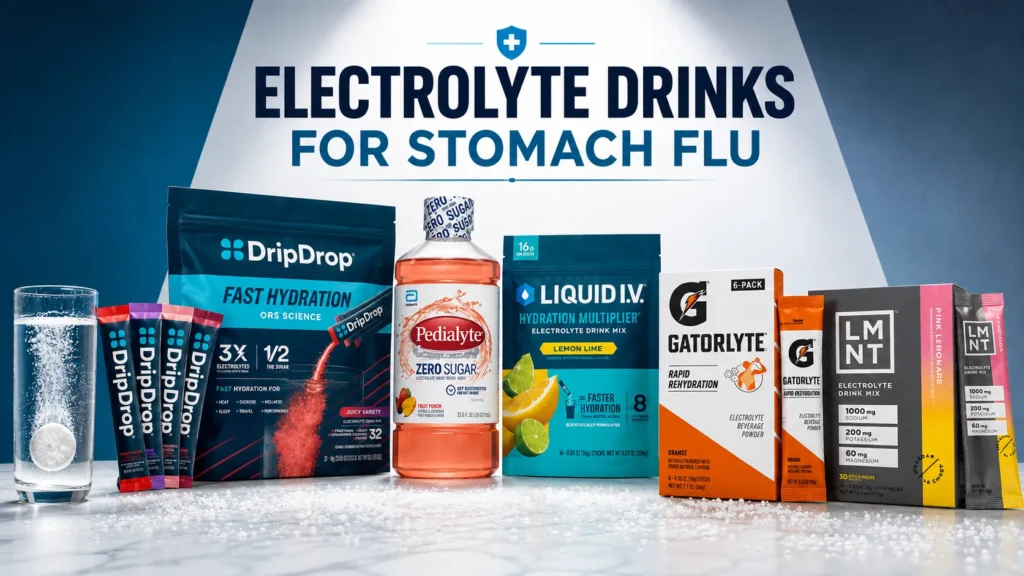
Electrolyte drinks for stomach flu can help replace water and minerals lost through vomiting and diarrhea, but the most appropriate choice is usually an oral rehydration solution rather than an ordinary sports drink. This guide compares five widely available options, explains why sodium and glucose ratios matter, and offers practical sipping guidance. Seek medical care for severe dehydration, blood in stool, persistent vomiting, confusion, or symptoms involving an infant or medically vulnerable person.
Table of Contents
The right electrolyte drinks for stomach flu are genuinely the difference between recovering at home in 24-48 hours and ending up in an urgent care getting IV fluids. This article covers the science behind why plain water fails, the best electrolyte drinks for stomach flu hydration, exactly what to eat and drink during and after the stomach flu, and how to keep fluids down when your stomach is in full revolt.
| This article uses research from the National Institute of Diabetes and Digestive and Kidney Diseases (NIDDK), WHO oral rehydration standards, a 2023 clinical trial on ORS fluid retention, LyteLine (Nov 2025), WellWhisk (May 2026), and PumpD Nutrition (June 2026). Not medical advice – see a doctor for severe symptoms. |
Why Plain Water Isn’t Enough When You Have Stomach Flu
This is the most important concept in this entire article, and it’s counterintuitive enough that most people get it wrong while sick. The problem isn’t just that you’re losing water – it’s that you’re losing water and electrolytes together through vomiting and diarrhea. And without electrolytes, the water you drink doesn’t stay in your cells.
The National Institute of Diabetes and Digestive and Kidney Diseases (NIDDK) states directly that viral gastroenteritis treatment centers on replacing lost fluids and electrolytes – not just fluids alone. According to LyteLine’s 2025 clinical review of stomach flu hydration, “while water helps, it does not replace all the minerals lost during illness.” Sodium is the primary mineral controlling how much water your body retains in the bloodstream, and without enough of it, water passes straight through.
There’s also an active harm to consider: drinking large amounts of plain water when you’re sick can dilute the sodium remaining in your blood, worsening cellular dehydration. My Balance’s February 2026 clinical nutrition guide put it plainly: “a zero-sugar hydration mix high in sodium and chloride is your real tool here, not water volume.”
The Science Behind ORS and Stomach Flu Recovery
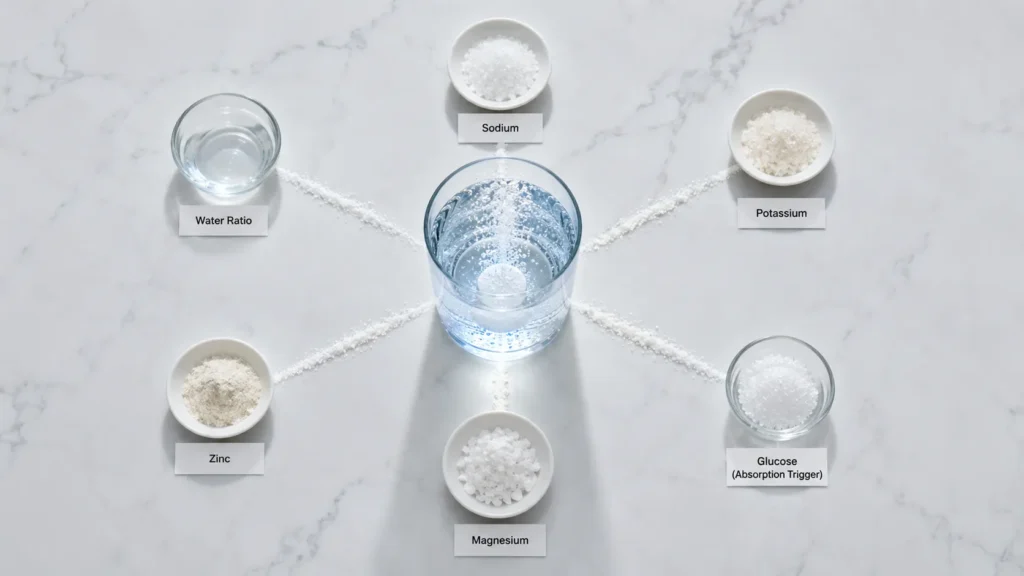
ORS stands for Oral Rehydration Solution – a formula developed by the World Health Organization specifically for rehydrating people with severe fluid loss from vomiting and diarrhea. The science behind it is elegant: pairing glucose with sodium activates a specific cotransport mechanism in the small intestinal wall that pulls water and minerals into the bloodstream far faster than osmosis alone.
A 2023 clinical trial confirmed that ORS-based solutions retained 77% of ingested fluid compared to just 58% for plain water after dehydration. That 19-percentage-point difference can be the gap between recovering at home and needing IV hydration in a clinical setting. The key ratio in WHO ORS: approximately 75 mg/dL sodium and a glucose-to-sodium pairing that keeps osmolality in the 200-310 mOsm/L range.
The practical implication: the best electrolyte drinks for stomach flu hydration are built around this ORS principle. Standard sugary sports drinks are not – and that distinction matters enormously when your gut is already inflamed.
What Electrolytes You Lose During Stomach Flu
Every episode of vomiting or diarrhea depletes a specific set of minerals. Understanding what you lose clarifies why any discussion of electrolytes for stomach flu needs to cover more than just sodium:
- Sodium – the most critical loss; controls fluid distribution between blood and cells; low sodium causes dizziness, headache, and worsening dehydration
- Potassium – lost in diarrhea specifically; low levels cause weakness, fatigue, and muscle cramping per the
NIH Office of Dietary Supplements Potassium fact sheet
- Chloride – bonded to sodium in sweat and GI fluids; essential for stomach acid production and fluid balance
- Magnesium – elevated losses during prolonged illness; low magnesium worsens muscle cramps and sleep disruption during recovery
- Glucose – not an electrolyte but needed to activate sodium absorption in the small intestine via the cotransport mechanism
Stomach flu hospitalizes over 200,000 Americans annually, according to Salt of the Earth’s March 2026 review of viral gastroenteritis data. The reason most of those hospitalizations happen is insufficient electrolyte replacement in the first 12-24 hours – not lack of water. That’s the problem electrolyte drinks for stomach flu directly solve.
5 Best Electrolyte Drinks for Stomach Flu Hydration
These are the five strongest electrolyte drinks for stomach flu available in the US market, ranked by clinical relevance, sodium content, sugar profile, and suitability for an inflamed digestive system. Here’s the full comparison at a glance:
| Product | Sodium | Potassium | Sugar | Formula | Best For |
| DripDrop ORS | 330 mg | 185 mg | 7 g | WHO ORS | All illness recovery |
| Pedialyte Classic | 490 mg | 280 mg | 9 g | ORS-based | Kids + adults |
| Gatorlyte | 490 mg | 350-400 mg | 12 g (RTD) | Isotonic | Athletes, adults |
| Liquid IV | 500 mg | 370 mg | 11 g | CTT / ORS | General illness |
| LMNT | 1,000 mg | 200 mg | 0 g | Sports-grade | Heavy fluid loss, adults |
#1 DripDrop ORS – Best Overall for Stomach Flu
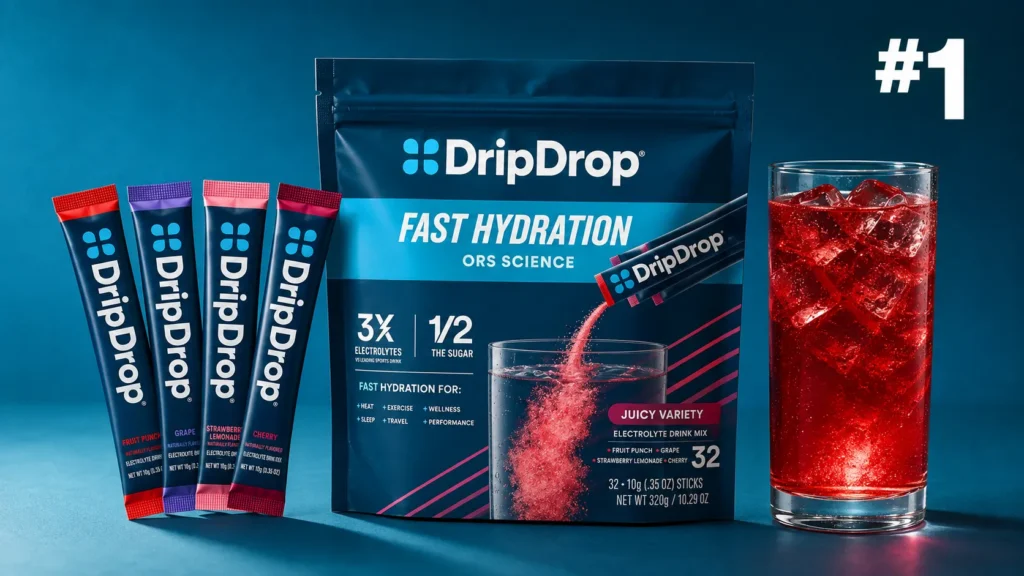
The top recommendation for best electrolyte drinks for stomach flu hydration is DripDrop ORS. DripDrop built its formula directly on WHO oral rehydration science and holds the highest Beverage Hydration Index (BHI) score of 2.3 in independent lab testing – meaning it absorbs fluids into the bloodstream faster per volume consumed than any mainstream competitor. In a stomach flu context where you may only be able to keep small amounts down, maximum absorption per sip matters enormously.
DripDrop delivers 330 mg sodium, 185 mg potassium, and 50 mg magnesium per serving, with 7 grams of glucose – enough to activate the cotransport absorption pathway without exceeding the osmotic threshold that causes diarrhea to worsen. It also contains B vitamins and vitamin C, which support immune recovery alongside rehydration. No artificial sweeteners, no artificial colors.
WellWhisk’s May 2026 roundup noted DripDrop as “doctor-formulated” and specifically designed for acute illness dehydration rather than general sports use. For a full comparison of how DripDrop stacks up against Liquid IV in absorption and ingredients, our Gatorlyte vs Liquid IV guide covers the clinical differences in detail.
#2 Pedialyte – Most Clinically Recognized
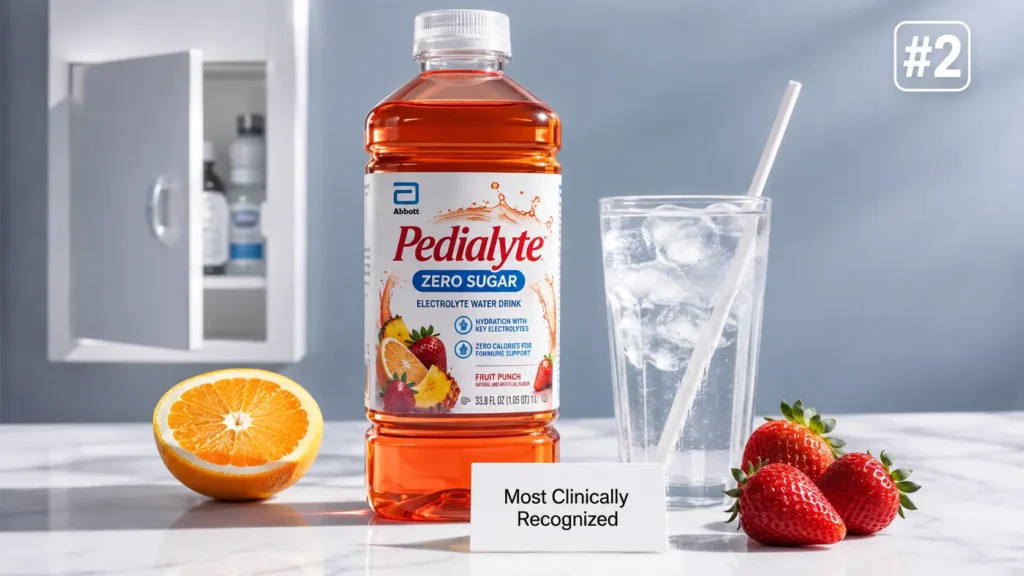
Pedialyte is what doctors reach for first when they recommend oral rehydration for stomach flu – in children and adults alike. Its formula is based on WHO ORS principles and delivers 490 mg sodium and 280 mg potassium per serving, with just 9 grams of sugar. The sugar level sits within the ORS range needed to activate intestinal absorption without causing osmotic diarrhea.
The clinical trust Pedialyte carries is its biggest asset. It’s widely available at every major US pharmacy and grocery store at any hour – which matters at 3 AM when the stomach flu hits suddenly. PumpD Nutrition’s June 2026 sick-day hydration review confirmed Pedialyte as “the benchmark clinical product for GI illness recovery” in the ORS category. The Freezer Pop format is particularly useful for people who can’t keep liquid down – sucking on a frozen Pedialyte pop delivers minerals gradually through the oral mucosa.
Pedialyte Sparkling and Pedialyte Electrolyte Water extend the lineup beyond the classic formula. For the stomach flu specifically, the Classic or Powder Pack versions with the standard sodium level are the most clinically appropriate choices.
#3 Gatorlyte – Best for Adults with Heavy Fluid Loss
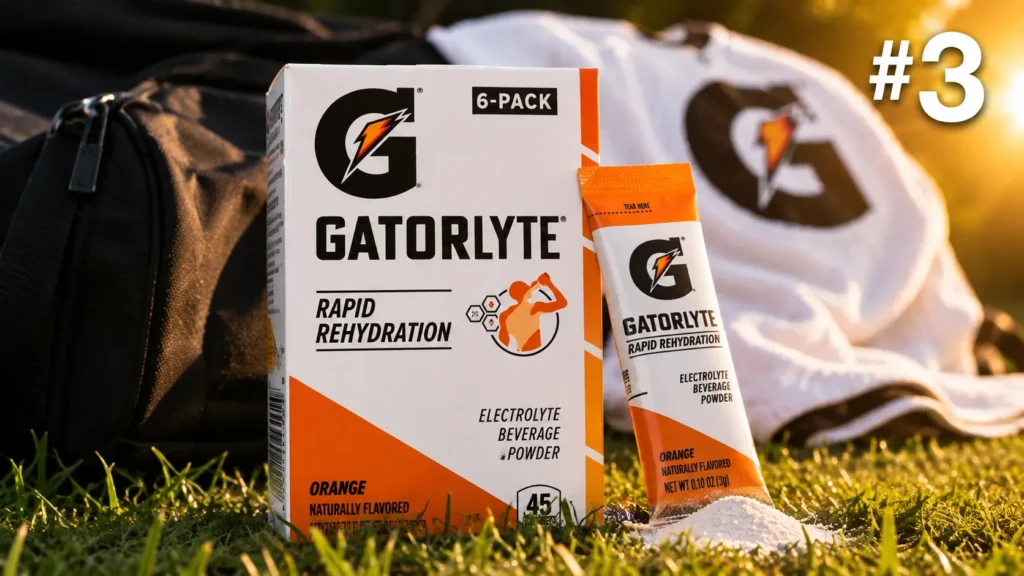
Gatorlyte – not regular Gatorade – earns the #3 position because it combines a five-electrolyte profile with an isotonic formula that clinical research says clears the stomach efficiently. At 490 mg sodium, 350-400 mg potassium, 105 mg magnesium, and 120 mg calcium per serving, Gatorlyte covers the full electrolyte spectrum that stomach flu depletes.
The key distinction: Gatorlyte contains no artificial dyes or artificial sweeteners – a formulation detail that matters for inflamed GI tissue that’s already reactive. Regular Gatorade Thirst Quencher, by contrast, contains 34 grams of sugar and artificial dyes that can worsen gut irritation. Gatorlyte is Gatorade’s clinically informed product, not the standard sports drink. The 12-gram sugar content in the RTD bottle is within clinical ORS range.
#4 Liquid IV – Best Absorption Speed and Taste Variety
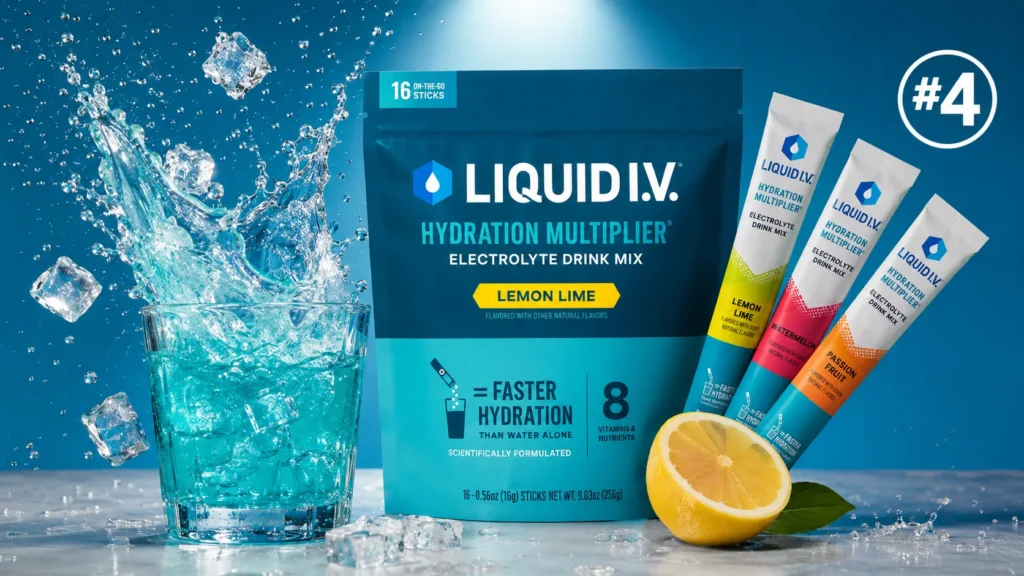
Liquid IV’s Cellular Transport Technology uses the same sodium-glucose cotransport mechanism as clinical ORS. At 500 mg sodium, 370 mg potassium, and 11 grams of sugar, it sits just above the clinical ORS sodium range while delivering meaningful potassium alongside the sodium. PumpD Nutrition’s June 2026 review confirmed the added B vitamins and vitamin C provide “immune and energy support during recovery” that pure mineral products don’t.
Where Liquid IV wins over competitors for stomach flu: 15+ flavors mean you’re far more likely to find one you can tolerate when nothing sounds appetizing. A drink you can actually keep down is infinitely more useful than a “clinically superior” product you immediately vomit back up. The sugar-free version removes the glucose but uses allulose and stevia – for stomach flu specifically, the original version with glucose is better because you need the cotransport activation.
For a detailed comparison of how Liquid IV performs against LMNT on ingredient levels and clinical use cases, our full LMNT vs Liquid IV comparison covers everything.
#5 LMNT – Best for Severe Sodium Loss in Adults
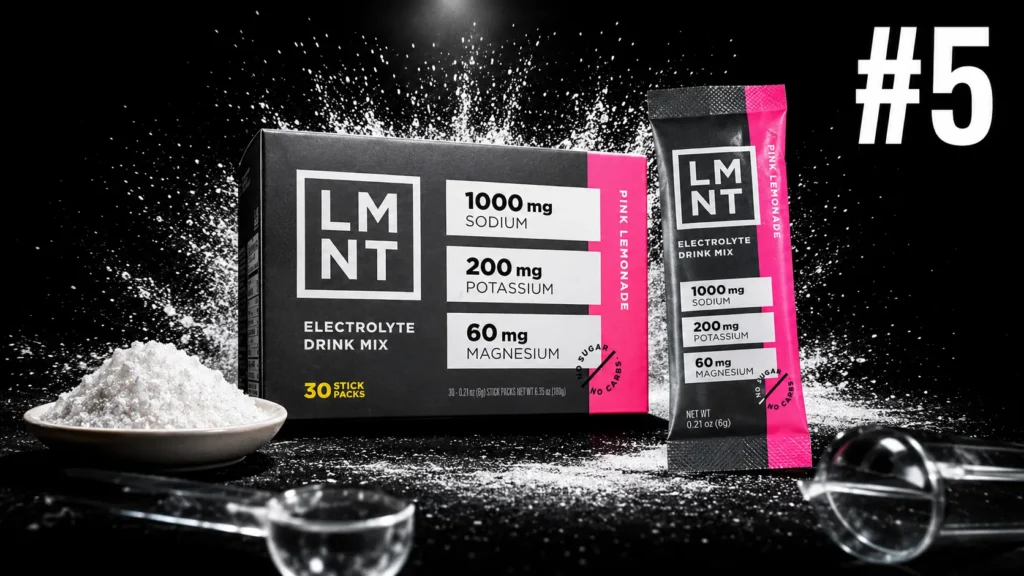
LMNT is not an ORS product and isn’t specifically designed for stomach flu – but its 1,000 mg sodium per packet makes it the strongest single-serving sodium replacement available in the mainstream market. For adults experiencing severe vomiting who are already sodium-depleted, LMNT’s Raw Unflavored version (zero taste, zero additives) delivers a massive sodium correction in a single scoop.
The important caveat: LMNT’s 1,000 mg sodium with zero sugar doesn’t activate the glucose cotransport mechanism that ORS products use. This means it rehydrates through osmotic mechanisms rather than active transport – effective but slower for acute GI illness. Use it as a booster alongside food rather than as a standalone product during active vomiting. For more on daily LMNT use, our article on can you drink LMNT everyday covers appropriate use contexts.
What to Eat and Drink During and After the Stomach Flu
What to eat and drink during and after the stomach flu is one of the most common questions people search while actively sick. Here’s the phased approach based on clinical guidance:
Step1 – During Active Vomiting and Diarrhea (First 12-24 Hours)
Focus only on fluids. Solids worsen nausea and trigger more vomiting. Take small, slow sips of an ORS-based electrolyte drink – 1-2 oz every 5-10 minutes. My Balance’s February 2026 guide specifically warns: “never chug your fluids when sick.” Mix your electrolyte powder in 24-32 oz of water rather than the standard 16 oz. The diluted concentration is easier for an inflamed GI tract to absorb without triggering more vomiting.
If you can’t keep even sips down, try Pedialyte Freezer Pops or ice chips made from an electrolyte drink. Sucking on frozen electrolyte products delivers minerals slowly enough that most inflamed stomachs can handle them.
Step2 – During Recovery (24-48 Hours In)
When the active vomiting slows, follow the BRAT approach – Bananas, Rice, Applesauce, Toast. These foods are bland, low-fiber, and gentle on an inflamed gut. Add boiled potatoes, plain crackers, and clear broths. Bone broth is particularly useful here: natural sodium, potassium, and collagen support in a warm, easy-to-tolerate form.
Step3 – After Recovery (48-72 Hours)
This is when what to eat and drink during and after the stomach flu shifts from survival mode to gut repair. Probiotic foods – yogurt, kefir, miso – help restore the gut microbiome that GI illness disrupts. Continue electrolyte drinks with meals for 2-3 more days, even if you feel fine, because electrolyte stores take longer to fully replenish than symptoms take to resolve.
Drinks for When You Have Diarrhea – What Works

Diarrhea deserves specific attention because it creates a unique risk: osmotic diarrhea caused by high-sugar drinks. When your gut is inflamed, introducing 30+ grams of sugar into the intestines pulls water from your bloodstream into your intestinal lumen – actively worsening diarrhea while you think you’re hydrating.
My Balance’s February 2026 clinical nutrition guide explained this mechanism directly: “standard commercial sports drinks are terrible for this condition because they frequently contain upwards of 30 grams of refined sugar. When you introduce a massive concentration of sugar into an already inflamed digestive tract, the body pulls water out of your bloodstream and into your intestines – osmotic diarrhea, worsening the exact symptom you’re trying to treat.”
The best drinks for when you have diarrhea:
- DripDrop or Pedialyte – clinically calibrated glucose levels below osmotic diarrhea threshold
- Plain coconut water (unsweetened) – natural potassium with moderate, whole-food sugar levels
- Clear broth with added salt – zero sugar, meaningful sodium
- Diluted Gatorlyte (more water than the label suggests) – if nothing else is available
- Plain water sipped slowly alongside electrolyte intake
The worst drinks for when you have diarrhea: regular Gatorade (34g sugar), standard Powerade, fruit juices, sodas (even diet), and milk, which lactose-intolerant people process especially poorly during gut inflammation.
How to Drink Electrolytes When You Can’t Keep Anything Down
This is the most practical problem sick people face – and the technique matters more than the product.
- Sip rule: 1-2 oz (2-4 tablespoons) every 5-10 minutes. Smaller volume means less likelihood of triggering the vomiting reflex
- Temperature: Cold or room temperature fluids are better tolerated than warm during active vomiting
- Dilution: Use 24-32 oz of water per electrolyte packet rather than the standard 16 oz – gentler concentration on an inflamed stomach
- Ice chips: Freeze diluted Pedialyte or DripDrop into ice chips; sucking on these minimizes volume while still delivering minerals
- Horizontal position: Lying slightly propped up (not flat, not fully upright) after sipping slows gastric emptying and reduces reflux
- Wait 10-15 minutes after vomiting before attempting another small sip – stomach muscles need a brief recovery window
If you can’t keep any fluid down for 12 hours or more, or if vomiting is blood-tinged, those are medical emergency signals. Oral electrolyte drinks for stomach flu have clear limits – IV hydration in a clinical setting becomes necessary at that point.
6 Signs of Norovirus You Should Know
Stomach flu covers several viral causes. Norovirus is the most common culprit in the US, responsible for 19-21 million cases annually per the CDC. Here are the 6 key signs you’re dealing with norovirus specifically:
- Sudden nausea – onset within 12-48 hours of exposure, often arriving abruptly rather than gradually
- Forceful vomiting – norovirus often causes violent vomiting in waves rather than the gradual nausea of other illnesses
- Watery diarrhea – non-bloody, watery, frequent
- Stomach cramps – sharp or cramping pain, typically in the lower abdomen
- Low-grade fever – usually under 101.5°F; high fever suggests bacterial infection rather than norovirus
- Body aches and headache – systemic inflammation symptoms alongside the GI presentation
Norovirus is exceptionally contagious – exposure to as few as 18 viral particles causes infection. The virus survives on surfaces for days and resists standard hand sanitizers. Only soap and water hand washing and bleach-based surface cleaning reliably inactivate it. Alcohol-based sanitizers are insufficient.
When to See a Doctor Instead of Treating at Home
Not every stomach flu resolves safely at home. Seek medical attention if:
- Vomiting or diarrhea lasts more than 2 days without improvement in adults (24 hours in children under 2)
- High fever above 102°F alongside GI symptoms
- Blood in vomit or stool
- Signs of severe dehydration: no urination for 8+ hours, dark brown urine, extreme dizziness when standing, sunken eyes
- Inability to keep any liquid down for 12+ hours
- Confusion, extreme weakness, or seizures
These signs indicate that oral electrolytes for stomach flu are no longer sufficient and IV fluid replacement in a medical setting is needed. Don’t wait these out – dehydration-related kidney damage and electrolyte imbalances from untreated severe GI illness can cause lasting harm.
Electrolytes Drinks to Add to Your Wellness Routine for Prevention
The best time to think about electrolytes drinks to add to your wellness routine is before you get sick, not during. Maintaining consistent daily electrolyte intake means you start illness from a position of mineral adequacy rather than deficit – which translates to milder symptoms and faster recovery when a bug does hit.
According to FDA sodium guidance, most Americans already meet or exceed standard daily sodium targets through dietary intake. The gap that matters for wellness routine use isn’t raw sodium – it’s potassium and magnesium, which most Americans fall short on regardless of health status.
Practical electrolytes drinks to add to your wellness routine for prevention:
- One daily serving of a low-sugar electrolyte drink like Ultima Replenisher or LMNT to maintain mineral baseline
- Coconut water 2-3 times per week for natural potassium top-up
- Bone broth 1-2 times per week for collagen and natural mineral support
- Keep a box of DripDrop or Pedialyte in your medicine cabinet for the inevitable sick day
For people who manage migraines alongside their general wellness routine, our article on electrolyte drink for migraines shows how the same hydration principles reduce migraine threshold – prevention works both ways.
Final Verdict: Electrolyte Drinks For Stomach Flu
The best electrolyte drinks for stomach flu are those built on ORS science – DripDrop leads the clinical category, Pedialyte brings institutional trust and universal availability, Gatorlyte covers the five-electrolyte spectrum, Liquid IV offers fast absorption and palatability through a wide flavor range, and LMNT fills the acute high-sodium gap for adults with severe fluid loss.
Avoid high-sugar sports drinks that worsen osmotic diarrhea. Avoid plain water in large amounts without electrolyte support. And keep electrolytes drinks in your wellness routine year-round so your body isn’t starting from a mineral deficit when illness hits. The difference between a 24-hour and a 72-hour stomach flu is often just the quality and speed of your rehydration strategy.
| Disclaimer: This article is for informational purposes only and does not constitute medical advice. Seek medical care if symptoms are severe, blood is present, or dehydration signs are significant. Stomach flu in infants, elderly adults, and immunocompromised individuals can escalate quickly and warrants prompt medical evaluation. |
Frequently Asked Questions
Quick answers to the most searched questions about stomach flu hydration.
Will electrolytes help with a stomach bug?
Yes – electrolytes for stomach flu replace the sodium, potassium, and magnesium lost through vomiting and diarrhea. ORS-based products like DripDrop and Pedialyte absorb significantly faster than plain water and reduce recovery time when used consistently.
Is Pedialyte or Gatorade better for norovirus?
Pedialyte wins. Its ORS-based formula sits within WHO osmolality guidelines. Standard Gatorade has 34g sugar which can worsen osmotic diarrhea in an inflamed gut. Gatorlyte (not regular Gatorade) is the closest Gatorade alternative appropriate for illness.
What drinks are good for stomach flu?
Best choices: DripDrop ORS, Pedialyte, Gatorlyte, Liquid IV, coconut water (unsweetened), clear bone broth, and diluted electrolyte mixes. Sip all of these slowly in small amounts rather than drinking large volumes at once.
How to flush out a stomach flu?
You can’t “flush” stomach flu – it’s viral and runs its course in 1-3 days. What you can do is support recovery through small, frequent ORS electrolyte sips, rest, and avoiding foods that worsen GI symptoms until the virus resolves naturally.
What color Gatorade is best for stomach flu?
Clear Gatorade Zero (no sugar, no artificial dyes) or white/light-colored varieties are safest for an inflamed gut. Avoid dark reds and blues from artificial dyes. Gatorlyte in any color is the better medical choice over standard Gatorade.
What are 6 signs of norovirus?
Sudden nausea, forceful vomiting, watery non-bloody diarrhea, stomach cramps, low-grade fever (under 101.5°F), and body aches or headache. Norovirus onset is typically abrupt, occurring 12-48 hours after exposure.
How long does stomach flu last?
Most stomach flu cases resolve in 1-3 days for healthy adults. Norovirus typically peaks at 24-48 hours. In children, elderly adults, and immunocompromised individuals, symptoms can last longer and dehydration risk is higher.
Is Gatorade better than water for stomach flu?
Gatorlyte is better than water. Standard Gatorade Thirst Quencher (34g sugar) can worsen osmotic diarrhea and is not recommended. ORS products like DripDrop and Pedialyte outperform all versions of Gatorade for illness-specific rehydration.
How to heal gut after stomach bug?
After symptoms resolve: eat BRAT foods (bananas, rice, applesauce, toast), add probiotic foods like yogurt and kefir to restore gut microbiome, continue electrolyte drinks with meals for 2-3 days, and avoid alcohol, dairy, and high-fat foods for another 48 hours.
What kills the stomach flu virus?
Time and your immune system. No medication kills norovirus or rotavirus directly. Antiviral drugs don’t treat stomach flu. Soap-and-water handwashing and bleach-based surface disinfection prevent spread. Hydration and rest support your immune system while it clears the virus.
This article contains affiliate links. If you purchase through our links, we may earn a commission at no extra cost to you. We only recommend products we genuinely believe in. Read our Affiliate Disclaimer for full details.