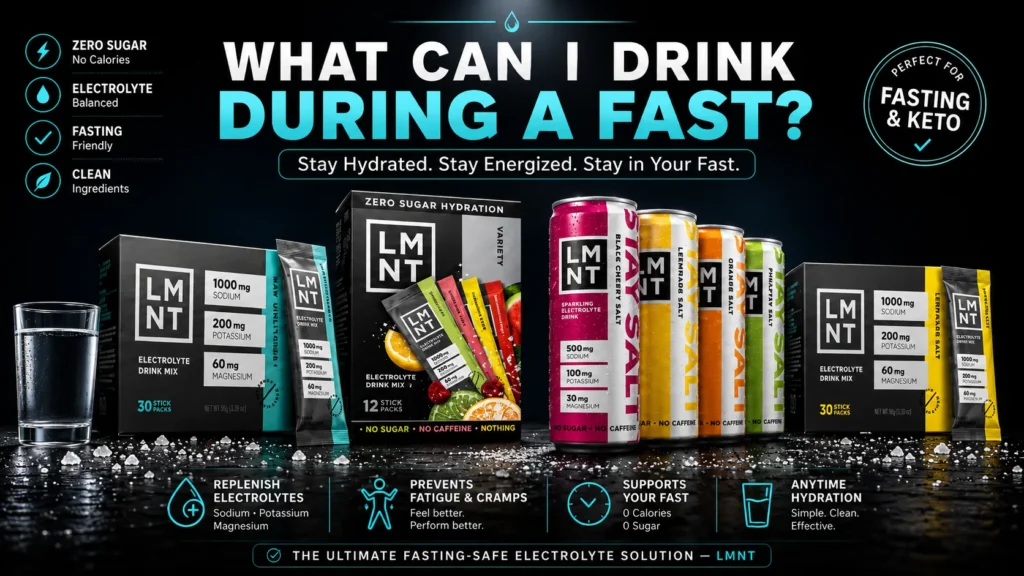
So you’re fasting. Alarm went off at 7 AM, stomach is already asking questions, and now you’re staring at your fridge wondering: what can I drink during a fast without accidentally ending the whole thing? Good news – your options are wider than just water and sadness. The answer depends on one straightforward principle, and once you understand it, everything else falls into place. This article covers exactly what you can and can’t drink, tackles does LMNT break a fast head-on, and explains how to get electrolytes while fasting without killing your progress.
Table of Contents
The One Rule That Determines Everything
Fasting revolves around a single physiological goal: keeping insulin low. Insulin is the hormone your body releases when glucose enters the bloodstream. When insulin rises, your body shifts from fat-burning mode to glucose-burning mode – and the metabolic benefits of fasting pause or disappear entirely.
So the rule is: anything that triggers a significant insulin response breaks your fast. Calories – especially carbohydrates and sugar – trigger it. Pure minerals, plain water, and zero-calorie beverages without glucose don’t. That rule is your filter for every drink decision during a fasting window.
ScienceInsights (May 2026) summarizes it clearly: “Most beverages that stay under roughly 1 to 5 calories per serving keep you in a fasted state for fat-burning purposes, but even small amounts of protein or sugar can interrupt deeper cellular processes like autophagy.” Keep that in mind as we work through each option.
What Can I Drink During A Fast? Your Safe Options

Here is a clean breakdown of every drink that earns a place in your fasting window:
1. Water – Always, Without Question
Water has zero calories, zero carbohydrates, and zero insulin impact. It’s the universal foundation of every fasting protocol. Still water, filtered water, tap water – all of it is fully safe. Drink as much as you want during a fast. One note: during extended fasts, plain water alone isn’t sufficient because you lose electrolytes through urination. More on that shortly.
2. Black Coffee – Your Morning Ally
Black coffee contains roughly 2-5 calories per cup – too low to trigger an insulin response. A 2021 Oklahoma State University study found that black coffee after a 10-hour fast produced no measurable difference in glucose or triglyceride levels compared to plain water. Caffeine also supports fat oxidation and suppresses appetite, which actually makes fasting easier, not harder.
The one absolute rule: keep it black. Milk, cream, sugar, or flavored syrups end your fast immediately. A latte is breakfast, regardless of how much you try to convince yourself otherwise.
3. Plain Tea and Herbal Tea
Green tea, black tea, white tea, and herbal teas are all fasting-safe when consumed plain and unsweetened. Green tea in particular contains catechins – antioxidant compounds that support fat oxidation and may improve insulin sensitivity. Research cited by BetterMe (April 2026) confirms that plain tea has negligible caloric content and no meaningful insulin impact during fasting.
What to avoid: bottled teas, chai with milk, tea lattes, or anything with added sweeteners. A standard bottled tea from a gas station can carry 20-30 grams of sugar. Brew your own and leave it plain.
4. Sparkling Water
Plain sparkling water is fasting-safe. The carbonation doesn’t affect insulin or blood sugar. Some people find the fizz helps curb appetite during a fasting window, making it a useful tool for getting through the tougher hours. Just make sure it’s unflavored – many “sparkling water” products in the US are flavored with citric acid or artificial sweeteners that can irritate some fasting protocols.
5. Electrolyte Drinks Without Sugar
This is the category most people get confused about – but the science is straightforward. Electrolytes are minerals: sodium, potassium, magnesium, calcium. They carry zero calories and zero carbohydrates. They do not trigger an insulin response. And during fasting, they’re more important than at any other time. More on this in a dedicated section below.
What Doesn’t Break a Fast – The Definitive List
What doesn’t break a fast when used correctly:
- Still water and sparkling water (unflavored)
- Black coffee with no additions
- Plain, unsweetened herbal, green, black, and white tea
- Plain electrolyte powders with zero sugar and zero calories
- Apple cider vinegar diluted in water (trace calories – under 3)
- Bone broth (gray zone – low calorie but contains some protein and may affect autophagy fasting)
The important distinction: what doesn’t break a fast changes slightly depending on your fasting goal. For weight loss and fat-burning through 16:8 or 18:6 protocols, the list above holds broadly. For autophagy-focused fasting (cellular cleanup), some practitioners apply stricter standards and limit to water and pure minerals only. For gut rest fasting, even coffee can be a concern because it stimulates digestive processes.
Know your goal. That context determines exactly where your line sits. Our full breakdown of do electrolytes break a fast covers each fasting type in detail with the evidence behind each decision.
Does Coke Zero Break a Fast?
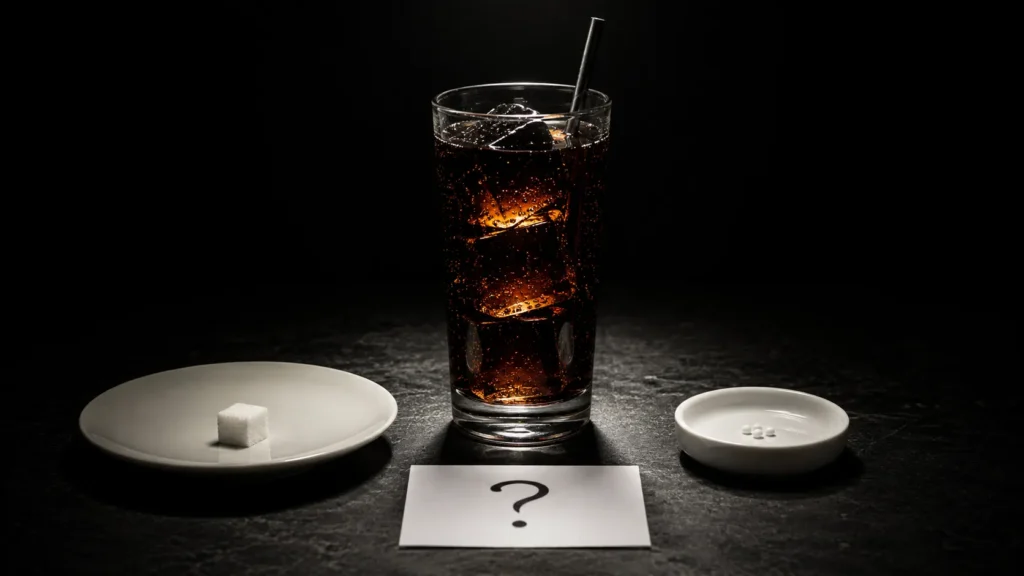
Does Coke zero break a fast? The official answer is: technically no, practically borderline, strategically avoid.
Here’s the breakdown. Coke Zero uses sucralose and acesulfame potassium as sweeteners – both technically zero-calorie. One randomized crossover study found no measurable cephalic insulin response from tasting aspartame. On paper, does coke zero break a fast checks out as safe.
But the full research picture is less clean. BetterMe’s 2026 fasting guide notes that habitual use of artificial sweeteners can affect insulin resistance over time. The sweet taste also triggers cravings that make fasting mentally harder. Dr. Berg’s fasting guide warns that “even products labeled ‘diet’ can affect your metabolism and make it harder to stay consistent.”
The phosphoric acid in Coke Zero also erodes tooth enamel, and the carbonation combined with artificial sweeteners can cause bloating and digestive discomfort on an empty stomach. For a strict 16:8 fast, a Coke Zero probably won’t metabolically end your fast. But there are better choices. Does coke zero break a fast in the technical sense? Probably not. Is it the smart choice? Also no.
Does LMNT Break a Fast? Official Answer + The Science
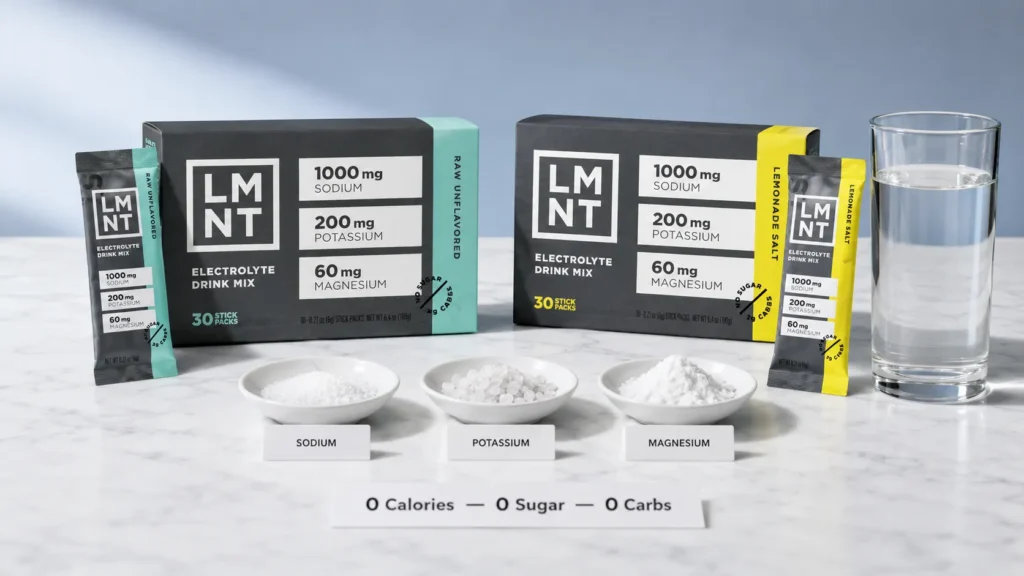
Let’s settle this one properly. Does LMNT break a fast? According to LMNT’s official fasting documentation, no – LMNT does not break a fast. Their position is backed by community data from members who use continuous glucose monitors (CGMs). Those users consistently report zero blood sugar response when drinking LMNT during their fasting window.
Here’s why does LMNT break a fast gets a clean no. Each packet contains sodium chloride, potassium chloride, and magnesium malate. These are mineral salts – not carbohydrates, not proteins, not glucose. They don’t metabolize for energy and don’t trigger insulin. Zero sugar across every LMNT product.
The nuance between versions:
- LMNT Raw Unflavored: zero calories, zero sweeteners – the strictest fasting option; nothing beyond the three minerals
- LMNT Flavored (Citrus Salt, Watermelon, Raspberry, etc.): approximately 5-10 trace calories from stevia and natural flavors – safe for all standard IF protocols (16:8, 18:6, OMAD)
For autophagy fasting specifically – where the goal is triggering cellular cleanup – the Raw Unflavored version is the safer choice. The trace calories in flavored versions are too low to matter for fat-burning fasts but worth noting for the strictest protocols.
How to Get Electrolytes While Fasting – And Why You Need To
Here’s the part most people miss entirely. When insulin drops during a fast, your kidneys respond by excreting more sodium. Sodium carries water with it. Within 16-24 hours, you can lose meaningful amounts of sodium, potassium, and magnesium through urine – even without sweating at all.
This is why fasting symptoms – headache, fatigue, dizziness, brain fog, leg cramps – aren’t signs that fasting is bad for you. They’re signs of mineral depletion. And they go away when you replace the electrolytes.
According to the NIH Office of Dietary Supplements, magnesium supports over 300 enzymatic reactions in the body and plays a direct role in muscle and nerve function. During fasting, magnesium depletion compounds the fatigue that fasting already creates. Separately, NIH’s potassium health fact sheet confirms potassium’s role in muscle contraction and blood pressure regulation – both affected by extended fasting.
So how to get electrolytes while fasting – practically:
- Add a zero-sugar electrolyte powder (LMNT, Ultima, or similar) to your fasting water
- Use a pinch of sea salt or Himalayan salt in plain water – simple, free, effective
- Take a magnesium glycinate or malate capsule if cramping is a consistent problem
- Drink mineral water – some naturally contain meaningful sodium and magnesium levels
For context on why the LMNT formula specifically addresses this problem, our guide to how much sodium is in LMNT explains the 1,000 mg sodium target and the research supporting it for fasting contexts.
Why Electrolytes Actually Matter More During a Fast
In normal eating, you get sodium from processed food, potassium from fruits and vegetables, and magnesium scattered across various foods throughout the day. Fasting removes all of that. You’re not just avoiding calories – you’re also eliminating your dietary mineral intake for 16-24+ hours.
Combined with the kidney’s accelerated sodium excretion when insulin drops, the mineral deficit compounds quickly. Symptoms start showing up around hour 14-18 for most people on a 16:8 protocol – exactly when fasting should feel manageable, not miserable.
If you’re also following a keto or low-carb diet alongside fasting, the electrolyte demand is even higher. Low-carb diets reduce insulin independent of fasting, which means your kidneys are already excreting more sodium before the fast even begins. Our guide to electrolytes for keto flu headache covers this combined demand in detail.
The practical takeaway: don’t treat electrolytes as optional during fasting. Treat them as the maintenance system that makes longer fasts possible and makes short fasts actually enjoyable.
How Many LMNT Packets Per Day Is Right for You?
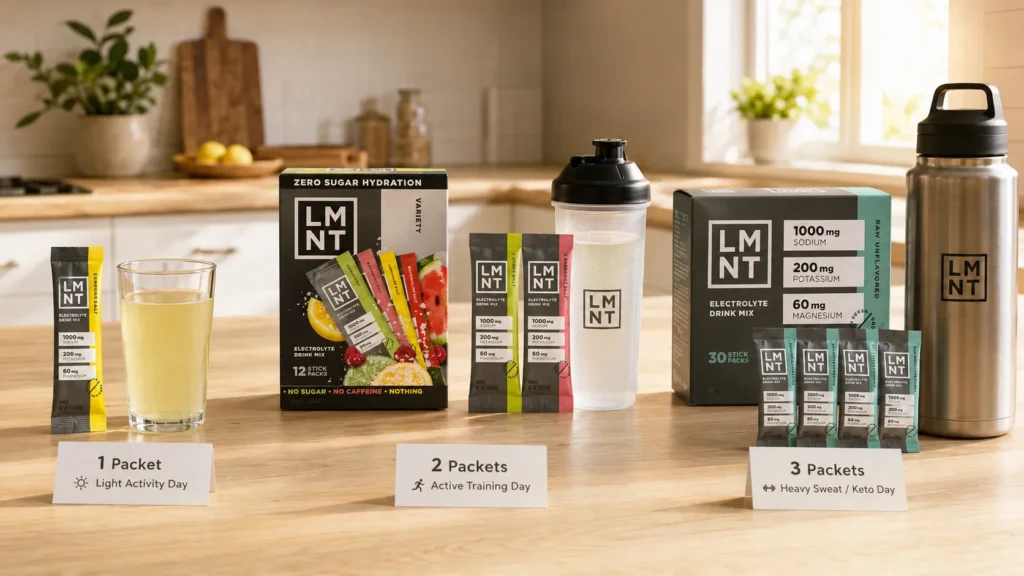
Once you know LMNT doesn’t break your fast, the natural next question is: how much is appropriate? How many LMNT packets per day you need depends on your output, diet, and how long your fasting window runs.
LMNT’s official recommendation: start with one packet per day and adjust based on how you feel. For most people on a 16:8 fast with moderate activity, one packet per day mixed in 20 oz of water during the fasting window is the right starting point.
The table below shows the general guidance by lifestyle:
| How Many LMNT Packets Per Day – By Profile Sedentary, indoors, standard diet: 1 packet per day Moderately active, fasting 16-18 hours: 1-2 packets per day Athlete, intense training, heavy sweating: 2-3 packets per day Extended fasting (24+ hours): 2-3 packets spread across the fasting window Keto + fasting combination: 2 packets minimum, spread 8 hours apart per Virta Health guidelines |
For the full picture on daily use across different contexts, our article on can you drink LMNT everyday covers the full spectrum of who benefits most and who should moderate.
Drinks That Break Your Fast – Avoid These
Since we covered what doesn’t break a fast, here’s the other side of the coin. These drinks will end your fasted state regardless of your protocol:
| Fast-Breaking Drinks to Avoid Regular sodas and juices: 30-40+ grams of sugar per serving spikes insulin immediately. Milk and dairy-based drinks: contain lactose (sugar) and protein, both of which trigger insulin. Smoothies and protein shakes: calories, protein, and often sugar – breaks a fast completely. Energy drinks (standard): Monster, Red Bull original contain 27+ grams of sugar. The “sugar-free” versions use artificial sweeteners and stimulants – borderline territory at best. Sweetened coffee drinks: lattes, cappuccinos, flavored syrups, or anything from a coffee shop with add-ins. Not fasting. That’s breakfast. Sports drinks with sugar: Gatorade, Powerade, original Liquid IV, and similar products contain 10-34 grams of sugar. They trigger insulin and end your fast. |
Quick Reference: What Can I Drink During A Fast?
| Drink | Breaks Fast? | Notes |
| Water | No | Always safe |
| Black Coffee | No | Under 5 calories |
| Plain Tea | No | Unsweetened only |
| Sparkling Water | No | No flavoring added |
| LMNT (Unflavored) | No | Zero calories, zero sugar |
| LMNT (Flavored) | No* | Trace 5-10 cal, fasting-safe |
| Coke Zero | Borderline | Sucralose may affect some |
| Bone Broth | Gray zone | Low cal, some protein |
| Diet Soda | Avoid | Artificial sweeteners |
| Juice | Yes | Sugar spikes insulin |
| Regular Soda | Yes | Breaks fast immediately |
| Milk / Cream | Yes | Calories and protein |
| Energy Drinks | Yes | Sugar and stimulants |
Final Verdict: What Can I Drink During A Fast?
The answer to what can I drink during a fast is broader than most people expect. Water, black coffee, plain tea, sparkling water, and zero-sugar electrolyte drinks like LMNT all belong in your fasting toolkit. They don’t raise insulin, they don’t break your fat-burning state, and – in the case of electrolytes – they actively help you sustain the fast longer and feel better doing it.
Does LMNT break a fast? No. LMNT’s own fasting documentation and real-world CGM data from users both confirm it doesn’t affect blood sugar. The Raw Unflavored version is the strictest choice for autophagy fasting. Flavored versions work fine for all standard IF protocols.
Does Coke Zero break a fast? Technically borderline. Practically, choose something better. The artificial sweeteners and phosphoric acid bring more downsides than benefits in a fasting window.
How to get electrolytes while fasting? Use a zero-sugar electrolyte powder. Your body loses sodium, potassium, and magnesium during a fast because low insulin tells your kidneys to flush them. Replace those minerals and fasting gets easier, cleaner, and more effective.
If you want to compare the full range of electrolyte options available for fasting, our LMNT vs Liquid IV comparison and Ultima vs LMNT breakdown cover the field in detail.
| Disclaimer: This article is for informational purposes only and is not medical advice. Always consult your healthcare provider before starting a fasting protocol, especially if you take medications for blood pressure, diabetes, or kidney conditions. |
Frequently Asked Questions
Short answers to the most specific fasting drink questions people search for.
Does Coke Zero break a fast?
Technically no – it’s zero calories and sucralose doesn’t spike insulin in most people. But artificial sweeteners can affect insulin sensitivity long-term and trigger cravings. Most fasting experts recommend skipping it.
Does taking vitamins break a fast?
Water-soluble vitamins (B, C) in plain water are generally fine. Fat-soluble vitamins (A, D, E, K) need food for absorption and can cause nausea on an empty stomach. Save those for your eating window.
How long does it take to hydrate?
Electrolytes begin absorbing through the intestinal wall within 15-20 minutes. Full cellular hydration typically takes 45-60 minutes. Electrolyte-enhanced water absorbs faster than plain water alone.
Does salt help with hydration?
Yes. Sodium keeps water in the bloodstream rather than passing through. Without adequate salt, water you drink passes out through urine without hydrating cells effectively. Salt is foundational to proper hydration.
Is LMNT electrolyte ok for fasting?
Yes. LMNT‘s official documentation confirms it doesn’t break a fast. Zero sugar, no insulin response. Raw Unflavored is the strictest choice; flavored versions carry trace 5-10 calories and are safe for standard IF protocols.
Does watermelon LMNT break a fast?
No. Watermelon Salt is a flavored LMNT variety with stevia and natural flavors – approximately 5-10 trace calories. It doesn’t trigger insulin and is considered fasting-safe for 16:8 and similar protocols.
Will 20 calories of electrolytes break a fast?
For fat-burning fasts, 20 calories is borderline but likely doesn’t cause a meaningful insulin response. For strict autophagy fasting, any caloric intake technically interrupts the process. Choose zero-calorie options to stay on the safe side.
How many LMNT packets can I have daily?
LMNT recommends starting at 1 packet per day. Active people and heavy sweaters can use 2-3 daily. Each packet has 1,000 mg sodium – stay within the 4-6 gram daily sodium target LMNT’s science team recommends.
This article contains affiliate links. If you purchase through our links, we may earn a commission at no extra cost to you. We only recommend products we genuinely believe in. Read our Affiliate Disclaimer for full details.